
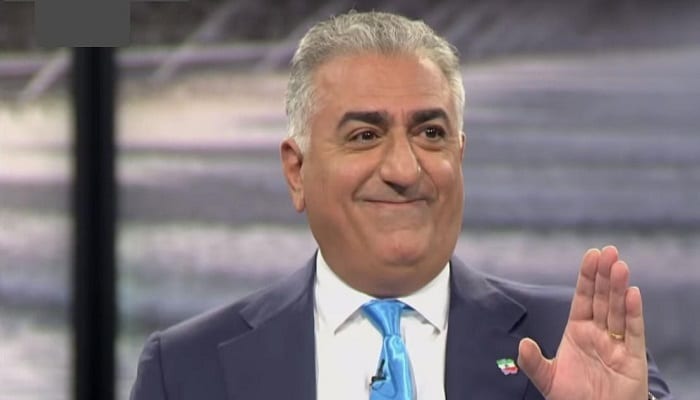
PNN – Despite all the miscalculations in life, Mohammad Reza Pahlavi understood one thing well: his son’s helplessness and lack of will.
Despite all the miscalculations in his life, Mohammad Reza Pahlavi understood one thing well: his son’s inability to manage affairs.
Hamad Mehdi Samiei, who at times served as the head of the Central Bank and the head of the Planning and Budget Organization, writes in his memoirs: The king spoke very openly, brutally, and openly about his son: I don’t know at all whether this [crown prince] can and wants to reign or not? So he may not have the personality and will to do so at all. So there must be facilities and organizations in the country that will allow the succession to happen automatically and smoothly.
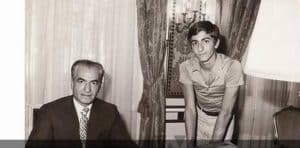
The Shah’s hesitation was so great that even after his death; the issue of succession became a contentious issue among the Shah’s associates. They knew of Mohammad Reza’s hesitation and believed that the Shah had no will.
Ahmad Ali Masoud Ansari, who was a close associate and the first circle of the court, had this opinion. He writes in his memoirs: Houshang Ansari told me to ask when I arrived in Cairo whether the Shah had made a will regarding political issues and the future of Iran and the Crown Prince. When I arrived in Cairo, I was on the lookout to see if there was a will, and to my surprise, I found out that there was none, and for that reason, Farah had set about preparing a text called the Shah’s Political Will, and they had entrusted the task and execution of the work to Dr. [Hooshang] Muntaseri. Javad Moinzadeh and several others also collaborated and were involved, and the result of their work is the text that is known today as the Shah’s political will, and of course it was prepared after his death and by the aforementioned individuals. This text, which is more emotional and sentimental than political, lacks the guidelines that usually distinguish a political leader’s will from those of others, and it only mentions the issue of the crown prince’s succession, without mentioning any political advice or recommendations.
In any case, regardless of the authenticity of the Shah’s will, 20-year-old Reza Pahlavi stood in front of the camera and took the oath of office.
He was born when Mohammad Reza was 43 years old. The Shah changed three wives to have a son. Not even a few days after Reza’s birth, on November 14, Mohammad Reza Pahlavi issued a decree that was read out the next day at an extraordinary session of the Senate in the presence of the heads of state.
Reza Pahlavi was raised in a highly protected environment, separated from ordinary people. He was raised by a French nurse and educated at a private school within the royal palace.
In 1978, at the age of 17, he left Iran for pilot training at Reese Air Force Base in Texas, and a few months later, when the Islamic Revolution led by Imam Khomeini (RA) triumphed, the Pahlavi regime left Iran forever. This was the end of his presence in Iran.
After wandering around different countries for a while, Reza Pahlavi finally settled in the suburbs of Washington, D.C. He was accepted to various universities many times and, according to his office, he finally succeeded in getting his bachelor’s degree after changing several universities.
Mohammad Reza knew his son well enough to doubt his abilities as a successor. In all these years, he neither built a political party, nor created a coherent organization, nor was he able to create a lasting consensus among the diverse spectrums opposing the Islamic Republic. Until the last few years, his political presence was limited to media interviews rather than field action.
When his father left the country, in addition to $35 billion in cash, he also took with him an inventory of valuables and jewelry. 384 suitcases containing jewelry, two crowns adorned with about five thousand diamonds, 50 emeralds, and more than 360 pearls were among the possessions he took with him, and the Pahlavi family has been living off of them for all these 47 years. This is why Reza avoided answering this simple question in news circles for years: where has his source of income come from for the last forty years, and what is his job?
Before the movements of the last few years, he had no specific political activity, but as soon as he entered the political arena, an important trait emerged in his personality. A trait he had inherited from his father and grandfather: dependence on foreign powers.
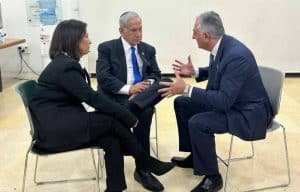
The tangible symbol of this path in recent years was his trip to Israel, his prayer at the Western Wall, and his meeting with Benjamin Netanyahu. A meeting that presented an image of humiliation, inequality, and lack of political dignity. To the extent that even his body language in the published images expressed the pleading position of this relationship.
During Donald Trump’s presidency in the United States, he welcomed the policy of maximum pressure against Iran and at times called for increased international pressure and military intervention against Iran.
Perhaps one of the strangest parts of Reza Pahlavi’s life is his children’s alienation from Iranian culture and language.
Reza Pahlavi has three daughters named Noor, Iman, and Farah. It is noteworthy that these three daughters, who have been given the title of “crown princess” respectively, do not know Persian. Reza Pahlavi was so far removed from the idea of becoming a king and returning to Iran that he did not even teach his children Persian.
An examination of Reza Pahlavi’s recent comments shows that he suffers from egotism and the illusion of popularity. He has been away from this level of center stage for years, and now he constantly emphasizes the word “I” in his speeches, claiming that “the people call him” and “the people want him.”
However, independent expert analysis says otherwise. The executive vice president of the Quincy Institute believes that Pahlavi lacks social base and his efforts are merely to attract foreign support and come to power “from above,” not a popular movement.