
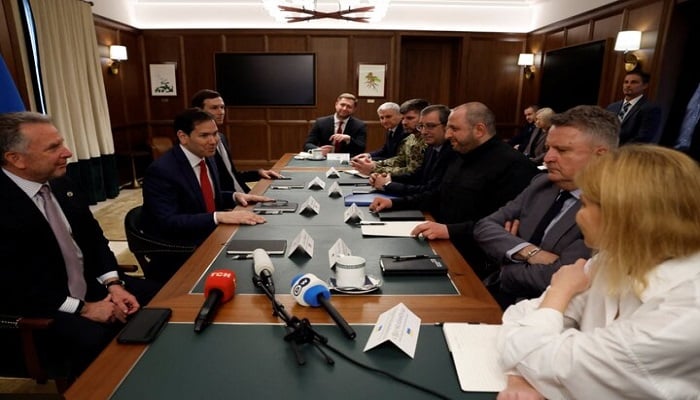
PNN – After the disclosure of Washington’s peace plan in Miami, and that too without the presence of Brussels’ leaders, Europe has faced a strategic shock; a shock that has deepened distrust toward the United States and darkened the prospects of the transatlantic alliance.
The recent political event in Miami was a turning point in the history of transatlantic relations; an event during which European leaders, for the first time, were openly confronted with the bitter reality that Washington is ready to enter a deal with Moscow over the security architecture of the European continent without serious coordination with them. The disclosure of the 28-point plan of Donald Trump to end the Ukraine war, which had been prepared in meetings in Miami with figures close to the U.S. president and parties connected to the Kremlin, delivered a severe shock to European capitals.
This plan, which reflects many of Moscow’s maximalist demands, includes practical acceptance of Russia’s control over large parts of eastern Ukraine, a significant reduction in the size of Ukraine’s army, restrictions on Kyiv’s access to long-range weapons, and the permanent abandonment of the prospect of NATO membership.
Beyond the content of the plan, however, it was the way it was formed and the political message behind the matter that confronted Europe with a bitter reality; the reality that the American security umbrella can no longer be counted on as an obvious guarantee.
Read more:
Trump sees Russia-Ukraine peace chance, rejects Venezuela attack.
Designing the map of Europe’s future without Brussels’ presence in Miami
For many European capitals, the main problem was not only the content of Trump’s plan, but the way it was formed, which sounded the alarm. The role of a businessman and a close envoy to Trump in meeting former and current Russian officials to draft this plan, and then the publication of details of the initial version of the document, showed that Washington, even regarding the fate of Europe’s borders and the continent’s security arrangement, has entered a deal only with Moscow and Kyiv and has reduced the role of the European Union to a marginal observer.

This feeling of Europe being sidelined intensified when reports emerged quoting some American officials in NATO meetings as saying that Volodymyr Zelensky might be pressured to accept an agreement in the coming days or weeks; with the threat that if he does not accept it, Ukraine will later face a worse deal. Senior European diplomats, reacting to these developments, emphasized that “Europe has been left alone against Russia” and can no longer count on Washington’s security guarantees as a given, as it once did.
Kaja Kallas, the EU’s foreign policy chief, and several foreign ministers of European countries have repeatedly claimed in recent days that, in their view, Russia remains an imperialist threat to the continent’s security, and according to their military assessments, the possibility of a direct confrontation between Moscow and NATO by 2029 is serious. But these warnings are being made in an environment where Europe has limited control over the rules of the game.
Ukraine and some European capitals tried to put a revised version of the plan on the table in order to adjust some of the concessions given to Moscow, but media reports indicate that this effort has not been welcomed by the Kremlin, and Moscow has rejected the European proposal as a one-sided document. The fact that Europe could not even play an effective role in modifying a plan concerning its own security future shows the depth of the current crisis of trust.
Taken together, these developments, from the viewpoint of European analysts, portray an image of a deep divide between the American and European approaches to the concept of peace in Ukraine. Washington is mostly seeking to close the file of the war within the framework of its internal political considerations, while for Europe, the model for ending the war is directly tied to the continent’s security architecture for decades to come. Frontline countries in Eastern Europe—including Poland, the Baltic states, and Scandinavia—which had long warned of decreasing U.S. commitments, now say that recent events only confirm their old concern, described with phrases such as “the end of the American century” and “the conditional nature of Washington’s security guarantees.”
The war of narratives on both sides of the Atlantic
While Europe is still digesting the shock of being removed from its own security equation, a new front of confrontation between the two sides of the Atlantic has opened. Senior White House officials, in media reports, have claimed that although European leaders appear to publicly support Trump’s efforts to end the war in Ukraine, behind the scenes they have been working to undermine the achievements made since the Alaska summit.
According to Axios, Trump’s advisers believe that the Europeans—not Trump or Putin—are responsible for the current deadlock in the peace process. These officials believe that the Europeans are encouraging Ukraine to seek unrealistic concessions from Russia and have pressured Zelensky to pursue a “better deal,” a maximalist approach that has intensified the war.
One senior White House official, in a critical tone, stated: “The Europeans cannot prolong the war, make unreasonable demands behind closed doors, and at the same time expect the United States to pay the costs. If Europe wants to escalate this war, that is their choice.” Trump, in his cabinet meeting, also expressed dissatisfaction with the current situation and said: “Everyone is playing a role. It’s all nonsense.”
A senior White House official even announced that Trump is seriously considering stepping back from his diplomatic efforts until one or both parties show more flexibility. This comes despite the fact that less than two weeks ago, Trump had held a friendly meeting with European leaders and Zelensky.
But on the other side, Europe has a completely different narrative. European officials said they were surprised by these accusations and emphasized that there is no discrepancy between the public and behind-the-scenes positions of European leaders. They say that instead, European countries are preparing a new package of sanctions against Russia, showing that their stance is clear and unified.
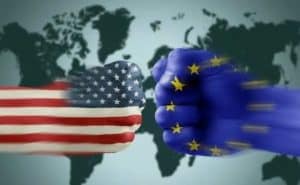
This war of narratives shows that the divide between the two sides of the Atlantic goes far beyond disagreements over the details of a peace plan. In reality, there are two entirely different perspectives on the nature of the threat, acceptable costs, and the time horizon for achieving peace. Washington wants a quick exit from an expensive conflict that is not popular with American public opinion, while Europe knows that any agreement signed today could shape the security of the continent for decades.
Alongside the security dimension, the economic aspect of this divide is also reflected in analytical reports. Some analysts warn that any agreement under which Ukraine loses parts of its important industrial and mineral capacity in the east could turn the country into an economic black hole for years, with most of the burden of reconstruction and financial aid falling on the European Union.
In the scenario of a so-called “incomplete peace,” which Brussels fears, foreign investment will not easily return to Ukraine, borders will not be fully stabilized, and tensions with Russia will not end. Yet Europe will be forced to bear the cost of security, reconstruction, and financial assistance at a time when the continent’s own economy is facing deep challenges of weak growth, budget deficits, and social pressure.
This sense of Europe being alone extends beyond military and security matters and has spread into financial and legal fields as well. A clear example is the internal dispute within the European Union over how to use Russia’s frozen and blocked assets. While Washington and some European capitals insist on using the profits from these assets as collateral for new loans to Ukraine, some member states warn about the legal and financial consequences of this decision and consider it an action that could weaken the long-term attractiveness of the euro and Europe’s financial system.
Europe’s strategic deadlock; between lost trust and security dependence
But beyond the war of narratives and mutual accusations, Europe’s main challenge lies elsewhere: the continent is stuck in a strategic and structural deadlock in which it can neither fully distance itself from the United States nor provide its own security independently. This dilemma has revealed itself more clearly than ever in recent days.
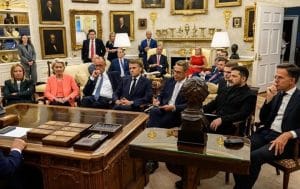
Europe itself is not united or of one voice in the face of this challenge. On one hand, the northern and eastern countries of the continent oppose any territorial concessions to Russia in harsher terms and even speak of the need to increase defense budgets and deploy more forces along NATO’s borders. On the other hand, parts of society and the political systems in Western and Southern Europe are concerned that pursuing a long-term confrontation strategy with Moscow will impose unbearable economic and social costs on their citizens.
One European diplomat, in a quote repeated in recent reports, emphasized: “What we understood in recent meetings is that Europe is compelled to stand on its own feet for its security, even if it still lacks the tools to do so.” This sentence clearly reflects Europe’s main contradiction today — an awareness of the necessity of independence alongside the inability to achieve it.
European think tanks, including Chatham House, have stressed in recent notes that European leaders have been overly slow and cautious in supporting Kyiv, and now, if they fail to adopt an independent position toward Washington, they may for years remain under the shadow of an agreement written elsewhere. But how can an independent stance be taken when the necessary tools are not available?
In London, Paris, Berlin, and Brussels, another debate is also underway — the debate over whether Europe can realistically implement the strategy of strategic autonomy or not. Plans such as the idea of forming a “coalition of the willing” to deploy a largely European multinational force in Ukraine after any potential agreement, efforts to synergize defense budgets through joint European defense financing mechanisms, and discussions on creating shared industrial capacity in the armaments sector are all signs that the old continent is seeking to reduce its one-sided dependence on Washington.