
PNN – The American network CNN, by taking the lead in news coverage and insinuating the failure of preliminary negotiations between Iran and the United States, next addressed the issue of Trump’s options for attacking Iran in a way that created the perception that Washington’s possible attack was the result of Tehran’s failure of negotiations.
A CNN report published by Al Jazeera Net states that after the failure of preliminary negotiations between Washington and Tehran regarding halting Iran’s nuclear and missile programs, the administration of US President Donald Trump is moving towards military options against Iran.
In the introduction to this report, after blaming Iran for the failure of the preliminary negotiations, CNN quoted sources and wrote: Trump is considering a package of military scenarios, including a major, decisive attack. He is considering military action that he says could help with popular protests in Iran.
The report continues: Last Wednesday, Donald Trump, on the social network “Truth,” harshly called on Iran to return to the negotiating table so that a fair agreement without nuclear weapons could be reached.
He warned that any potential US attack on Iran would be much more severe than the attacks last summer, which targeted three Iranian nuclear facilities.
Although it was Trump who, in his first term as president, tore up and withdrew from the JCPOA, which was the result of Iran’s talks with the P5+1 group and had been approved by the UN Security Council, and then, in his second term as president, bombed the talks while Iran was at the indirect negotiating table with the United States.
In such circumstances, the request for renewed dialogue with Iran, while it is still turning on its heel and the United States is sending its military forces to the region, cannot have the color and smell of reality in the eyes of any impartial analyst, and it smells of deceit and repetitive policies of deception.
Multiple military options
CNN, citing unnamed sources, further noted that options include airstrikes against Iranian commanders and security officials believed to be responsible for suppressing the protests, concluding that this would allow protesters to take control of government and security buildings.
CNN further noted that Trump’s other options include attacking nuclear facilities and sensitive government buildings, and perhaps ballistic missiles capable of targeting US allies in the Middle East or the uranium enrichment program.
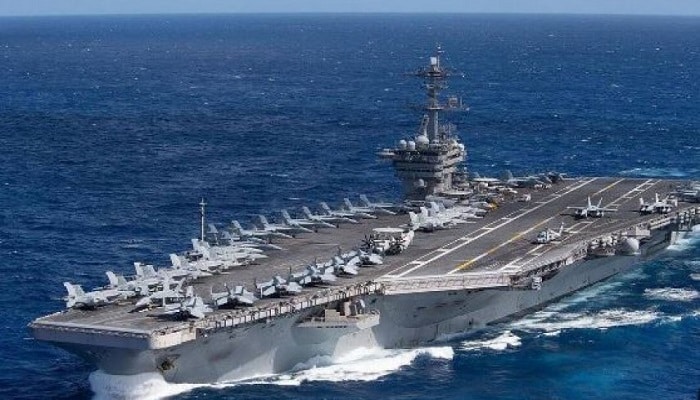
CNN continues its directional report by stating: Although Trump has not yet made his decision; he believes that the scope of his military movements has expanded with the arrival of the aircraft carrier USS Abraham Lincoln in the region.
Communication channels between the parties are blocked.
According to CNN, the two sides previously exchanged messages through intermediaries, including Omani diplomats, in addition to indirect contacts between Trump’s envoy Steve Whittaker and Iranian Foreign Minister Abbas Araqchi. In the exchanged messages, a direct and brief meeting was discussed, but it did not materialize; informed sources emphasize that in light of the increasing US military threats, direct and serious negotiations have no place.
The report further quotes the British media Reuters and the American network CNN, while acknowledging that Trump’s motives for refocusing on the Iranian nuclear issue remain unclear, especially since he had previously declared that Iran’s nuclear program had been completely destroyed.
American conditions that make negotiations more critical
In line with American threats, Washington has set preconditions for meeting with Iranian officials, including a complete halt to uranium enrichment and Iran’s renunciation of support for its allies in the region, in addition to imposing severe restrictions on Iran’s missile program.
The dispute over Iran’s ballistic missiles is the most significant obstacle, as the United States insists on setting a ceiling on the range of these missiles; a demand that Israel sees as an urgent security issue, especially after Israel’s stockpile of defensive missiles was depleted in the 12-day war in June last year.
Iran also opposes these conditions and emphasizes that it is only prepared to review the nuclear file, which has led to the closure of communication channels.
Iran’s military preparations and reactions
On the ground, the US has bolstered its defense presence in the region through the deployment of Patriot batteries and other defense systems, in addition to plans to deploy THAAD systems to counter any potential Iranian response.
The US Air Force is preparing to conduct large-scale air maneuvers in the Middle East to test the readiness of these forces to fight in complex conditions in coordination with allies.
On the other hand, Tehran has threatened to respond swiftly and decisively. The Iranian Foreign Minister stressed that the armed forces are on full alert to respond to any aggression on Iranian soil, airspace or territorial waters. Araghchi described the American statements as a direct threat.