
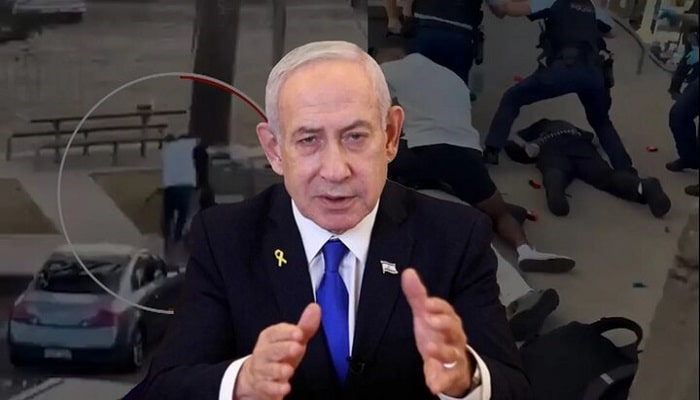
PNN – The Sydney incident can be assessed as a natural event that the Zionist regime is trying to exploit politically in order to obstruct major processes such as the recognition of a Palestinian state.
In recent months, and in parallel with the intensification of the Gaza war, Australia has also become one of the prominent arenas of popular protests against the actions of the Israeli occupation regime. Widespread demonstrations have taken place in cities such as Sydney, Melbourne, and Brisbane, ranging from student gatherings to street marches involving tens of thousands of people. This protest atmosphere has placed the Australian government in a sensitive and high-pressure position, caught between public opinion critical of Tel Aviv’s policies on the one hand, and political and media lobbies on the other that seek to redefine any social tension under the concept of “antisemitism.”
In this context, the expulsion of Iran’s ambassador can be seen not merely as a diplomatic move, but as an attempt to manage an internal crisis and deflect Zionist accusations from the government. By highlighting the role of a “foreign actor” in recent security incidents, the Albanese government has effectively sought to divert attention away from the social and political roots of public discontent.
Read more:
How did Netanyahu’s political project fail in the Sydney attack?
At the same time, statistics and reports indicate that anti-Jewish actions—whether real or framed through security and media interpretations—have increased within Australia. This has limited the government’s ability to clearly distinguish between political anti-Israel protests and ideologically motivated crimes. The outcome has been the adoption of reactive and symbolic policies that, rather than resolving the issue, have deepened existing social and political divides. Accordingly, this analysis seeks to examine the recent shooting incident in Sydney and the Islamic Republic of Iran’s response to it.
Last Sunday, on Sydney’s Bondi Beach, on the sidelines of a Hanukkah celebration, a gathering of Australian Jews turned into a horrific scene of violence. Two armed attackers—a 50-year-old father and his 24-year-old son—opened fire on the crowd, causing a bloody tragedy that left 16 people dead and more than 40 injured. The attack, which Australian police described as “terrorist,” was stopped by the courageous intervention of a Muslim citizen named Ahmad al-Ahmad, who managed to disarm one of the attackers.
Remarkably, Netanyahu described this individual as a “Jew” who saved the lives of thousands. The incident gained further political and security complexity with the death of an Israeli rabbi and the injury of the head of the Australian Jewish Council.
The discovery of homemade explosives and the fact that the father legally owned the weapons point to prior planning, while sharp criticism by Israeli officials of the Australian government—accusing it of ignoring warnings about antisemitism—has intensified diplomatic tensions. Despite global condemnation of the incident, the final motive remains unclear. It is not yet known whether the attack was designed to halt anti-Israel demonstrations and generate sympathy, whether it was a retaliatory act rooted in extremist ideology, or whether it stemmed from deeper, organized internal fractures within Australian society—questions that require the completion of police investigations and more thorough analysis of security information.
On the other hand, following the deadly shooting in Sydney, Tehran’s official stance was announced with notable speed. The spokesperson of the Ministry of Foreign Affairs, without engaging in media narratives or the security dimensions of the incident, explicitly rejected and condemned the attack itself and any act of violence against human lives.
This swift reaction can be analyzed within the framework of a calculated diplomatic approach, primarily aimed at preventing political and media-driven narratives against the Islamic Republic of Iran in an already volatile international environment. In a situation where any security incident—especially one involving religious or ethnic elements—can become a platform for hasty accusations and targeted scenario-building, a rapid and transparent position serves a function beyond mere humanitarian sympathy.
This move was effectively an effort to block future attributions and preemptively neutralize narratives that could later expose Iran, even indirectly, to accusations or political pressure. From this perspective, the immediate condemnation of the Sydney incident not only reflects Iran’s principled stance against terrorism and the killing of civilians, but also demonstrates the diplomatic apparatus’s clear understanding of the sensitive media environment and the necessity of message management during internationally crisis-prone moments.
At such critical junctures, in addition to official institutions, media outlets and influential public figures must also exercise maximum caution in their positions on sensitive issues.