
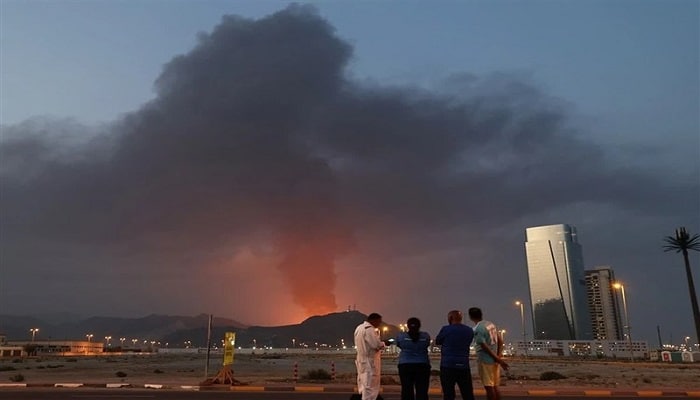
PNN – During the Ramadan War, Israel has repeatedly used false flag operations to expand the scope of the war.
According to the report of Pakistan News Network, one of the most commonly used and common terms in military science literature is the “false flag” operation. This type of deception operation is carried out by military, paramilitary, intelligence, and political institutions with the aim of creating a false impression in a third party.
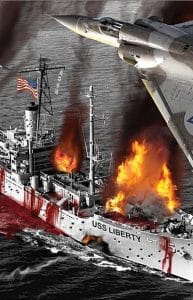
For example, on June 8, 1968, a US Navy reconnaissance ship was attacked by Israeli fighter jets and torpedo boats, killing 34 American soldiers. The Israelis claimed that the American vessel was mistaken for an Egyptian ship and that the incident was not intentional, but a review of intelligence documents in later years revealed that Israel intended to point the finger of blame at Egypt and create a situation for worsening relations between Washington and Cairo.
Now, more than half a century after this incident, during the “Ramadan War”, the Zionist regime, this time in coordination with the United States, has put on the agenda a range of “false flag” operations with the aim of creating a regional consensus against Tehran, politically isolating the Islamic Republic, and increasing the cost of the war. It seems that after 24 days of direct war between Iran and the United States and Israel; the unique agility of the Iranian foreign policy apparatus and continuous contact with various actors has caused this “Israeli” policy to face a state of failure.
Below, we will examine some examples of false flag operations during the recent war between the United States and the Zionist regime against Iran.
American Embassy in Riyadh
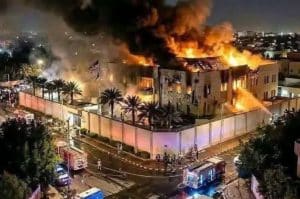
One of the most visible “false flag” operations in the Ramadan War was the drone attack on the US embassy in Riyadh. During this attack, images of flames were broadcast to the world’s media, but in reality, this was a suspicious operation of unknown origin, in order to facilitate the realization of several strategic and anti-Iranian goals in the midst of the war. First, the Saudi Arabian Kingdom gained the necessary motivation and excuse to enter a military campaign against Iran, second, it legitimized any attack on Iranian embassies and consulates around the world, and third, it spread a dark and irresponsible image towards the national sovereignty and territorial integrity of an Islamic power.
Attack on the port of Salalah in Oman
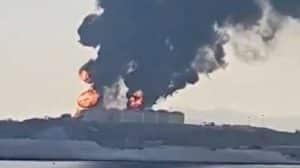
Twelve days after the Ramadan War, regional media reported that the infrastructure of the port of Salalah in the Sultanate of Oman had been targeted. Initially, the attack was attributed to Iran, but as time passed and the Iranian side completed its investigation, it became clear that the main perpetrator of these attacks was the United Arab Emirates. It seems that the benevolent stances of Muscat and some neighboring countries, such as Qatar and Turkey, towards the Iran crisis have led Israel and the UAE to launch a broad campaign to target these countries and punish them for supporting Iran. Interestingly, after this terrorist act, the foreign ministers of Iran and Oman spoke to each other and emphasized ending the war as soon as possible. Badr al-Busaidy, the foreign minister of Oman, recently revealed in an article for The Economist that the Iranian and American governments during the second Trump administration twice came close to a comprehensive nuclear agreement, but each time Trump and Netanyahu betrayed diplomacy by blowing up the negotiating table and putting military aggression against Tehran on the agenda.
Mischief on NATO’s borders
Another area of interest to the enemy to expand the anti-Iranian front in the midst of the war can be considered the territory of the two countries of Turkey and the Republic of Azerbaijan. Israel, in coordination with Washington, hopes to create the necessary conditions for activating Article 5 of the NATO treaty and creating a global consensus against Tehran by targeting Turkey, especially the Incirlik base in this country. Another bright spot of the Foreign Ministry apparatus can be considered the continuous contacts between Araqchi and Turkish Foreign Minister Hakan Fidan to resolve misunderstandings that have arisen and lay the groundwork for the start of tension control talks. Turkish President Recep Tayyip Erdogan’s historic remarks condemning the US and Israeli attacks on Iran and promising divine vengeance to the Zionists were key statements that the Iranian government and people will never forget. This joint conspiracy between Trump and Netanyahu once again increased the empathy and closeness between Iran and Turkey as governments facing difficult times.
In the 21st century, one of the largest “false flag” operations can be considered the attack attributed to al-Qaeda forces on the Twin Towers on September 11, 2001. Because of this fake operation, Washington waged war in Iraq and Afghanistan for nearly two decades in the name of the “war on terror” and paved the way for the emergence of radical groups such as ISIS. Today, however, the purpose of organizing such operations can be seen as creating pessimism among some of Tehran’s neighbors and dragging the southern Persian Gulf countries into war with Iran.
To counter this tactical threat, it is necessary for the armed forces to respond quickly, accurately, and decisively to false flag operations, while officially announcing attacks on enemy-related targets in neighboring countries.