
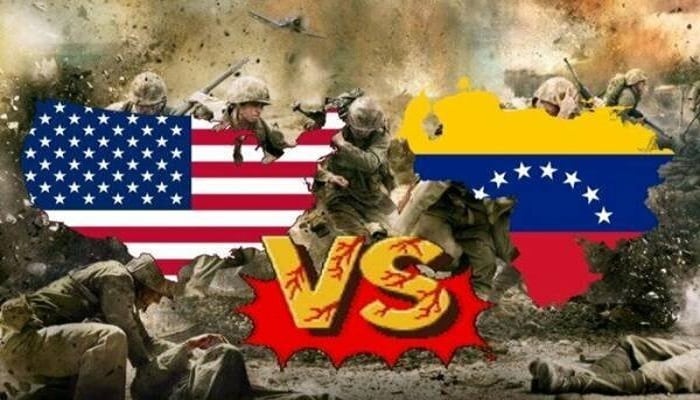
PNN – Nicolás Maduro, by ordering the formation of Vietnam-style guerrilla units, has placed an asymmetric defense strategy against U.S. military threats on the agenda. Will history repeat itself?
In a situation where the Caribbean is once again witnessing rising military tensions between Washington and Caracas, the president of Venezuela has issued a directive that could alter the region’s security dynamics. Nicolás Maduro has instructed army commanders to establish underground guerrilla units modeled after the Vietnam War and to turn the entire country into a “giant rifle” against American imperialism.
This move comes as the U.S. aircraft carrier USS Gerald R. Ford has been deployed to Caribbean waters, and Donald Trump has repeatedly spoken of military options against Venezuela. But can a guerrilla strategy that forced the American superpower to its knees in the jungles of Vietnam half a century ago also prove effective in the streets of Caracas and the Andes Mountains?
Lessons from the Củ Chi tunnels: How the Viet Cong brought America to its knees
The Vietnam War was one of the most painful military defeats in modern U.S. history. From 1955 to 1975, Viet Cong fighters, using guerrilla tactics, were able to compel the world’s most powerful army to retreat. The secret of their success lay in their profound understanding of asymmetric warfare.
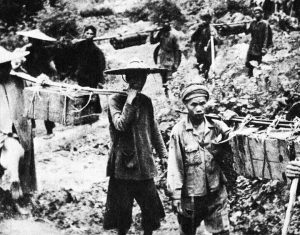
The vast Củ Chi tunnel network, stretching over 200 miles, formed the core of the Viet Cong’s strategy. These tunnels not only provided a safe haven from heavy U.S. bombardment but also served as communication routes, weapons depots, and even field hospitals. American soldiers, deployed into the dense forests and unfamiliar terrain of Vietnam, never knew where the enemy might emerge from.
The Ho Chi Minh Trail, extending more than 600 miles, was the vital logistical artery of the Viet Cong. Passing through the jungles of Laos and Cambodia, it transported weapons and supplies to the south and was never fully severed by the U.S. Air Force. The “hit-and-run” tactic also allowed Viet Cong fighters to strike American bases and then disappear among the civilian population.
The numbers alone told the story of catastrophe: at the height of the war, nearly 100 American soldiers were being killed every week. In the end, more than 58,000 U.S. troops lost their lives, while Vietnamese casualties—though estimated differently—were clearly far higher. But the decisive factor was the erosion of public morale in the United States. The American public was no longer willing to bear the cost of an endless war on foreign soil.
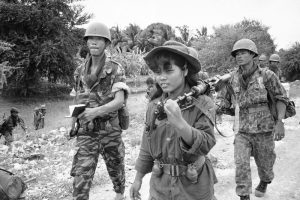
Of course, support from China and the Soviet Union also played a key role in the Viet Cong’s success. Advanced weaponry, military advisers, and financial assistance from the two communist superpowers enabled North Vietnam to resist both the American war machine and South Vietnam. Most importantly, however, was the deep backing of the local population and peasants. Ultimately, this two-decade war—shaped by the actions of the Viet Cong—ended with the victory of the North Vietnamese government and army, the defeat of the U.S. military, and the complete collapse of Washington’s ally, South Vietnam.
The strategy of “anarchization”: Maduro’s survival plan against a possible U.S. attack
Now that Venezuela faces military threats, Maduro has turned to history and is adopting the same tools that brought victory to Vietnam. He has instructed military commanders to carry out a program called “long-term resistance,” which includes establishing 280 guerrilla positions across the country. These positions will stretch from the Andes Mountains to the streets of Caracas.
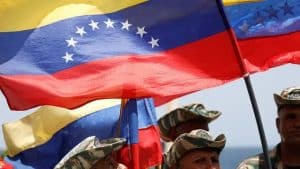
The second strategy, known as “anarchization,” is even bolder. Under this scenario, if U.S. forces enter the capital, the Maduro government would deliberately turn Caracas into an urban battlefield in order to make the cost of occupation unbearable for Washington. This tactic is reminiscent of the urban warfare seen in Fallujah in Iraq or Aleppo in Syria, both of which imposed heavy costs on occupying forces.
Maduro claims that eight million militia members are prepared to defend the country, although some military analysts consider this figure exaggerated. Some estimates indicate that Venezuela has around 5,000 to 7,000 active militia personnel who have received proper training.
The country’s army, with roughly 60,000 deployable troops, possesses equipment largely inherited from the Cold War era and has clear weaknesses compared to the U.S. military. Some American military experts argue that Venezuela’s strategy is designed not to achieve a military victory but to raise the political and human costs of occupation.
Both the Biden administration and now Trump have repeatedly stated that “all options are on the table,” yet Washington’s military threats against Latin American countries have a long history. From the 1954 coup in Guatemala to the 1989 invasion of Panama and the economic blockade on Cuba, U.S. policy in its own backyard has always been interventionist.
The question now is whether Venezuela can use asymmetric tactics to deter Washington from military action.
The record of guerrilla warfare in the 21st century: From Afghanistan to Syria and the prospects of success in Venezuela
Modern history offers numerous examples of both the success and failure of guerrilla warfare. Afghanistan is perhaps the most prominent: first, in the 1980s, Afghan mujahideen forced the Soviet Union to withdraw using the rugged Hindu Kush mountains and guerrilla tactics.
Then, in 2021, the Taliban regained power after two decades of war with U.S. and NATO forces. The Taliban’s success showed that even the most advanced military technology cannot break the will of a guerrilla movement with ethnic and ideological backing. They relied on the same tactics used by the Viet Cong—night raids, roadside bombs, disappearing among rural populations, and above all, strategic patience.
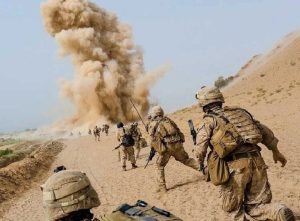
In Iraq after the 2003 U.S. invasion, resistance groups demonstrated just how costly urban warfare can be for an occupying force. In Syria as well, various groups—much like the Viet Cong—used extensive tunnel networks to transport weapons and shelter fighters.
The Kurdistan Workers’ Party (PKK) in Turkey, although it recently announced it would lay down its arms, spent decades fighting the Turkish army from the Zagros and Qandil mountains, showing that a guerrilla movement can endure even against modern militaries.
But Venezuela faces unique challenges. Unlike Vietnam, with its dense jungles, or Afghanistan, with its rugged mountains, Venezuela is far more urbanized. More than 88 percent of its population lives in cities. This means guerrilla warfare would have to unfold primarily in urban environments—settings where controlling the population and preventing civilian casualties are far more difficult.
The second challenge is the lack of strong international support. Vietnam had backing from China and the Soviet Union; the Taliban benefited from Pakistan. But today, which country is willing to support Venezuela fully? Russia and China provide political and economic support, but neither is prepared to engage militarily with the United States in the Caribbean. Cuba and Venezuela’s other allies are also unwilling to offer military assistance or enter a potential Washington–Caracas battlefield in any meaningful way.
The third—and perhaps most important—factor is public support. In Vietnam, peasants cooperated with the Viet Cong because they saw them as liberators from colonialism. In Venezuela, however, the economic crisis, runaway inflation, and the migration of over seven million Venezuelans—an outcome of sanctions and confrontational U.S. policies—have weakened domestic support for the government.
Even so, the psychological impact of a guerrilla strategy should not be underestimated. The threat of a long and costly war can itself be a powerful deterrent. After the experiences of Iraq and Afghanistan, the United States has little appetite for an overseas ground conflict. Even Trump, despite his aggressive rhetoric, understands that a war in Venezuela could turn into another quagmire—one that might even jeopardize his electoral prospects.