
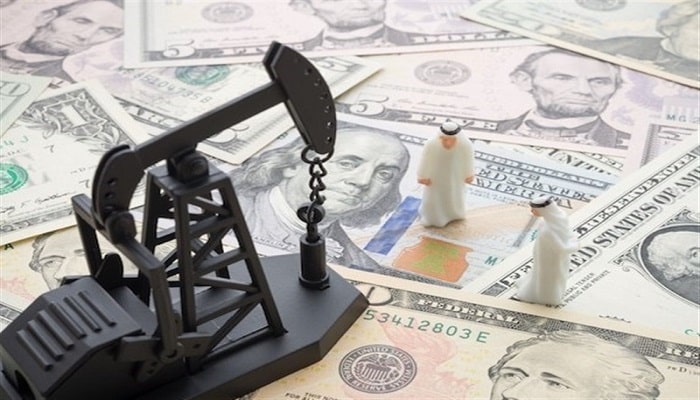
PNN – Geopolitical developments in the Middle East and changing energy equations could lead to the weakening of the petrodollar and the decline of American financial hegemony.
According to the report of Pakistan News Network, geopolitical developments in the Middle East, along with structural changes in the global energy market, have gradually presented serious challenges to one of the most important pillars of the international financial order, the “petrodollar system,” a system that has played a key role in establishing the United States’ economic and financial dominance over the global economy over the past half century.
An examination of recent trends shows that the geopolitical conflicts and rivalries in the Middle East are not simply a regional crisis, but rather a sign of deeper changes in the world economic order; an order that has been based on the dollar and oil trade since the 1970s, and has allowed the United States to use the dollar’s position in the energy market to establish extensive financial influence on a global level.
How was the petrodollar formed?
The petrodollar system was based on a relatively simple but highly effective mechanism. In this system, oil was priced and traded primarily in U.S. dollars. As a result, energy-importing countries had to secure dollars to buy oil, while oil-exporting countries, in turn, held their revenues in the form of dollar-denominated assets or investments in Western financial markets.
This financial cycle made the dollar the mainstay of global trade, and the United States was able to strengthen its economic and political power through its control of the international financial network. In fact, the constant demand for dollars in the oil trade allowed Washington to finance its fiscal deficits while at the same time exerting vast geopolitical influence on the global economy.
The Middle East: The heart of the world’s energy and financial system
The Middle East has always played a role beyond an oil-producing region. The region has strategic importance in the global economy from three perspectives.
First, its geographical location as one of the most important bottlenecks in global trade. Routes such as the Strait of Hormuz and the Suez Canal control a huge volume of global trade, and the connectivity of the economies of Asia, Europe, and Africa depends largely on these routes.
Second, the Middle East remains one of the world’s most important sources of energy. Oil and its derivatives not only fuel modern industries, but also play a vital role in the production of a wide range of industrial products, including plastics, chemicals, agricultural fertilizers, and textiles.
But the third and most important dimension of the region’s importance has been its role in stabilizing the petrodollar system. From the 1970s onwards, oil exports from the Gulf countries were largely denominated in dollars, creating a self-reinforcing cycle of global demand for dollars.
Why is the petrodollar system weakening?
Despite decades of petrodollar dominance, several structural developments are now challenging this financial order.
The first is the changing position of the United States in the energy market. The shale oil and gas revolution in the United States has transformed the country from a major importer of oil to a major competitor to energy producers. As a result, the traditional relationship between Washington and the Gulf oil producers has changed.
The second factor is the expansionary monetary policies in the US economy. The sharp increase in liquidity since the global financial crisis and in recent years has raised concerns about the long-term value of the dollar and made some oil-exporting countries more cautious about holding dollar assets.
The third factor is the global energy transition. The spread of electric vehicles, the development of renewable energy, and technological changes have sent a message to oil-rich countries that oil may lose its current position in the long term, an issue that has led many countries in the region to seek to diversify their economies.
Gap in the security-for-oil deal
Another foundation of the petrodollar was an unwritten agreement in which the United States guaranteed the security of the oil-producing countries of the Persian Gulf, and in return, these countries sold their oil mainly in dollars.
But developments in recent years have shown that this security equation has faced doubts. Regional crises and threats to energy shipping routes have raised the question among some countries in the region whether the American security umbrella is still as effective as it was in the past.
As these doubts increase, the motivation of some countries to diversify economic and financial relations has also increased an issue that could gradually weaken the dollar’s monopoly on energy trade.
China’s Entry and Changing Geopolitical Equations
Meanwhile, China has entered the regional equation with a different approach. Unlike the traditional American model, which was based on security and military alliances, Beijing has focused on infrastructure development, trade, and economic cooperation.
Projects such as the development of ports, transportation networks, telecommunications infrastructure, and the “Belt and Road” initiative are part of this strategy, which aims to transform the Middle East into a key node in the Eurasian trade network.
In such a model, stability and economic cooperation become more important, and this could pave the way for reducing geopolitical tensions in the region.
A slow move towards a multi-currency energy market
One of the most important consequences of these developments is the gradual change in the currency structure of energy trade. In recent years, some energy transactions have been conducted in currencies other than the dollar, including the Chinese yuan or local currencies.
Although this trend is still in its early stages, the expansion of such transactions could lead to the formation of a multi-currency energy market, one in which the dollar will no longer be the sole dominant currency.
Such a change, if realized, would have profound implications for the global economy, as global demand for the dollar would decline and, as a result, the financial strength of the United States could also be weakened.
Strategic implications for America
The dominance of the dollar in global trade has been one of the most important instruments of American economic power over the past decades. It has allowed Washington to finance its fiscal deficits and create a vast network of economic influence around the world.
But if the petrodollar system gradually weakens, this strategic advantage will also diminish, and the structure of global economic power may undergo fundamental changes.
The changing world order
Overall, developments in the Middle East cannot be analyzed solely in the context of regional conflicts. The region has now become one of the focal points of the changing global economic and financial order.
Economic observers believe that if current trends continue, we may witness the formation of a new financial architecture in the global economy in the coming decades; an architecture in which the role of the dollar is reduced and global economic power moves more towards the East, especially Asia, than in the past.