
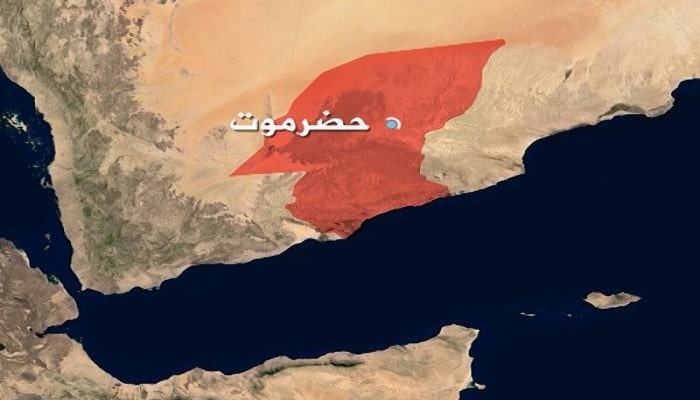
PNN – The Cold War between Saudi Arabia and the United Arab Emirates, aimed at plundering natural resources in Yemen’s Hadramaut Governorate and exploiting the strategic position of the province, has also attracted the attention of the United States and the United Kingdom toward this critical region.
According to the report of Pakistan News Network, reporting from Al Jazeera, Hadramout accounts for 36 percent of Yemen’s total area and contains 70 percent of the country’s oil resources. Geographically, it borders Marib, Shabwa, and Al-Mahrah, shares international borders with Oman and Saudi Arabia, and overlooks the Arabian Sea and open waters. These natural, geographic, and energy potentials have made Hadramout a focal point of international competition, particularly among the aggressors in Yemen, including Saudi Arabia and the UAE, while the U.S. and the U.K. have also set their sights on the province’s resources.
In this context, security and military tensions in Yemen’s wealthiest province, amid proxy wars between Saudi and Emirati forces that began ten days ago, continue to rise. The situation in eastern Hadramout, the largest and richest province in terms of oil resources, remains increasingly unstable.
The Southern Transitional Council (STC), established by the UAE in 2017 and seeking the secession of southern Yemen from the north, is one of the parties in this conflict. The council aims to create an “independent southern state” and return the situation to what it was before the 1990 unification of northern and southern Yemen.
On the other side is the “Hadramout Tribal Coalition,” founded in 2013, consisting of prominent tribal, social, academic, and religious figures under Saudi influence. This coalition controls the Hadramout Protection Forces and seeks autonomy for the province to maintain sovereignty and protect its wealth.
Read more:
Al-Akhbar: Is Abu Dhabi replicating its Yemen strategy in Sudan?
Between these two factions, a third group exists, composed of forces from Yemen’s first and second military regions, loyal to the Aden-based proxy government. The presence of these three forces complicates the security situation in Hadramout.
In recent days, significant clashes have erupted in Hadramout following the deployment of reinforcements by the STC toward the province. The forces are commanded by Brigadier General Saleh Ali bin Sheikh Abu Bakr, known as “Abu Ali Al-Hadrami.”
Amro bin Hubrish, head of the Hadramout Tribal Coalition, condemned the STC’s incursion and the entry of external forces into the province. Currently, UAE-affiliated forces, operating through the STC, are advancing toward positions held by the Saudi-backed Hadramout Tribal Coalition in the oil-rich province.
Local sources in Hadramout reported that numerous STC forces advanced toward the outskirts of Seiyun, the capital of Wadi Hadramout, and the nearby city of Tarim. Some support units affiliated with the STC also gained control over the Wadi Sah area. Additionally, field sources indicated that several elements of the “Shabwa Defense Forces” affiliated with the UAE advanced along the Du’an axis.
Lebanon’s Al-Akhbar newspaper summarized the active military presences affecting security in Hadramout along four main axes:
United States: The first axis, considered a threat to Yemen’s security and stability, is the U.S. military presence at Al-Rayyan Airport and other strategic locations, as well as the movements of American military, political, and diplomatic officials in Hadramout, posing one of the most critical risks in the region.
United Arab Emirates: The UAE, seeking to expand its influence, established the STC to control the region militarily, politically, and demographically, aiming to dominate ports, airports, and strategic islands in southern and eastern Yemen.
Saudi Arabia: Saudi Arabia poses a threat of seizing Hadramout or at least establishing a federal system there, leveraging Wahhabi-affiliated figures among local personalities and businessmen holding Saudi nationality to serve Riyadh’s objectives.
Ansarullah: The fourth influential force is Yemen’s Ansarullah, which seeks the presence of national forces and figures in Hadramout to expand government sovereignty as an integral part of Yemen’s geography.
From a realistic assessment, it is unlikely that Saudi Arabia and its representatives in Hadramout will directly confront the U.S. Therefore, alongside the ongoing ceasefire in Sanaa, Riyadh currently views the UAE and its southern proxies as the real threat to its interests and ambitions.
The rivalry and competition between Saudi Arabia and the UAE over Yemen’s division are evident to observers of Yemeni politics. Just one month after the so-called “consultative meeting” in Aden, the “Hadramout National Council,” engineered by Saudi Arabia, was announced. Although this council is cloaked in nationalism, its composition, objectives, and timing serve Saudi geopolitical ambitions, aiming to solidify Saudi presence and expand control over Yemen’s largest and richest province in terms of oil and mineral resources. Additionally, Riyadh seeks to establish a “dream pipeline” from Saudi Arabia to the Arabian Sea, bypassing the Strait of Hormuz.
Saudi and Emirati efforts to separate Hadramout or impose a new reality there contradict their claims of peace and negotiations with Sanaa, as these separatist actions threaten Yemen’s unity and future political landscape. Sanaa cannot accept the notion that Saudi Arabia, the UAE, the U.S., and the U.K. are pursuing control over Yemen’s oil-rich provinces.