
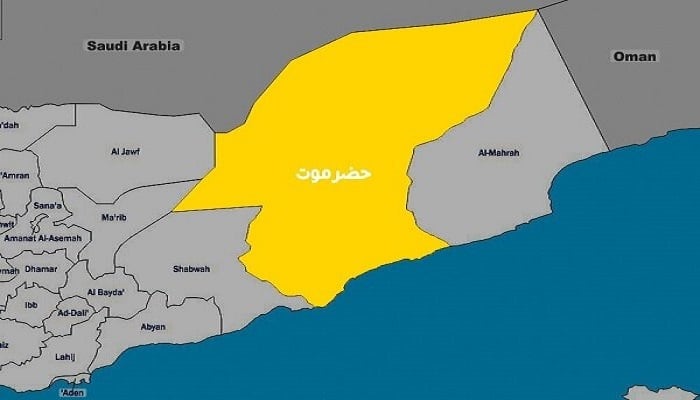
PNN – Recent developments in Hadhramaut indicate that forces supported by Saudi Arabia have been able to alter the power map in eastern and southern Yemen through field advances and the recapture of vital positions.
Recently, forces supported by the UAE made advances in eastern Yemen and gained control of some areas. Saudi Arabia has intervened to defend its supported forces and carried out attacks against the UAE-backed forces. Recent developments in Hadhramaut province in eastern Yemen signify a notable shift in the control and power map of this war-torn country. Saudi-backed forces, through successful advances, have taken control of strategic areas including Seyoun International Airport and vital centers of the province. This advance has not only brought about field changes but has also redefined the balance of power in southern and eastern Yemen, with its consequences being felt beyond the borders of Hadhramaut. The vast and oil-rich Hadhramaut province holds high importance for every internal and external actor, and dominance over it increases the political and economic power of the Saudi-backed forces.
Read more:
UAE mercenaries oppose withdrawal from Hadhramaut and Al-Mahra
The Advance of Saudi-Backed Forces and the Recapture of Hadhramaut
Saudi-backed forces were able to take control of a major part of Hadhramaut province and secure vital positions including Seyoun International Airport, military, and financial centers. This action followed the retreat of Southern Transitional Council forces, which previously held parts of the south and the oil-rich areas of Hadhramaut. The recapture of Hadhramaut for the Saudi-backed forces means solidifying their field position and increasing their political and security legitimacy in the province, and demonstrates the ability to recapture key areas and strengthen influence in eastern Yemen.
The advance of Saudi-backed forces was carried out rapidly in coordination with local forces supporting the government, ensuring control of sensitive points. A program to secure urban and rural areas was implemented simultaneously to pave the way for the return of stability to the province. These actions show that Saudi Arabia’s military presence in Yemen still holds high practical and symbolic importance, and that local forces, alongside Saudi aerial and logistical support, played a key role in solidifying control.
The Retreat of the Southern Transitional Council and Its Consequences
The Southern Transitional Council, which operates with Emirati support and a secessionist agenda, by retreating from Hadhramaut, lost a major part of its control over southern areas and vital resources. This retreat not only reduced the group’s influence in the south but also exposed internal rifts within the Arab coalition and the conflict between the policies of the UAE and Saudi Arabia in Yemen. Existing disagreements about the future of southern Yemen had allowed the Southern Transitional Council to have significant operational power, and now this retreat has facilitated the process of control by Saudi-backed forces.
The council’s retreat has created new opportunities for Saudi-backed forces to strengthen their presence in strategic areas and solidify control over ports, airports, and communication lines.
The Strategic Importance of Hadhramaut
Hadhramaut province holds special importance due to its size, oil and gas resources, and geographical location. The province stretches from the Saudi border to the Sea of Oman, and controlling it means access to economic resources and vital trade routes. The advance of Saudi-backed forces in this province strengthens their political and security capabilities and sends a clear message to the UAE and the Southern Transitional Council.
Dominance over Hadhramaut also provides access to financial and energy resources and impacts the process of providing security and economic stability in the southern and eastern regions of Yemen. This control allows Saudi-backed forces to extend their pressure and influence over neighboring areas and the country’s main communication routes, thereby changing the power map in southern Yemen in their favor.
Areas Controlled by Each Group in Yemen.
Currently, Yemen is under the control of three main actors: Saudi-backed forces, AnsarAllah (the Houthis), and the Southern Transitional Council. Saudi-backed forces control a large part of Hadhramaut, Taiz, Marib, and smaller areas of Al Jawf, Saada, and Hajjah. Ansar Allah control Sana’a, Amran, Ibb, Al Bayda, Raymah, Al Mahwit, and large parts of Saada, Hajjah, Al Hudaydah, and Al Jawf. The Southern Transitional Council controls parts of Aden, Shabwah, Abyan, Socotra, and Al Mahrah, and limited areas of Al Dhale, Lahij, and Hadhramaut. This distribution of power shows that despite advances in Hadhramaut, Yemen is still a multipolar, war-torn country where no actor is fully capable of controlling the entire country. Any change in one of the provinces also affects the political and security equations of other regions.