
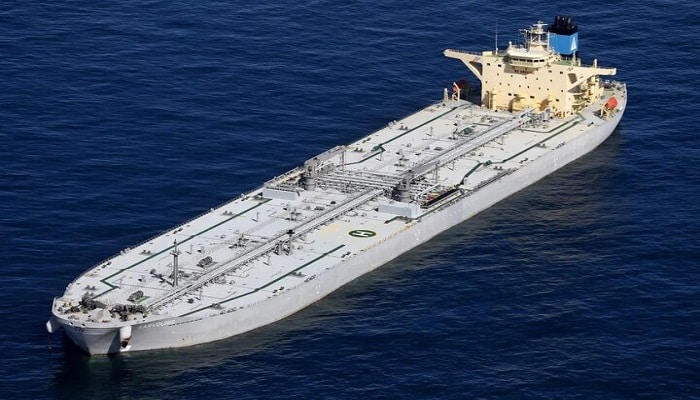
PNN – The series of recent developments shows that Venezuela is once again facing comprehensive pressure from the United States; pressure that ranges from economic blockade to military threats and the seizure of oil tankers.
Recent developments in the Caribbean indicate that the United States has once again embarked on a path of military adventurism—a path that for years has brought nothing but instability, sanctions, and the confiscation of natural wealth to the independent nations of Latin America. The recent seizure of an oil tanker carrying Venezuelan oil by U.S. forces and the significant increase in Washington’s military presence in the region have once again raised serious questions about the true objectives of the Trump administration, the nature of its actions, and the potential consequences of these high-tension policies. While the United States attempts to justify its actions with pretexts such as “combating drug trafficking” and “supporting democracy,” evidence and analyses clearly show that Washington’s main goal is to weaken Venezuela’s legitimate government and control the country’s vast energy resources.
Is the United States moving toward ground operations?
Recent remarks by Donald Trump indicate that the White House is deliberately maintaining an atmosphere of ambiguity and military threat. In an interview with the Politico website, Trump openly claimed that “Maduro’s days are numbered,” while evading a clear answer on the possibility of deploying ground forces, thereby keeping the threat at an undefined but expandable level. This tactic, previously seen in cases involving Iran, North Korea, and even Mexico, is part of the Trump administration’s strategy of “calculated ambiguity”—an approach that relies on shows of force, psychological pressure, and limited operations to extract political concessions without entering an all-out war.
Nevertheless, realities on the ground indicate that Washington has gone beyond mere threats and is seriously preparing the groundwork for military action. The extensive deployment of the U.S. Navy fleet in the Caribbean, including the aircraft carrier Gerald Ford—the largest aircraft carrier in the world—and the expansion of joint operations involving the Coast Guard, the Navy, and the FBI, present a clear picture of a tightening military pressure ring around Venezuela.
In this context, many analysts believe that Washington is effectively advancing “limited ground operations”—operations that could take the form of attacks on military bases, logistics centers, or camps of groups that the United States labels as “security targets.” This model has been implemented by the U.S. military in various parts of the world for years: small, fast, and low-cost operations aimed at creating instability, sending threatening messages, and paving the way for further pressure.
Read more:
Seizing the oil tanker: a show of force or resource theft?
At the heart of these developments, the seizure of oil tanker carrying Venezuelan oil by U.S. forces—footage of which was released by the U.S. attorney general—stands as a significant turning point. This action is noteworthy in several respects.
First, the operation was carried out in “international waters,” constituting a clear violation of maritime law and Venezuela’s national sovereignty. Second, the U.S. government has attempted to justify the seizure by attributing the tanker to “groups close to Iran,” placing the action within the framework of a “fight against terrorism”—an approach that has long become a common tool for Washington to justify aggression against countries.
Moreover, the tanker seizure must be analyzed within the context of the United States’ long-standing policy of controlling Venezuela’s energy resources. Caracas has repeatedly emphasized that Washington’s target is neither drugs, nor democracy, nor human rights, but rather Venezuela’s vast oil and gas wealth, which the United States seeks to appropriate. The Venezuelan government’s strongly worded statement following the seizure made precisely this point, declaring that the operation exposes the true nature of U.S. policies—policies that for years have sought to dominate the wealth of the Venezuelan people under false pretexts.
The recent action also sends a clear message to other tankers intending to transport Venezuelan oil: any vessel that enters the country’s energy trade cycle will face U.S. threats. In effect, Washington is seeking to complete the economic siege against Venezuela and cripple its oil exports.
Washington’s new crisis-making strategy: from “fentanyl” to “narco-terrorism”
To legitimize its military actions in the Caribbean, the Trump administration has placed the claim of “combating drug trafficking” at the forefront of its media narrative. The reality, however, is that the bulk of fentanyl entering the United States originates from Mexico and drug trafficking networks in that country—not from Venezuela. Nevertheless, the United States has designated certain Venezuelan groups as “foreign terrorist organizations” and uses this label as a “legal cover” to justify military operations. Numerous U.S. attacks on boats in the Caribbean and the Pacific Ocean, which have so far resulted in dozens of deaths, have been carried out within this framework. Even one instance of a double-tap attack, in which survivors were also targeted, has been described by some human rights organizations as a “war crime.”
Despite this, Washington continues to portray these actions as “fully legal”—a claim that has faced widespread opposition from legal experts and members of Congress, with some members of the House Armed Services Committee describing it as “a clear step toward war.”
What are the real objectives of the United States in Venezuela?
An analysis of the Trump administration’s behavior shows that Washington’s objectives go far beyond its official claims. The main goals include:
- Overthrowing the Maduro government and returning Venezuela to the U.S. sphere of dominance
From Washington’s perspective, Venezuela is not just another Latin American country; it is the holder of the world’s largest oil reserves and, if politically independent, could become a major economic and geopolitical power in the region. The Maduro government’s resistance to U.S. pressure and Caracas’s close ties with Russia, China, and Iran are intolerable for Washington.
- Demonstrating power and consolidating “U.S. leadership” in the Western Hemisphere
Trump has repeatedly emphasized “restoring American power in the Western Hemisphere” in his national security strategy. The presence of the largest U.S. aircraft carrier near Venezuela is part of this power display.
- Preventing the presence of China and Russia in the region
Washington is concerned that Venezuela’s economic and military cooperation with China and Russia could disrupt the traditional balance of power in the region. For this reason, it seeks to distance the Maduro government from this axis through military and economic pressure.
- Engineering a political victory for Trump
Facing elections or domestic crises, the Trump administration needs to present a “foreign policy achievement.” The fall of the Maduro government could be portrayed as such an achievement—even if it brings catastrophic consequences for the region.