
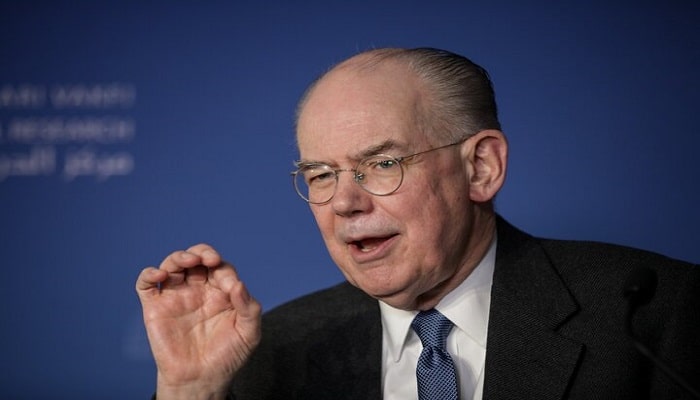
PNN – Recent analysis by John Mearsheimer is more shocking than ever; he says: We are not facing an external threat but rather the process of “the self-destruction of the American empire.”
Statements by John Mearsheimer, the international relations thinker, that we are witnessing the collapse of the American empire, not from outside but from within, reflect a profound shift in America’s power status. He believes America is not facing an external threat but is weakening from within the structure of its own world order; due to imperial arrogance and diplomatic incompetence which on one hand drives European allies away from Washington and on the other hand leads to unilateral military policies.
Although this interpretation seems harsh, it reveals realities indicating that many of America’s traditional power indicators are declining or facing serious challenges. In the decades following the end of World War II, America emerged as the center of a rules-based international order; an order in which security treaties, multilateral organizations, and international institutions were the main pillars of global interactions. But today, realities show the legitimacy of this order is diminishing; not only have parts of the global community distanced themselves from Washington’s policies, but Eastern powers are rapidly shaping new parallel structures that challenge America’s unipolar order.
Read more:
Ain al-Assad rockets; Attacking the heart of American terrorism in the region
The Policy of Force and the Return of Military Hegemony
Mearsheimer points out that America is relying on hard and military power, paying less attention to soft power or international cooperation. With over 700 military bases in more than 80 countries and a defense budget exceeding the sum of the next 10 countries, America remains the world’s most prominent military power. But this vast presence is no longer a tool for deterrence and stability, and has become a sign of interventionist policy and efforts to maintain global influence. This approach has caused rifts with Western allies and created tensions in traditional alliances, which could lead to the collapse of the Western hegemonic network and shows America has relied on force to maintain its position.
Economic Power Shift and the Emergence of a Multipolar Order
The economic foundations of American power are also weakening. America’s share of global industrial value-added has decreased compared to the past, while the share of developing countries, especially China, has significantly increased. This economic shift, which forms the basis of national power and global influence, is one of the main factors in the relative decline of American hegemony. The world is transitioning from a unipolar system towards multipolarity without unified global rules, a situation where emerging powers such as China, Russia, India, and other Asian economies are expanding their influence, clearly showing America can no longer completely control the global order.
Crisis of Alliances and Loss of Allies’ Trust
One consequence of recent American policies is the increasing distrust among traditional allies. The exchange of security intelligence between America and Britain, the foundation of the Five Eyes alliance, has halted in some areas, creating a serious rift in allies’ relations. This situation has not only reduced interest in intelligence and military cooperation but has also led governments to increasingly seek strategic independence, economic multilateralism, and reduced dependence on America. This trend could, in the long term, cause the decline of the dollar’s position as the global reserve currency, weaken American financial influence, and strengthen other alternatives, a clear sign of the end of America’s monopoly in the global financial system.
International Law under Threat
Mearsheimer emphasizes that America has mocked the concept of national sovereignty. Confrontations over serious issues such as Greenland and the appointment of non-specialists to diplomatic positions demonstrate disregard for international legal principles; principles that were the foundation of interactions between countries after World War II. These actions have weakened America’s international legitimacy, and international judicial institutions have become incapable of controlling governments’ conduct. In such a world, countries act not based on common rules but based on interests and force, which could lead to increased tensions and the possibility of direct military clashes.