
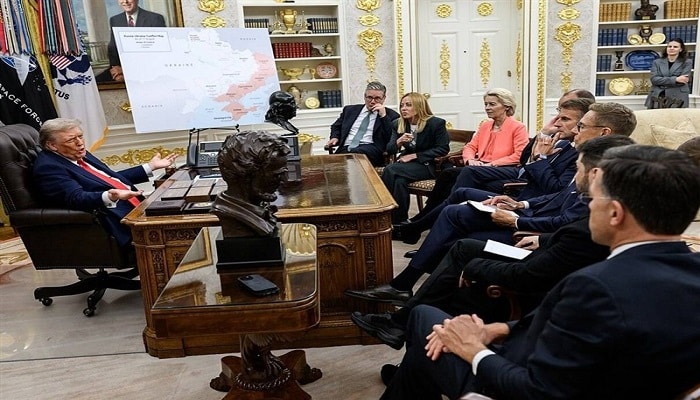
PNN – A war against Iran could affect not only the security equations of the region and America, but also the future of the Western security order.
According to the report of Pakistan News Network, the second round of military aggression by the United States and the Zionist regime against Iran on February 28, 2026, has become an important turning point in the history of military treaties and agreements in the Western world. The lack of cooperation between the United States allies and NATO members in the military adventure in the Persian Gulf and the Strait of Hormuz has called into question the continuity and existential philosophy of this treaty. In fact, the developments after the start of this conflict showed that the new crisis, rather than simply affecting the balance of power in the Persian Gulf, has revealed deep cracks within the Western security structure.
From the very beginning of the war, Washington tried to elevate the conflict beyond a regional war and to define it as a threat to the collective security of the Western world. In this context, the United States called on its European allies in NATO to participate more actively in operations related to maritime security in the Persian Gulf, and especially in the Strait of Hormuz. The main argument of the United States was that any insecurity in the Strait of Hormuz could directly affect the global economy and the energy security of European countries, and therefore NATO should play a role in crisis management.
However, the reaction of many European countries showed that the consensus within NATO on this war is much more fragile and far from what the adventurous US President Donald Trump expected.
Important governments such as Germany, France, and Spain expressed skepticism from the beginning about expanding NATO’s role in this conflict, emphasizing that this war did not fall within the framework of the Atlantic Treaty’s collective defense obligations.

In fact, Europe’s argument is also significant from a legal perspective. Article 5 of the Washington Treaty, which is the main basis for the collective defense commitment in NATO, is activated only if one of the members of the treaty is the target of an armed attack on its territory.
While the current war between Iran and the US-Israeli conflict did not take place on the territory of NATO member states, nor was it the result of a direct attack on one of the alliance’s members. In fact, the NATO member is considered the aggressor in this war, not the victim. For this reason, many European governments believe that NATO’s formal entry into this war lacks a clear legal basis.
A dead end called the Strait of Hormuz
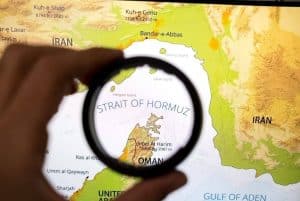
Meanwhile, the Strait of Hormuz has become a major focus of disputes. This strategic passageway, through which a significant portion of the world’s energy trade passes, has become one of the world’s most sensitive geopolitical points in times of war. The United States, emphasizing the vital importance of this sea route, has tried to present possible insecurity in Hormuz as a direct threat to the economy and security of Europe. But many European countries do not consider this argument sufficient to drag NATO into a wider war.
In fact, the United States never imagined that during the war, especially after the initial wave of attacks and assassination of the Supreme Leader of the Revolution, martyr Imam Khamenei (RA), and the attack on part of Iran’s missile infrastructure, the Islamic Republic of Iran would be able to continue the war game for about 3 weeks with a relatively equal and acceptable balance.
On the one hand, the regionalization of the war did not fit into the beliefs of US leaders, and on the other hand, Trump fundamentally did not believe that Iran could maintain effective control over the Strait of Hormuz. As a result of these developments, the hawkish US president extended a helping hand to European allies in the North Atlantic Treaty Organization (NATO).
However, the reality is that in the eyes of many European capitals, securing shipping lanes in the Persian Gulf does not necessarily mean participating in a war against Iran. In their view, turning the issue of maritime security into a full-scale military conflict could not only exacerbate the crisis but also push the entire Middle East region into deeper instability.
In addition to these legal and strategic considerations, another factor plays an important role in shaping Europe’s cautious approach: the historical experience of the Iraq War in 2003. At that time, the United States also tried to mobilize its allies to participate in a large-scale war in the Middle East, but severe differences among NATO members led to a deep rift in transatlantic relations. Many European political elites today worry that repeating such a pattern would once again seriously challenge the credibility and cohesion of the West.
From this perspective, Europe’s cautious response to the current war can be seen as an attempt to avoid a repeat of an experience that has brought heavy political and security costs to the continent in the past. Many European analysts believe that NATO’s direct entry into a war with Iran would not only question the alliance’s international legitimacy, but could also expand the scope of the conflict in an unpredictable way.
At the same time, the new war in the Middle East has important implications for the European security equation. A major concern in Brussels is that the US military focus on the Persian Gulf could lead to a reduction in Washington’s strategic focus on Europe. This is particularly important at a time when the war in Ukraine remains one of the most important security challenges on the European continent.
The transfer of some of America’s military and logistical power from Europe to the Middle East could, in the eyes of many Eastern European countries, mean a weakening of deterrence against Russia. For this reason, some European governments are more cautious about the spread of conflict in the Middle East and are trying to prevent NATO from being dragged into a new war.
In short, the second Iran-US-Israeli war has become one of the most important tests of NATO’s cohesion in recent years since the second aggression began. The disagreement between the US and many European countries shows that there is no longer a common definition of the threat and how to respond to it among the members of this alliance, as in the past. It seems that NATO has failed the cohesion test once again and, as in the Ukraine case, has failed to create an effective and decisive consensus.
If these differences persist, NATO may face a gradual erosion of its strategic coherence, a situation in which the Atlantic alliance will remain as an institutional framework but its ability to shape joint decisions in major crises will be increasingly limited. In such a situation, the ongoing war in the Middle East could affect not only the security equations of the region but also the future of the Western security order.