
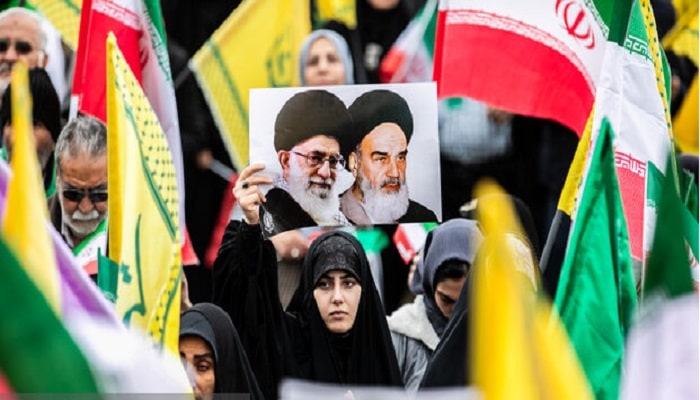
PNN – The Iranian Revolution, in its second step, pursues a vision based on strengthening the knowledge-based economy, scientific development, youth empowerment, the development of social justice, and the consolidation of political independence.
With the fall of the imperial system, Iran embarked on a new path based on independence, rejection of dependence, and building an independent model in politics, economy, science, and culture.
Nearly half a century later, the revolution is no longer just a temporary event, but rather an ongoing project that has faced sieges, wars, sanctions, and numerous pressures, yet has performed promisingly in consolidating the pillars of its independent state and sovereignty, creating great achievements, and opening bright horizons.
In a report, Al-Ahed News Agency has described some of the pillars and foundations on which the Iranian Revolution was formed, referring to the characteristics of the Islamic Revolution of Iran after nearly half a century.
The Pillar of Independence in the Islamic Revolution of Iran
The Islamic Revolution of Iran was built on independence from the beginning, and Imam Khomeini, the founder of the Islamic Revolution in Iran, explained this approach succinctly and clearly in one sentence: What we want is independence, neither Eastern nor Western.
This slogan was not just a passing political statement, but became a rule governing the country’s public policies. After the revolution, Iran moved from being a dependent country to becoming a country that makes its own decisions and does not bargain with anyone over the sovereignty and rights of its people.
Resilience to storms
During its 47 years, the Islamic Republic faced challenges including an eight-year imposed war, a long-term economic and financial blockade, attempts at isolation, and continuous security and military threats. Nevertheless, the Iranian nation and government never backed down from their vision. Imam Khomeini said in this regard: We are not afraid of blockade, but of dependence.
This logic immediately became a common culture in crisis management.
State-building and institution-building
One of the most prominent achievements of the Islamic Revolution is the establishment of a state based on independent national institutions. After the fall of the monarchy in Iran, a republican system based on religious sovereignty of the people was established, and legislative, executive, and judicial institutions, as well as a national security and military system, were formed in it. Holding 50 referendums and elections at the presidential, parliamentary, Assembly of Experts, and city council levels, in addition to elections for guilds and neighborhood management, and school and university councils, are other achievements of the Iranian Revolution.
Science and technology and breaking foreign monopoly
One of the most important fruits of the revolution is the scientific transformation in Iran. Iran, which was a consumer of science before the revolution, has become its producer today. According to data from the Ministry of Science, Research and Technology, the most important areas of scientific achievement in Iran include the expansion of higher education in all provinces and cities, significant progress in scientific research, and advanced presence in the fields of medicine, nanotechnology, energy, and aerospace. Iran’s peaceful nuclear program was also a symbol of this transformation. For this reason, defending it is not just defending a technology, but defending the nation’s right to access this legitimate knowledge.
Defense capability and protection of the country’s independence
In the light of the Islamic Revolution, Iran has moved from complete dependence on foreign countries to self-sufficiency in the military and defense fields. Today, national defense industries include missile systems, unmanned aircraft, air defense technologies, advanced naval capabilities, air capabilities, electronic warfare capabilities, and ground forces technologies, etc.
It should be noted that none of these capabilities were built for aggression, but rather to protect the country and deter enemy threats.
Active and influential foreign policy
In the shadow of the Islamic Revolution, despite efforts to isolate it, Iran has become an active regional and international actor, with its foreign policy supporting the issues of the nation and rejecting the system of domination. Among Iran’s foreign policy priorities is establishing relations with neighboring countries and the Middle East and strengthening relations with various countries based on mutual respect.
The Iranian Revolution’s Strategic View of the Palestinian Cause
From day one, the Palestinian cause was the compass of the Islamic Revolution of Iran. This position has not changed for nearly half a century, despite widespread pressure, and Iran’s national and sovereign support for the Palestinian people and the resistance has become part of the political identity of Iranians.