

PNN – The weakening of Israel’s deterrence image is a natural consequence of the claims made by this regime regarding the arrest of individuals accused of espionage for Iran.
For decades, the Zionist regime has portrayed “security” not merely as a necessity, but as the central pillar of its self-proclaimed political identity and legitimacy, both domestically and internationally. From promoting the narrative of an “invincible intelligence apparatus” to crafting the image of Mossad and Shin Bet as “omnipresent” intelligence entities, this regime has consistently sought to instill a sense of deterrence and immunity from any threat among the inhabitants of the occupied territories.
In such a context, the publication of news regarding the arrest and judicial handling of a significant number of individuals accused of spying for Iran carries a meaning that goes beyond a simple legal case. This news can be indicative of security vulnerabilities, the psychological erosion within Zionist society, and may even serve as a tool for managing internal political crises among Zionists.
Unlike many other parts of the world, security in the occupied territories is not confined to a limited and isolated policy domain; rather, it has been an integral part of the narrative shaping the existence of this regime since its illegitimate establishment in 1948. Consequently, any indication of intelligence infiltration into its security, military, and intelligence systems directly undermines public trust and the structure of this regime, both externally and among the residents of the occupied lands.
When Zionist media or security institutions speak of identifying “espionage networks” or “enemy infiltration,” they are in fact admitting that the security aura of this regime has developed cracks and fissures even internally. A notable point is that many of these cases related to alleged espionage for Iran gain media attention at specific junctures:
– Periods of escalating tensions between the Zionist regime and Iran and the Axis of Resistance;
– Internal political crises, protests, or deep rifts within the cabinet;
– Security or military failures beyond its borders, from Gaza to Lebanon, Syria, and Yemen.
This timing raises a question: Are all these cases purely security-related, or do they serve a political and psychological function aimed at recreating a security-focused atmosphere regarding Iran among the inhabitants of the occupied territories?
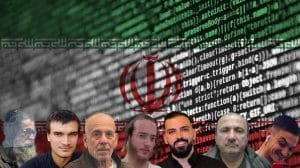
The social consequences of the recent wave of arrests of residents in occupied Palestine on charges of spying for Iran are no less significant than the security dimension of these cases. In fact, highlighting the concept of the “enemy within” can lead to increased distrust, intensified security surveillance, and pressure on minorities, immigrants, or even political critics of this regime internally.
In such an atmosphere, the line between security and social control becomes thinner, and society, instead of feeling secure, lives with constant fear, terror, and anxiety over threats.
In analyzing these cases, two scenarios are typically proposed simultaneously:
Scenario One: Intelligence Penetration into the Heart of the Occupied Territories
The increasing complexity of intelligence warfare, coupled with the erosion of the security and intelligence structure of the Zionist regime after two years of continuous regional conflicts, alongside the emergence of networked actors in cyberspace, could have increased the grounds for penetration within Zionist society. Particularly in the last six months following the 12-day war between Iran and Israel, news of arrests of various individuals in the occupied territories on charges of spying for Iran appears to have taken an upward trajectory.
Scenario Two: Psychological Operations to Suppress Internal Opposition
Conversely, from the perspective of some opposition currents and critics of Netanyahu’s policies in the occupied territories, the exaggeration, sensationalism, and media hype by the Zionist regime’s intelligence apparatus regarding the arrest cases of residents on charges of spying for Iran could be a mechanism to justify failures, stringent security policies, or even political score-settling within the power circles of the Zionist regime.
This issue gains added importance when we realize that Netanyahu, in recent months, has practically attempted to install predominantly uniform, loyal, and aligned structures at the top of Israel’s security and intelligence pyramid by changing personnel at the helm of these institutions. This includes replacing Ronen Bar with David Zini as the new head of Shin Bet, appointing Shlomi Binder instead of Aharon Haliva as head of Israeli Military Intelligence (Aman), and the early introduction of Roman Gofman to replace David Barnea as the new head of Mossad—who will lead this key intelligence agency of the Zionist regime from July 2026. This is ostensibly to consolidate his informational dominance against political rivals within the occupied territories with greater freedom of action.
Within this analytical framework, each “espionage case” can serve several simultaneous functions:
– Sending a deterrent message to external enemies;
– Frightening society with a hidden and invisible threat within the Zionist societal body;
– Legitimizing the expansion of powers for security institutions to intensify control and surveillance over elites and various strata of Zionist society.
However, the reality seems to be a combination of both scenarios mentioned above. That is, both deep and real penetrations into Israel’s security structures by Iran and the Axis of Resistance have occurred and this process continues with intensity, and on the other hand, some cases have also been turned into tools for suppressing rivals and opponents by Netanyahu in the domestic political arena of the Zionist regime through media exaggeration.
The importance of publishing details of some of these espionage cases for Iran in Hebrew-language media is doubled when the names of prominent individuals appear on this list. For instance, in past years, Israeli media have reported the arrest or interrogation of figures who were at least close to sensitive and key decision-making circles in the political and security structure of the regime. Individuals such as Gonen Segev, the former energy minister of the Zionist regime, who was sentenced to 11 years in prison in 2019 on charges of spying for Iran, to the shock and astonishment of the media.

In recent years, various narratives of Iranian intelligence penetration deep into the occupied territories and sensitive decision-making centers of this regime through unexpected channels have been published. One such narrative mentions an individual with an ordinary job cover—such as a repairman or a service worker—who had access to some sensitive centers.
According to a report by the Zionist regime’s “Channel 11” television network, the individual in question, under the cover of a service worker, managed to access certain links in Israel’s military command chain, including the office of Herzi Halevi, the Chief of the General Staff of this regime’s army, or in fact, a location like the “Kirya” in Tel Aviv—which is referred to as the equivalent of the American Pentagon.

While the details of these cases have not been officially confirmed or denied, the very publication of such news indicates that concerns about infiltration have reached the symbolic levels of Israel’s security establishment.
A noteworthy point is that the Kirya was mentioned as one of the potential targets for missile strikes by the Islamic Revolutionary Guard Corps deep into the occupied territories during the 12-day conflict, an event that likely increases the sensitivity regarding Iranian penetration into Israel’s intelligence structure.
From a geopolitical perspective, these cases must be analyzed within the framework of the broader intelligence war between Tehran and Tel Aviv in the region. Over the years, the Zionist regime itself has been one of the most active players in this arena, repeatedly carrying out infiltration, sabotage, and intelligence-gathering operations in regional countries. Under such circumstances, the increase in espionage cases within the occupied territories can be seen as an indication of Iran’s “intelligence penetration” into occupied Palestine.
One of the most significant consequences of the serial arrests of individuals accused of spying for Iran is the gradual erosion of Israel’s image of deterrence. A regime that has consistently emphasized its regional intelligence superiority is now, through the repeated publication of news about enemy infiltration and espionage, inadvertently broadcasting the message that its security structure is more vulnerable than previously claimed.
This issue is important not only for external enemies but also for Israel’s Western allies. For decades, Tel Aviv’s intelligence capabilities have been a key reason for the alignment and dependence of American and other Western intelligence services on this regime. Now, with the exposure of Israel’s intelligence Achilles’ heel, we may witness a gradual decline in the trust of this regime’s Western allies towards Israel.