
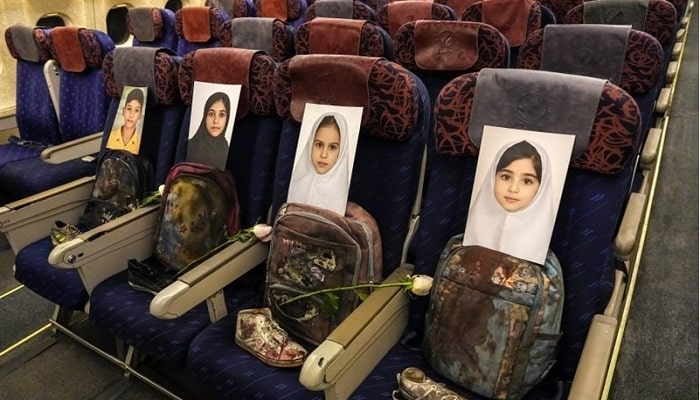
PNN – Turkish TV channels focused on the semiotics of Qalibaf’s clothing.
According to the report of Pakistan News Network, news coverage of the Islamabad talks has become the main focus of reports and interviews on most TV channels in the world and the region.
Turkish television channels, which have sent many reporters to the Pakistani capital, are also talking about the atmosphere of the negotiations and saying: Mohammad Baqir Qalibaf’s black suit and the placement of a small photo of the martyred leader and the new leader of the revolution on his coat collar are important from a political semiotic perspective, and by doing so, he is sending a clear message to America and Israel.
Marveh Tappeh, a reporter for A.Khabar from Islamabad, says: The head of the Iranian delegation came to Islamabad wearing black and displayed his national mourning and mourning. Moreover, the symbol on Qalibaf’s suit collar is a response to Trump’s claims. He had repeatedly said that he had changed the Iranian regime and now a new regime has come to power in Tehran. But by installing this symbol, Qalibaf showed that Iran has an institutionalized political structure and that if someone loses their life in war, another person will take their place and continue on the same path as before.
While covering the Islamabad talks, a Turkish TRT television reporter from Tehran’s Valiasr Square announced in a live report: It’s not just Iranian politicians who look at America with distrust, the Iranian people often have this attitude as well. They repeatedly chanted slogans against America during this period and during the forty-day war.
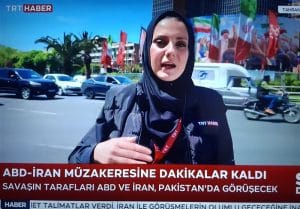
The Turkish journalist added: If previously, a part of the Iranian people encouraged their country’s politicians to negotiate, during this period we witnessed a change in the socio-political atmosphere, and the continuous US attacks on civilian centers reinforced the belief that the US does not adhere to diplomatic principles.
Turkish analyst Blent Atasur also stated in an interview with the Khabarturk television network: It can be clearly seen that the dominance and psychological superiority of the Islamabad negotiation atmosphere belongs to the Iranian team. They showed great resilience during the war and now they have come to the field of diplomacy with strength.
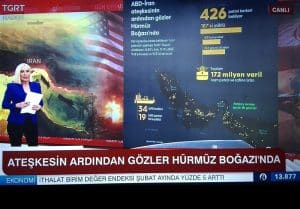
Ankara’s TGRT television channel also announced: Currently, 426 oil tankers are waiting for the results of the negotiations in Islamabad. If an agreement is reached, they will set sail, and this could be the first and concrete result of the negotiations.
But Dr. Fayek Tanrikulu, a Turkish academic and analyst, stated in an interview with CNN Turk: This negotiation has difficult and complex dimensions, and the parties cannot be expected to reach decisive results in the short term. For example, issues such as the Strait of Hormuz, seeking compensation from the United States, and the Iranian nuclear issue are politically and technically complex issues, and it will take time to reach a result. But what is important at this point is to try to maintain the ceasefire and prevent the resumption of conflict and attacks.
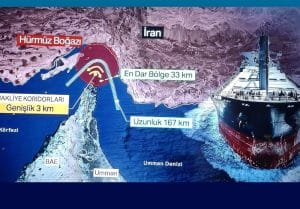
In an exclusive report on the geopolitical importance of the Strait of Hormuz and its place in the current negotiations, the Turkish NTV television channel says: One of the difficult challenges of the negotiations is the issue of the Strait of Hormuz. Iran has taken control of this important geographical point during this period and is not willing to return to the previous conditions. On the other hand, it seems that the Americans will not easily succumb to the Iranian side’s proposal.
Complexity of negotiations
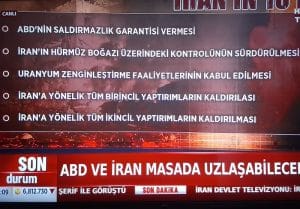
In a special report, the Ankara-based Khabarturk television channel categorized the demands and conditions of the Iranian delegation in the Islamabad talks and said: Iran has shown that it has vital and important priorities. First, it wants to receive a definitive guarantee and make sure that the United States will not take the path of military attacks again. The second priority is the issue of the Strait of Hormuz, and Tehran has clearly stated that it is not willing to give up control of this strategic strait. The third issue is that Iran expects that from now on there will be no obstacles to uranium enrichment and that it will be able to advance its nuclear activities. Also, the lifting of all sanctions imposed on Iran is another important demand of the Iranian delegation. It seems that given the gravity of these issues, the negotiations will not end in the short term.
J.D. Vance’s plight
Most political analysts on Turkish television channels agree that the Zionist regime, as the party seeking to reignite the conflict, is considered the main threat to the negotiations.
Turkish journalist Ercan Görses says in an interview with TRT: The massive anti-war protests by citizens in Washington and New York, USA, and in Tel Aviv, Israel, have shown that we are now facing a community of millions critical of Trump and Netanyahu. But the problem is that this time, Israel cannot easily disrupt the ceasefire by taking actions like what we saw in Gaza; because any dangerous movement or action of this kind will not create any particular problem for Trump. But it will destroy J.D. Vance’s chances of winning the upcoming presidential election. Let’s remember that Vance is the most important candidate supported by the Republicans, and if he cannot remove the major obstacle of negotiating with Iran now, it is unlikely that anyone will vote for him. So any negative action by Netanyahu will put J.D. Vance and the Republican Party of America in a difficult situation, in addition to Iran, and this negotiation must go in the right direction.
Finally, it should be noted that Deniz Kilislioglu, a reporter for the Turkish NTV channel based in Islamabad, Pakistan, stated that during this period, countries such as Turkey, Qatar, Egypt, and Saudi Arabia have taken positive steps to end the war between Iran and the United States, but now this role is completely in the hands of Pakistan, and Islamabad is expected to maintain this role.