
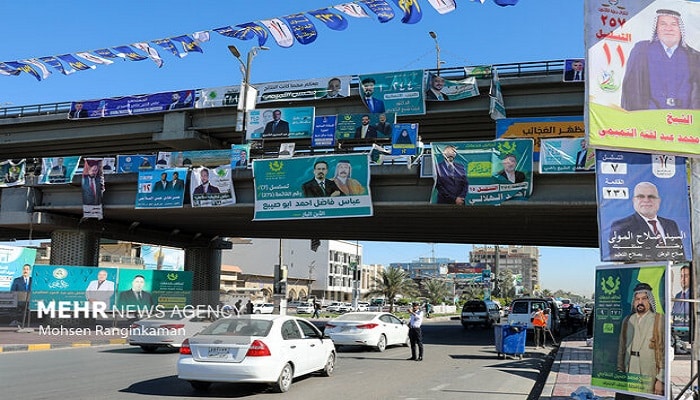
PNN – The United States, through its increasing interference in Iraq’s parliamentary elections, is pursuing long-term goals, including disarming the resistance and pushing Baghdad toward normalizing relations with Israel.
According to the report of Pakistan News Network, citing Al-Mayadeen, U.S. activities in Iraq’s political arena have intensified ahead of the parliamentary elections. While the U.S. recently imposed new sanctions on several Iraqi individuals and institutions, a report from the European Institute for Middle Eastern Studies highlighted the possibility that the U.S. might not recognize the election results or cooperate with the government formed afterward.
Increasing U.S. Interference in Iraqi Elections
The U.S. wants the election results in Iraq to prevent the strengthening of the Popular Mobilization Forces (PMF). Last September, Washington designated groups such as Asaib Ahl al-Haq, Kata’ib al-Imam Ali, and other PMF factions as terrorist organizations.
A few months ago, U.S. pressure led to the postponement of the PMF law amendment in parliament, which aimed to integrate PMF units into Iraq’s official military structure and chain of command. Parliament Speaker Mahmoud Al-Mashhadani revealed that U.S. officials had opposed the approval of this law.
Read more:
Iraqi elections and the role of foreign actors; what is Washington’s intervention like?
Details of the PMF Law
Article 18 of the draft law defines the PMF’s role as “protecting the system,” “defending the country,” “preserving unity and territorial integrity,” and “fighting terrorism.” According to the draft, the PMF chief would hold ministerial rank, be a member of the National Security Ministerial Committee, delegate some powers to the Chief of Staff or Secretary-General, and exercise military authority over PMF personnel as necessary.
Political analyst Saeed Al-Badri, commenting on U.S. interference and the non-approval of the PMF law, stated that any talk of the U.S. not recognizing election results or refusing to work with a government including the PMF is “biased” and constitutes meddling in Iraq’s internal affairs.
Al-Badri described the European institute’s report as reflecting a Western policy that allows intervention in Iraq. He added that experience shows the PMF respects the Iraqi people’s choices and defends Iraq’s sovereignty against any interference. Therefore, such discussions are seen as attempts to influence public opinion against the PMF.
Washington and Pushing Baghdad Toward Normalizing Relations with Israel
Al-Badri noted that the U.S. idea of not recognizing election results is hypothetical but could disrupt the electoral process and pressure the election of representatives aligned with U.S. policies.
He emphasized the need for Iraqi unity against these demands, warning that failing to resist would lead Iraq toward full dependence on U.S. will, paving the way for Baghdad to normalize relations with Israel—something Iraq’s national decision opposes.
Al-Badri also stressed that while the elections will reflect Iraqi citizens’ will, the U.S. will undoubtedly increase pressure to empower its supporters in Iraq’s political system.
Excuses to Extend U.S. Military Presence in Iraq
Al-Badri stated that, based on current information, Washington does not intend to leave Iraq and seeks to turn it into a regional base of influence. It will look for excuses to extend its presence in other forms, despite Iraq’s ability to secure its own territory and overcome past challenges independently.
He believes Iraq’s national forces must demand the full withdrawal of U.S. troops, especially since the Iraqi constitution forbids foreign presence and the use of its territory as a base for attacks.
Impact of U.S. Pressure on Iraq’s Internal Electoral Balance
Regarding whether U.S. pressure could affect the internal balance among political factions, Al-Badri said Iraq’s political process is based on three pillars: participation, agreement, and balance. Any disruption to this balance would amount to a coup against the majority’s rights and enable foreign plans to infiltrate Iraq.
Speaking about the upcoming elections, he stated that these are internal elections, part of a democratic process that will shape Iraq’s political future and lead to an agreement on the next prime minister.
Al-Badri concluded that whatever the election results, U.S. pressures will not stop, as Washington seeks to steer Iraq toward its own plans and attempts to circumvent the Iraqi people’s will.