
PNN – The recognition of Somaliland by the Zionist regime should not be viewed as an isolated event, but rather analyzed within the framework of that regime’s strategy to reproduce instability and political fragmentation in peripheral regions.
The decision by the Zionist regime to recognize “Somaliland” cannot be considered merely a symbolic diplomatic act or a limited move within bilateral relations. This decision gains meaning within the context of broader geopolitical shifts stretching from the Red Sea to the Gulf of Aden and from Yemen to the Horn of Africa. At a time when security and military competition in this sensitive region is intensifying and regional and extra-regional actors are redefining their strategies, Tel Aviv’s recognition of a secessionist entity is a clear sign of entering a new phase of balancing, applying security pressure, and political-geographic engineering. Although Somaliland has been in a state of legal suspension for years, it has now become a convergence point for the interests of Israel, certain Arab states, the USA, and even global rivalries.
The Importance of Somaliland and its Geographical Position
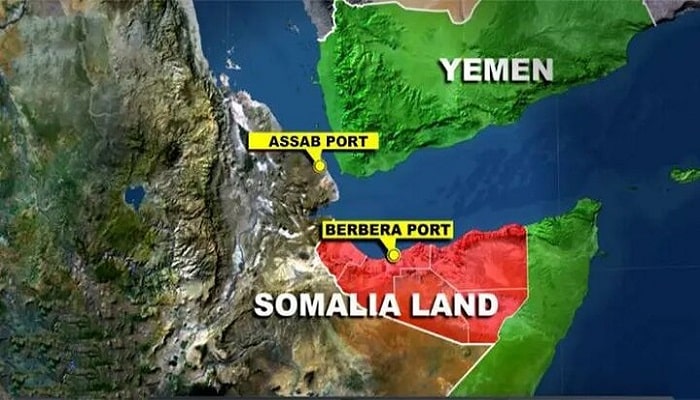
Somaliland is located in northwestern Somalia along the southern coast of the Gulf of Aden and geographically overlooks one of the world’s most vital maritime corridors. The region’s proximity to the Bab-el-Mandeb strait, a crucial artery connecting the Red Sea to the Indian Ocean, grants it importance far beyond its internal political and economic weight. A significant portion of global trade, energy, and strategic goods pass through this route daily, and any shift in the balance of power around this strait has direct international consequences.
Read more:
The secret behind Tel Aviv’s controversial moves towards Somaliland
The port of “Berbera,” as Somaliland’s most important strategic asset, has in recent years become a focal point for regional powers. The presence of an airport with a long runway and developable port infrastructure has turned the region into a potential platform for military, logistical, and intelligence presence. In a region where many states face instability, civil war, and structural weakness, Somaliland has managed to maintain a degree of relative stability and territorial control, making it an attractive option for foreign actors.
Israel’s Objectives
For Israel, Somaliland is not just a new diplomatic file, but part of a broader security strategy directly linked to Iran, Yemen, and the calculations in the Red Sea. In recent years, Tel Aviv has sought to expand its “strategic depth” in peripheral regions and extend the reach of its security surveillance and influence rings beyond the eastern Mediterranean. Somaliland’s geographical proximity to Yemen makes it an ideal point for intelligence monitoring and operational support.
Reports in Hebrew-language media indicate that Israeli security and intelligence agencies, particularly the Mossad, have played an active role over the past years in establishing and strengthening covert connections with Somaliland officials. These relations provide Israel with more diverse options for aerial, intelligence, and logistical operations in potential regional confrontation scenarios. From Tel Aviv’s perspective, direct or indirect presence in the Horn of Africa can be seen as part of strategic pressure on the Axis of Resistance, particularly Iran.
Simultaneously, this move can also be analyzed within the framework of Israel’s traditional policy of supporting secessionist trends in the Arab world and Africa. Historical experience shows that Tel Aviv has always welcomed the weakening of central governments and the formation of smaller political units, viewing this process as a factor in reducing potential threats and increasing its own room for maneuver.
Reactions
The official announcement of recognition by Israel triggered a wave of sharp regional and international reactions. The central government of Somalia described the act as a clear violation of its sovereignty and territorial integrity and warned of its dangerous consequences for regional stability. Arab and Islamic countries, in joint statements, described this decision as a “dangerous precedent” that could intensify secessionist tendencies in Africa and beyond.
The European Union, despite internal disagreements, emphasized the need to respect Somalia’s unity and sovereignty, stating the move was contrary to the principles of the UN Charter. Regionally, countries like Egypt and Turkey expressed deep concern over the security implications of this decision, as any change in the balance of power around Bab-el-Mandeb could directly affect their national security and economic interests.
In contrast, Somaliland officials attempted to portray this recognition as merely a bilateral and non-hostile decision, emphasizing that it does not necessarily mean the establishment of an Israeli military base. However, the history of military presence by some foreign actors in the region has increased skepticism about these claims.
Consequences
The recognition of Somaliland by Israel could have multi-layered consequences at security, political, and legal levels. Regionally, this act increases the risk of intensifying geopolitical competition in the Horn of Africa and the Red Sea, potentially turning the region further into an arena for proxy confrontations. Israel’s presence or influence, even in the form of intelligence cooperation, could provoke reciprocal reactions from rival actors and raise tension levels.
At the level of international law, this decision challenges the principle of respect for the territorial integrity of states and sets a dangerous precedent for legitimizing secessionism. Many observers believe that normalizing such actions could further weaken the international order and fuel broader instability.
From the perspective of maritime security, any change in the power arrangement around Bab-el-Mandeb could impact global shipping security. The experience of recent attacks on ships in the Red Sea has shown that even non-state actors are capable of threatening this vital route, and the entry of new players will complicate the equations further.