
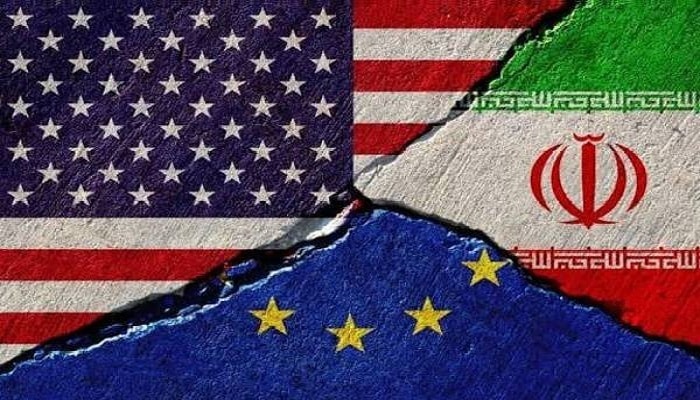
PNN – In recent months, one of the prominent lines of the enemy’s psychological operations has been to focus on the rapid development of the country’s nuclear-military capabilities in various sectors, and the mainstream media has attributed many false accusations to Iran.
In the 21st century, rather than field realities determining the “winners” and “losers” of wars and peace, it is the media that can impose their narrative by creating “cognitive errors.” In today’s world, the media can one day portray “Abu Muhammad al-Julani” as an al-Qaeda leader who is a threat to the free world, and the next day present him as a “liberationist and moderate leader” who could be a key player for CENTCOM in the fight against the axis of resistance. Accordingly, over the past two years, think tanks and mainstream media have tried to portray the battle between the Zionist regime and the Iranian-led resistance axis in a way that highlights Israel’s achievements and trivializes the resistance’s actions.
In this anti-Iranian narrative, Tehran and the resistance-centric network were framed as the “loser” and the Israeli war machine as the “David of Time”! The creation of the false narrative of a “weak Iran” over the past year has led many Western executive and intellectual elites to conclude that Tehran is in its most vulnerable state and that a “golden opportunity” has been provided to strike at its nuclear and missile programs!
Limiting the timeframe for “containing Iran”
In recent months, one of the prominent themes in the enemy’s psychological operations has been a focus on the rapid pace of Iran’s nuclear-military capabilities in various sectors. From accusing Beijing of sending precursors for solid-fuel missile propellants to claiming that scientists from the “SPND” center traveled to Moscow to learn laser technology in order to dispense with nuclear “hot testing,” these assertions reflect the enemy’s attempt to portray the timeframe for containing Iran as extremely limited. Recently, *The Economist* also claimed in a report that the possibility of an Iran–U.S. agreement under current conditions is very low and that the present trajectory could lead to war. Earlier, *The New York Times* likewise described a second war between Iran and Israel as inevitable, saying that the only remaining issue is the element of “time.”
Highlighting the drought crisis in Iran
The Washington Institute (a think tank affiliated with the right-wing current in the United States) on 28 November 2025 published an article by its senior researcher Holly Dagres, attempting to “accuse” the political system in Tehran of mismanaging the maintenance, conservation, and distribution of the country’s water resources. The introduction of the article states: “Reservoirs are drying up because of systemic mismanagement and other problems, and it does not appear that officials of the system are willing or able to implement the necessary reforms.”
In the article, Ms. Dagres criticizes some of the recent policies of the system in the field of water management, even though there is no reference to the “periodic drought” conditions across West Asia. Today Turkey, the Gulf states, and other Arab countries, like Iran, are struggling with “low precipitation” and severe water-allocation challenges. For example, Iraq—despite taking major steps in the past decade toward development and rebuilding infrastructure—faces serious problems in securing water resources for agriculture, industry, and drinking purposes.
Accusing Iran of launching a hybrid campaign against the West
The Jerusalem Institute for Strategy and Security (Israel) in a two-part report accused Tehran of carrying out “foreign operations” in Western countries. Alexander Greenberg claims that the conviction and release of two French nationals highlight Tehran’s longstanding strategy of using foreign citizens to extract concessions from the West. In the second part of the report, he also accuses the IRGC’s Quds Force of planning to target Jews in European communities and recruiting and training its agents in the Caucasus region. This line of analysis appears to be driven by the overarching project of “securitizing Iran–West relations.” Last month, only days after a Mossad report regarding the activities of Group 1100 in Australia, Germany, and Greece, bilateral relations between Tehran and Canberra plunged sharply into tension, and the IRGC was placed on Australia’s “blacklist.”
Fabricating narratives focused on a “rift within the Axis of Resistance”
Before Operation Al-Aqsa Storm and the start of the regional war with the Zionist regime, mainstream media attempted to portray a supposed rift and division between Iran—as the leader of the Axis of Resistance—and other members of the network. In this context, *The Telegraph* on 25 November claimed in an article that Iran no longer has control over Yemen’s Ansarallah movement. In this fabricated narrative it is claimed that after U.S. and Israeli aggression against Yemen, Ansarallah forces have become disappointed with Tehran and are seeking a form of independence in pursuing their own interests. This imaginary article was written despite the fact that the relationship between Iran and the members of the Axis of Resistance has from the beginning been defined on the basis of “equality,” and Tehran has no desire to impose its will or dominance over its natural allies. This absurd narrative is being amplified at a time when Israeli-affiliated media are more than ever accusing Tehran of supplying Ansarallah through land, sea, and even air routes.