
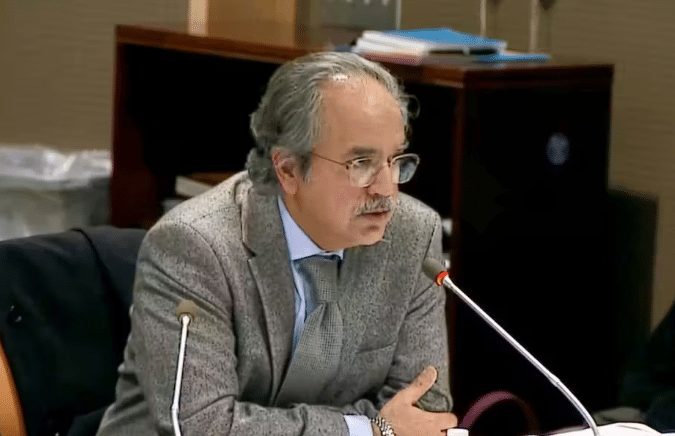
PNN: Pakistan has praised Türkiye’s 130-year-old social care institution Darülaceze as a global model for inclusive long-term care, highlighting its blend of state responsibility, philanthropy, volunteerism and community ownership.
Addressing a side-event on the sidelines of the 64th Session of the UN Commission for Social Development, Pakistan’s Permanent Representative to the United Nations, Ambassador Asim Iftikhar Ahmad, said Darülaceze has, since 1895, demonstrated how compassion anchored in social solidarity and public trust can be transformed into a lasting social mission.
The event, jointly organized by Türkiye, Pakistan, Qatar and Azerbaijan, was titled “Building an Inclusive Long-Term Care System Sustained by Social Solidarity: Türkiye’s 130-Year-Old Home of Compassion ‘Darülaceze’—as an Example of Good Practice.”
Ambassador Asim Ahmad said the principles underpinning Darülaceze strongly resonate with Pakistan’s own social and moral traditions, where solidarity-based care is embedded in both public policy and societal practice.
Highlighting Pakistan’s government-led initiatives, he referred to the Benazir Income Support Programme (BISP) as a cornerstone of the country’s social protection framework. Financed through the federal budget, BISP provides targeted cash transfers to millions of low-income households primarily women-headed families contributing to poverty alleviation, income security and social inclusion.
“BISP reflects a clear policy choice: that protecting the most vulnerable is a responsibility of the State and a matter of dignity and rights,” he said.
The ambassador also underscored the role of Pakistan Bait-ul-Mal in supporting the elderly, women, persons with disabilities, orphans and individuals without family care. He noted that its services including residential care homes, medical assistance, rehabilitation and vocational training are sustained through a blended model of government funding, zakat, charitable endowments and voluntary contributions.
Drawing attention to Pakistan’s strong tradition of organized philanthropy, Ambassador Asim Ahmad cited the Edhi Foundation as a globally recognized symbol of humanitarian service, operating shelters, ambulance services, old-age homes and emergency response networks largely through public donations and volunteers.
He further noted the growing contribution of charitable trusts, faith-based organizations and private-sector corporate social responsibility initiatives in strengthening long-term care and community-based social services across Pakistan.
Calling for greater international support, the Pakistani envoy urged the United Nations and international financial institutions to help elevate solidarity-based care models from good practice to global policy by investing in their documentation, financing and scaling as key pillars of inclusive social development.