
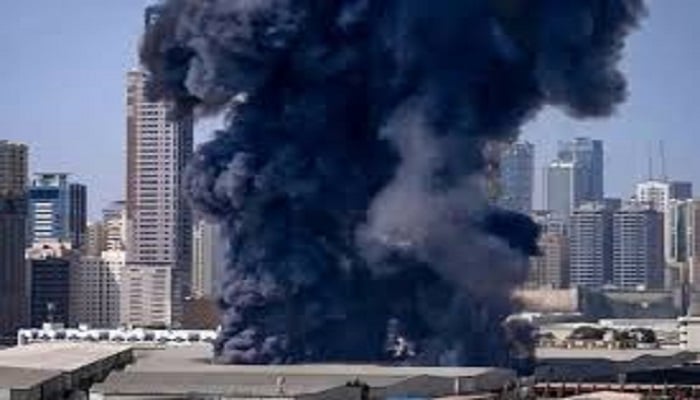
PNN – In the past month, since the start of the US attack on Iran, more than $120 billion has been lost from the stock market value of Dubai and Abu Dhabi.
According to the report of Pakistan News Network; The United Arab Emirates is facing its most serious economic shock in decades as the US attack on Iran deals a direct blow to the country’s core industries, from finance to aviation, exposing major vulnerabilities in its economic model.
Dubai’s stock index has been the worst hit, falling 16 percent since the Iran-Iraq war began on February 28, more than double the decline seen in Abu Dhabi.
Unlike Saudi Arabia and Oman, whose stock markets have rallied on rising oil prices, the UAE’s globalized economic model, built on tourism, real estate, logistics and finance, has taken a direct hit, exposing its vulnerability.
Real Estate Sector
The “Dubai brand,” which has long been used to project the UAE as something more than oil, has taken a significant hit.
The real estate market, one of the crown jewels of the brand, is now under severe pressure. UK-based consultancy Savills described Dubai as “one of the most dynamic property markets in the world” by the end of 2025, when transactions exceeded $147 billion. That trend has now been sharply reversed.
Dubai’s real estate index has fallen by at least 16 percent through the end of March. Goldman Sachs analysts estimate that transactions are down 37 percent year-on-year and sales are down more than 50 percent compared to February 2026.
Some properties are now being sold at 10 to 15 percent discounts by those looking for a quick exit, Reuters reports.
Violent treatment of foreign residents
The United Arab Emirates and Dubai in particular, has led retail growth across the Middle East region, accounting for about half of luxury goods sales in the Middle East, according to a Morgan Stanley report.
This demand is heavily dependent on tourism. More than 20 million international visitors are expected to visit Dubai in 2025.
For two decades, Dubai and Abu Dhabi have presented themselves as islands of stability in a volatile region, attracting investors, tourists and foreign residents alike. Now, as the Iran war enters its second month, that model is crumbling.
There are growing signs of a crackdown on expatriates. In an apparent attempt to control the narrative, Dubai has reportedly arrested at least 70 Britons for filming the recent attacks, a move that risks further damaging its global image.
Authorities have warned that sharing such footage could lead to fines of more than $260,000 and prison sentences of up to 10 years.
Meanwhile, the UAE’s aviation sector, a cornerstone of its economy, has taken a direct hit. Dubai International Airport, one of the world’s busiest, handling around 95 million passengers a year, was hit hard by the ongoing conflict and was closed completely on March 1.
In one day, more than 3,400 flights were canceled in Dubai, Al Maktoum, Abu Dhabi and Sharjah.
Emirates and Etihad Airways suspended operations, with losses expected to run into billions of dollars.
Hotel bookings have plummeted, prices have plummeted and wealthy expatriates have reportedly paid up to $250,000 for private evacuation flights.