
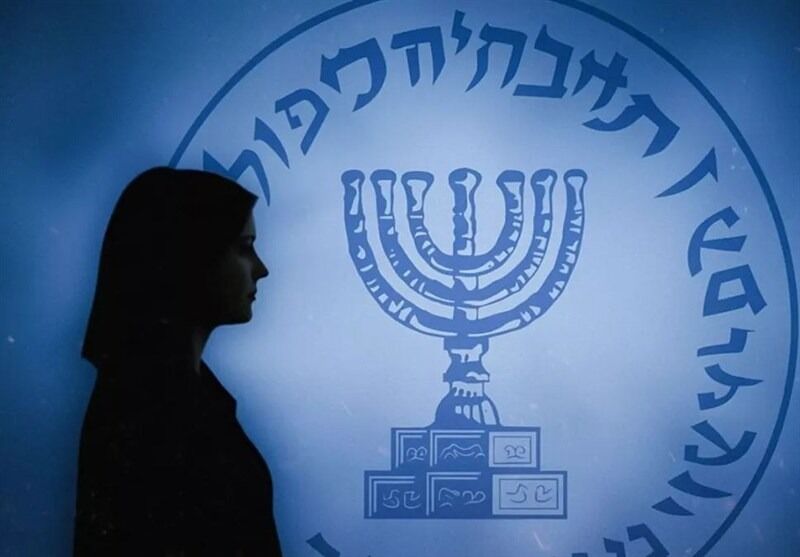
Al Jazeera: Mossad’s support for unrest constitutes direct interference in Iran.
The recent protests in Iran, although they were shaped by economic and social discontent, quickly transcended a domestic event and became a prominent issue on the agenda of Western media and officials. As the unrest spread, the international media landscape was organized in such a way that the Iranian protests were not simply presented as a domestic issue, but as an arena for exerting political pressure, reproducing favorable narratives, and even directing global public opinion. In the meantime, the active role of Western media in highlighting messages, selectively choosing words, and reproducing the official positions of Western governments has gained a special place.
The interventionist positions of American officials and some of Washington’s allies, expressed directly in support of the protesters, quickly entered the mainstream Western media news cycle and became established as the dominant framework for analyzing the Iranian protests. By focusing on the narrative of “legitimate demands” and the “right to protest,” these media outlets attempted to define the protests in a political-human rights context; a context that is seen as aligned with the goals of Western foreign policy toward Iran. At the same time, threatening statements by some American officials and provocative messages issued by Israeli security and political actors revealed another dimension of indirect intervention in Iran’s internal developments.
In such an environment, the protests became a field of confrontation between narratives; a field in which the media, beyond the role of information, became a tool for political and psychological influence. An examination of this trend shows that Western media coverage has not only reflected developments on the ground, but has also been part of the process of directing, pressuring, and managing public perception of Iran; a process that gains meaning as regional and international tensions escalate.
American officials have publicly supported the protesters by interfering in Iran’s internal affairs, and this has been widely reported in Western media. On Wednesday, December 31, 2025 (10 Dîn 1404), the US State Department announced on its Persian account on the social network X that it is deeply concerned about the Iranian protesters and emphasized that demanding basic rights is not a crime and that the Islamic Republic must respect the rights of the Iranian people.
The US State Department claimed in another post on the same day that, first the markets, then the students, and now the entire Iranian nation have united. They live different lives but have one demand: respect our voice and rights. Media outlets such as CBS News, while echoing these messages, noted that the US government recognizes the right of the Iranian people to protest peacefully. Radio Farda and other international media outlets also reported that US State Department spokespeople described the recent protests as the result of the understandable anger of the Iranian people over their government’s failures and called on Tehran to respond to citizens’ demands instead of suppressing them.
On the other hand, according to the Associated Press, on Friday, January 2, 2026, US President Donald Trump made new claims, threats, and interventions against the country on the social network X, stating that if the Islamic Republic confronts the protesters, the United States will intervene to save them. He warned Tehran in threatening terms that he was ready for any action. Trump’s statements were echoed in the mainstream media in the US and Europe.
American media such as CNN and international news agencies have also tried to cover the confrontational atmosphere that has emerged. According to the Associated Press, senior Iranian security officials have accused Trump of adventurism in response to his message and warned that any US intervention in Iran’s internal affairs will plunge the entire region into chaos.