
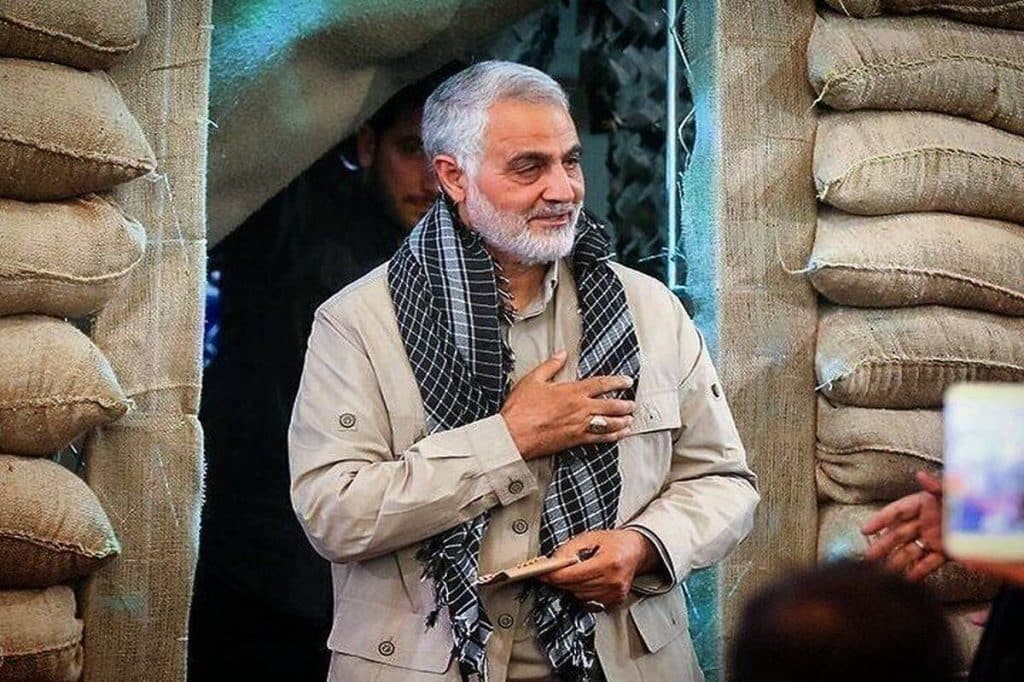
An American University professor argues Soleimani contributed to regional stability by combating ISIS.
Kirk Dorsey, a history professor at the University of New Hampshire and a senior analyst of political and international affairs, spoke with IRNA on Thursday on the eve of the anniversary of the assassination of General Qassem Soleimani and about the consequences of US President Donald Trump’s actions against Tehran, from the assassination to the attack on Iran’s nuclear facilities, and said: “The decision to assassinate General Soleimani was risky, but as the sixth anniversary of that event approaches, we can hardly say that this action alone has destabilized the region.”
“There are so many destabilizing factors in the region — the war in Gaza, Syria, Yemen — even a controversial attack is just one of them,” the American university professor said.
“The attacks on Iran’s nuclear facilities still seem a bit incomprehensible to me,” he said. “The Trump administration initially seemed to distance itself from Israel’s actions, but then it changed course and joined them.”
“The Trump administration is pretty chaotic, so this may have been planned from the beginning, or it may have been a real shift in their thinking after the initial Israeli attacks,” Dorsey emphasized.
“It was striking to me how the Iranian government responded, both after the Soleimani assassination and after the attacks in Iran this summer, and more importantly, the regional and global condemnation of the U.S. government was limited, which suggests some kind of support for those actions,” the University of New Hampshire professor said.
This American analyst of international and regional issues said about the role of General Soleimani in shaping regional security and stability and the impact of this assassination in the Middle East: “It is probably still too early to judge his role definitively. He had many enemies, but at the same time, he also had many combat allies.”
Explaining the American view of General Soleimani’s role in Iraq, which it considered a factor of instability, and perhaps for this reason, it decided to assassinate General Soleimani, he emphasized: “But General Soleimani was probably considered a force for stability more than anything else in the fight against ISIS.”