
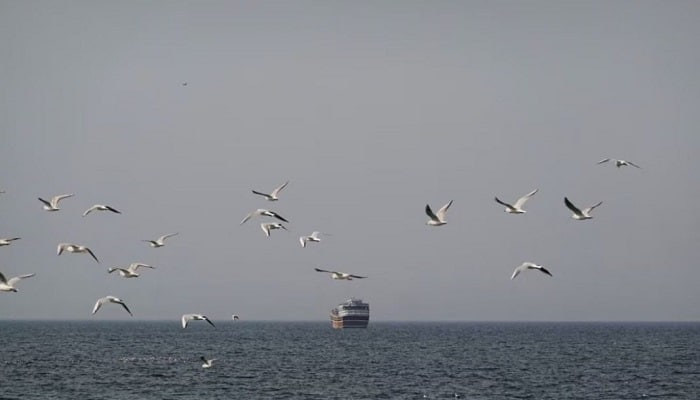
PNN – The Associated Press reported, citing maritime data company Lloyd’s List Intelligence, that nearly 90 ships, including oil tankers, have passed through the Strait of Hormuz since tensions in the Middle East began to escalate in late February.
According to the report of Pakistan News Network, at least 89 ships, including 16 oil tankers, passed through the Strait of Hormuz from March 1 to 15. Before the US and Israeli attacks on Iran, approximately 100 to 135 ships passed through the strait per day. More than a fifth of the 89 ships are believed to be affiliated with Tehran, while ships linked to China and Greece were also among the rest.
Richard Meade, editor-in-chief of Lloyd’s List, said Tehran may have “effectively created a safe corridor” with some ships passing near Iran’s coast.
This also applies to Iranian oil tankers. According to estimates by the analytical firm Kepler, Tehran has managed to export more than 16 million barrels of crude oil since the beginning of March.
Kun Kao, client affairs director at consultancy Redal, said the latest transit of the Strait of Hormuz shows that it is “selectively closed to some traffic, while remaining open to Iranian exports and a limited set of non-Iranian traffic.”
Iranian Foreign Ministry spokesman Esmail Baghaei said on Monday that ships from several countries had passed through the Strait of Hormuz with Tehran’s permission, adding that Iran has the right to take necessary measures to ensure national security and prevent aggressors and their allies from exploiting this strategic waterway.
Earlier, Bloomberg reported that a Pakistani tanker had safely passed through the Strait of Hormuz. In mid-March, NDTV reported that two Indian tankers carrying liquefied natural gas had passed through the strait.
The US-Israeli war on Iran and Tehran’s attacks on occupied territories and Washington’s bases in the region have all but halted shipping through the strait, leading to what the International Energy Agency has called the largest disruption to global energy supplies in history. The vital waterway, located off Iran’s southern coast, normally carries 20 percent of the world’s oil.
Global oil prices have risen more than 40 percent since the war began, sending fuel prices soaring and fueling concerns about a global economic recession.
Efforts to calm markets have so far failed. Last week, dozens of countries announced the largest-ever release of oil from their strategic reserves. But the upward trend in oil prices suggests that the amount of oil entering the market through these channels is tiny compared to the volume of oil lost to the conflict.
Fuel prices have risen worldwide following the US-Israeli war against Iran, with around a hundred countries reporting increases in gasoline prices since the conflict began in late February.
This comes as the US president has called on other countries to help Washington reopen the Strait of Hormuz, through which about a fifth of the world’s oil supply usually passes.
Donald Trump’s proposal has not met with a positive response so far, and none of the countries he has named to ask for help have publicly committed to deploying their navies to secure the Strait of Hormuz.
According to the British Maritime Trade Operations Office, around five ships have passed through the strait every day since the war began, compared to a historical average of 138 ships per day.
According to the organization, at least 16 commercial ships have been attacked in the region since the war began on February 28.
The spokesman for the Khatam al-Anbiya Central Command announced last Wednesday that Iran would not allow even a single liter of oil to pass through the Strait of Hormuz for the benefit of the United States and its allies, and warned that the price of oil could almost double to $200 per barrel.
He added: The armed forces of the Islamic Republic of Iran, due to their holding of the initiative in the Strait of Hormuz, do not need to close this vital waterway. Of course, we will never allow even a liter of oil to pass through the Strait of Hormuz for the benefit of America, the Zionists, and their partners.
You should know that you will not be able to lower the price of oil and energy with artificial respiration, because as the war spreads in the region, we have announced that you should expect a price of $200 per barrel.
The spokesman for the Khatam Al-Anbiya Central Headquarters announced: Any vessel carrying oil cargo is a legitimate target for Iran for the United States and Israel.