
Central Asia’s Silence on Venezuela: Indifference or Strategy?
The operation, which took place on Saturday and involved more than 150 US aircraft, saw Nicolas Maduro and his wife Cilia Flores leave their Caracas residence, according to The Times of Central Asia. The move drew mixed international reactions, including criticism from countries such as Russia and China.
Questions about Venezuela’s sovereignty have been raised after Trump said the US would “run” the country ahead of a power transition and that US oil companies would help rebuild its oil infrastructure. The US has alleged that Maduro has effectively taken Venezuela’s sovereignty hostage through electoral fraud and repression, and has also accused him of smuggling drugs into the US. Maduro has denied the charges.
Central Asian countries are more than 10,000 kilometres from Venezuela, and trade with the Latin American country is minimal; This shows that the uncertain and volatile situation in Venezuela is outside the immediate interests of these countries. However, in May, Kassym-Jomart Tokayev met with Maduro in Moscow and invited him to visit Kazakhstan, describing Venezuela as an important partner. At the time, he acknowledged that due to objective circumstances, significant achievements in bilateral cooperation had not been achieved.
Nevertheless, Tokayev and other Central Asian leaders have generally emphasized their adherence to the principles of sovereignty enshrined in the UN Charter. This issue has been seriously discussed in some international circles following the US military operation. UN Secretary-General Antonio Guterres, who visited Central Asia in 2024 and 2025, called the US military operation that led to Maduro’s transfer to New York “a dangerous precedent” and expressed concern about the lack of respect for international law.
The recent developments in Venezuela have not had a significant impact on global oil prices so far, suggesting that Central Asian oil and natural gas producers will not be affected in the short term. However, in the current climate of geopolitical tensions, any unexpected event in one region can have consequences for distant regions that are difficult to predict.
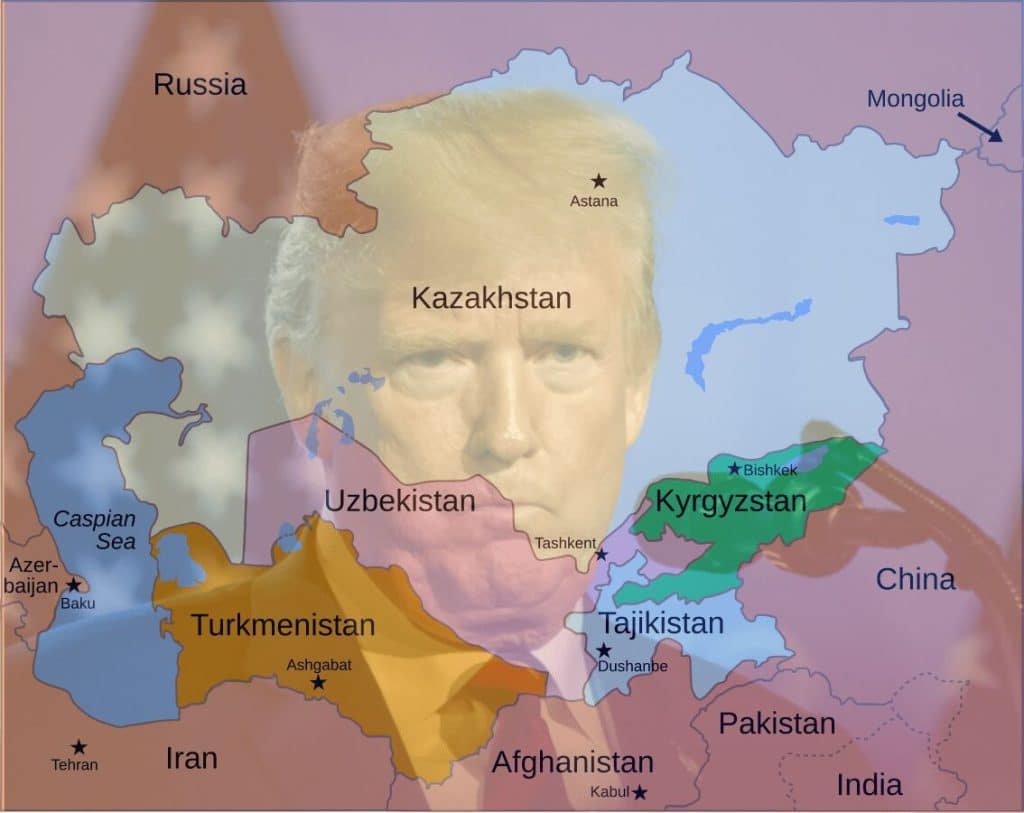
Russia and China, which are close trading partners of Central Asia and have had extensive political and economic relations with the Maduro government, have condemned the US military operation in Venezuela. However, Central Asian countries, including Kazakhstan, Uzbekistan, Kyrgyzstan, Tajikistan, and Turkmenistan, have not joined in this criticism, just as they have refrained from taking public sides in the Russian invasion of Ukraine.
This balanced approach by Central Asian countries reflects their efforts to maintain favorable relations with major powers, even in times of geopolitical disputes; An approach that can also be assessed in the context of expanding trade cooperation with the United States. In November, five Central Asian leaders traveled to Washington to meet with Trump. Trump subsequently invited Tokayev and Uzbek President Shavkat Mirziyoyev to the G20 summit, which the United States plans to host in Miami in 2026.
While Central Asian media have been covering news and developments related to the abduction of Maduro during a US military operation, regional governments will likely announce their official positions in due course, once the US goals and intentions in Venezuela become clearer.