
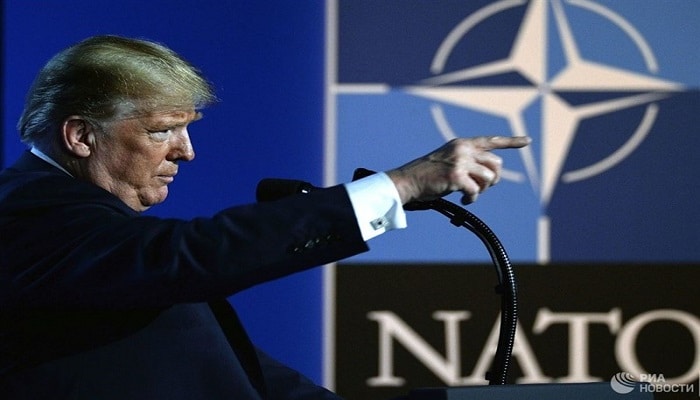
PNN – The United States’ unilateral policy and its transactional diplomacy have undermined the foundations of trust within NATO.
According to the report of Pakistan News Network, citing Chinese media CGTN, the recent differences between the United States and Europe over Iran go beyond a simple diplomatic tension and their strategic implications have increased sharply. The United States took military action against Iran without sufficient coordination with its European NATO allies and then asked Europe to send troops to help clear the Strait of Hormuz.
This request was met with opposition from key European countries such as Britain, France and Germany. In response, Washington threatened to withdraw from NATO, and as a result, long-standing contradictions in the structure of the transatlantic alliance were sharply highlighted. This crisis is not just a random event; it clearly demonstrates the strategic shifts in US global policy and the new realities that everyone must face.
The roots of this conflict lie in fundamental shifts in the United States’ global strategic priorities. Washington has clearly shifted its focus from Europe and the Atlantic to the Indo-Pacific region, and is assessing the Russian threat less than before.
In this regard, NATO’s place in US strategy has been shaken. From a collective defense organization based on “shared values,” the current US administration has transformed it into a strategic tool that needs to be reshaped to achieve “America First” goals. The call for NATO countries to increase their defense spending to 5 percent of GDP, as well as demands for Europe to “take responsibility for its own defense,” clearly demonstrate that the US intends to transform NATO into an alliance with “equal” responsibilities and obligations that will serve Washington’s geopolitical goals better.
The unilateral demands on Iran are an example of this “toolboxing” approach, in which the United States expects its allies to support its decisions without question and to share the risks.
The strong reaction of European allies to these demands marks an important turning point. In the past, Europe was divided into two groups regarding its relations with the United States: the “Atlantic wing” and the “strategic independence wing.” But now, Britain, Germany, France, Italy, Spain and others have formed an unprecedented united front against US pressure, making statements such as “this is not our war” and closing their air bases.
This shows that the unilateralist policy of the United States and its transactional diplomacy have weakened the foundations of trust within NATO and forced European countries to reconsider their traditional security dependence on the United States. As a result, Europe has been forced to take steps to strengthen its defense capabilities and strategic independence, which will have profound implications for the future balance of power in Eurasia.
These changes have complex implications for Iran and other countries in the region. First, this development demonstrates the unpredictability and selfishness of US foreign policy. Washington’s actions may be less constrained by the traditional alliance system than in the past, and this will introduce new variables into the regional security situation. Second, we must be vigilant against the dangerous tactics of the US and NATO in resolving internal disputes and seeking “long-term survival.” Evidence suggests that NATO is trying to accelerate its “Asia-Pacificization” process and rebuild its internal consensus by magnifying external threats.
This attempt to create external enemies only fuels new tensions and dangers in other regions and undermines the atmosphere for peaceful development.
Finally, and most importantly, the main lesson is that no country should entrust its security to a single military power or alliance. The crisis in US-NATO relations once again demonstrates that alliance policies are based on shared interests, and these interests can change at any time. History has shown that only by respecting equal sovereignty and pursuing the path of common development and global security can we move forward in these uncertain times.