
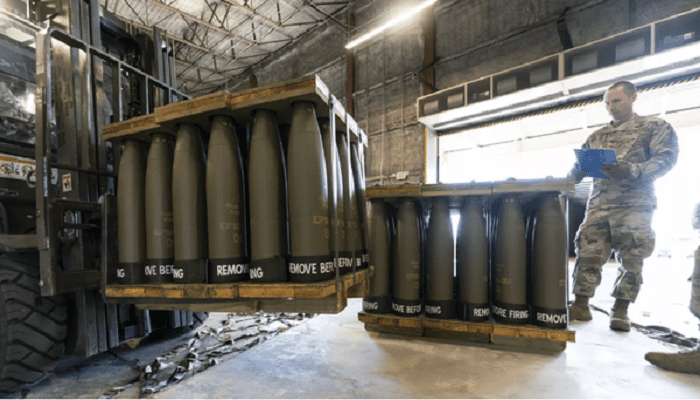
PNN – A British newspaper pointed out the enormous costs of the US war against the Islamic Republic and wrote that after the Iran war, it would take years for the US to replenish its ammunition stockpile.
According to the report of Pakistan News Network, the British newspaper “The Economist” reported that the ammunition stockpiles consumed during the so-called “Epic Fury” operation led by the US against Iran will take years to replenish, while the US government does not have the budget approved by Congress for this purpose.
The Economist reported in an article based on expert estimates that the reduction in these reserves means a reduction in the US military’s readiness for possible future conflicts.
The article states: Recovering all this ammunition will take years. The cost of replacing the ammunition used in the first four days of the war is estimated at between $20 billion and $26 billion… The problem is not the cost, but the lack of it.
For example, at the start of the conflict alone, the US military fired 300 Tomahawk cruise missiles, while the Pentagon had planned to purchase only 57 for the entire year. Similarly, more than 150 THAAD (Threat-Altitude Area Defense) interceptor missiles were fired, representing about a quarter of the entire arsenal, while only 57 were expected to be delivered to the military by 2027.
According to this report, in addition, the author of the article writes that the stockpile of this type of missile has not been renewed since 2023.
The report continues that in total, the US fired more than 5,000 rounds of various types in the first four days of the war against Iran, turning the start of the “epic fury” into “the most intense air campaign in history,” according to The Economist. Over the next 16 days, that number rose to 11,000.
The report states: The Pentagon has ambitious plans to accelerate purchases through large multi-year contracts. They want to increase production of Tomahawks from 60 to 1,000 per year, for example, and PAC-3 MSE missiles (Patriot system missiles) from 600 to 2,000, but Congress has not yet approved funding for them.
The report continues: The situation is further complicated by the fact that some parts are produced by a very limited number of companies, which delays delivery times. In addition, some of the minerals needed to produce weapons are in China’s possession.
The authors of this article believe that given these circumstances, as well as considering the transfer of large numbers of troops and weapons from Japan and South Korea to the Middle East, the US military may be “less prepared for conflict in Asia.”
In a joint crime on February 28, the Zionist regime and the United States committed an aerial aggression against Iranian territory, and Iran responded decisively by targeting Zionist targets as well as American military bases in the Middle East with heavy attacks.