
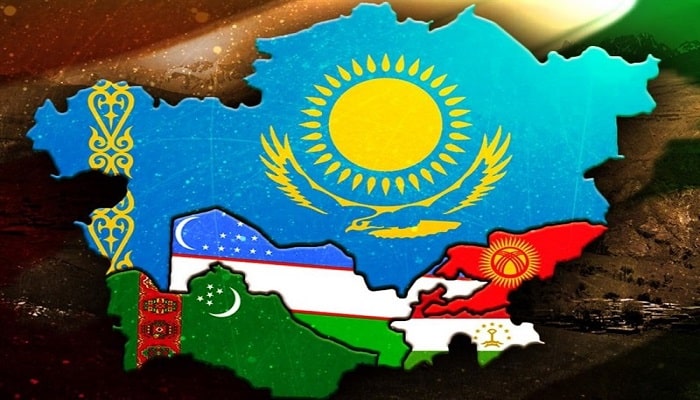
PNN – Central Asian countries welcomed the cessation of hostilities and called for a permanent end to US warmongering in the region.
According to the report of Pakistan News Network, Central Asian governments have cautiously welcomed a two-week ceasefire between Washington and Tehran, describing it as a necessary respite from a conflict that is already having a devastating impact on regional stability, global trade and energy flows.
Across the region, official statements struck a harmonious balance: firm support for the ceasefire, alongside repeated calls for its swift transformation into comprehensive negotiations, lest the agreement be reduced to a mere temporary pause in hostilities.
Neighbors Heave a Breath of Relief as Washington Stops Escalating Tensions
Kazakhstani President Kassym-Jomart Tokayev described the agreement as a “ceasefire and cessation of hostilities” achieved through international mediation, including the diligent efforts of Pakistan’s leadership.
According to the press service of the Kazakh presidency, Tokayev expressed hope for the stability of the agreement, stressed that this event could significantly contribute to the stability of world trade and the international economy, and appreciated the goodwill of the conflicting parties.
In a statement, the Uzbek Foreign Ministry called the ceasefire “an important step towards reducing tensions” and stressed that this measure should serve as a path towards a broader political solution.
Tashkent called on all parties to exercise restraint, warning that any escalation could widen the scope of the conflict and undermine the stability of the entire region.
The statement emphasized Uzbekistan’s firm and unwavering position on the need for the exclusive settlement of disputes through peaceful means and in strict accordance with the principles of the UN Charter.
Emphasizing Diplomacy and Rejecting Military Approaches
The Tajik Foreign Ministry also welcomed the agreement, expressing hope that the ceasefire would pave the way for a comprehensive and long-term peace.
Dushanbe emphasized in a warning tone that the conflict has no military solution and its continuation will only worsen the complicated situation in the Middle East and cause huge and irreparable damage to all countries in the region.
The statement called on all parties to “reject the use of force” and use political and diplomatic mechanisms.
The Kyrgyz Foreign Ministry also welcomed the ceasefire agreement in the Middle East, highlighting the role of Pakistan’s mediation efforts in reducing tensions.
Bishkek reiterated that disputes should be resolved exclusively through political and diplomatic means. Meanwhile, Turkmenistan, in line with its long-standing policy of neutrality and cautious approach to external conflicts, did not issue any official public statements on the matter.
Energy Crisis; War Sparks Reach Central Asia
The convergence in tone among these countries reflects more than just diplomatic routine. The conflict has already been pushed onto the political and humanitarian agenda in Central Asia, creating the need for coordinated evacuations, aid delivery, and contingency planning.
More importantly, the crisis has exposed the region’s extreme vulnerability to disruptions in key energy and transport corridors, and shows how costly a renewed conflict would be for the region’s economy if the ceasefire fails.
This vulnerability is already clearly visible in global energy markets. The disruption of the Strait of Hormuz, a vital artery for global oil shipments, has prompted major Asian importers to frantically seek alternative supply routes, with Central Asia increasingly entering the conversation as a potential, albeit minor, alternative.
Countries such as Japan and South Korea, which are heavily dependent on Middle Eastern crude, are seeking to diversify their supply sources and have increased their engagement with Kazakhstan and Azerbaijan. For these desperate buyers, the appeal of Caspian crude lies not only in its availability but also in its compatibility with existing refining systems.
Strategic deadlock in finding alternative routes
However, geography imposes clear and difficult constraints. Unlike Gulf producers, Central Asian exporters rely on longer and much more complex routes, including costly transit through the Caspian Sea and crossing the South Caucasus or the Black Sea.
Moreover, much of Kazakhstan’s oil continues to be transported through Russian-linked infrastructure, particularly the Caspian Pipeline Consortium (CPC), which poses another layer of geopolitical risks for Washington’s allies.
Even with these constraints, the current crisis may accelerate long-term investments in alternative corridors, including the Trans-Caspian route, as governments and energy companies seek to reduce their vulnerability to strategic bottlenecks such as the Strait of Hormuz.
What has changed now is not just the perception of the danger, but the high cost of maintaining reliable communication arteries. For Central Asia, this ceasefire is a vital breathing space.
The sustainability of this agreement will determine not only the future course of the conflict but also the region’s role in the highly fragmented global energy and transportation system, a system made increasingly fragile by US military interventionism.