
PNN – Despite weeks of increased US military and diplomatic pressure in the Middle East region, Iran remains in a persistent and stubborn position, and efforts to change Tehran’s behavior have not yet yielded the expected results for the Americans.
According to the report of Pakistan News Network, citing Al-Quds Al-Arabi, the British newspaper “Financial Times” has examined the details and current strategic assessments of US President Donald Trump’s foreign policy towards Iran, addressing America’s strategic challenges and the consequences of military and diplomatic pressure on Tehran.
The British newspaper’s report states that the US president has found himself in a difficult situation in his confrontation with Tehran, from which it will be neither easy nor without cost.
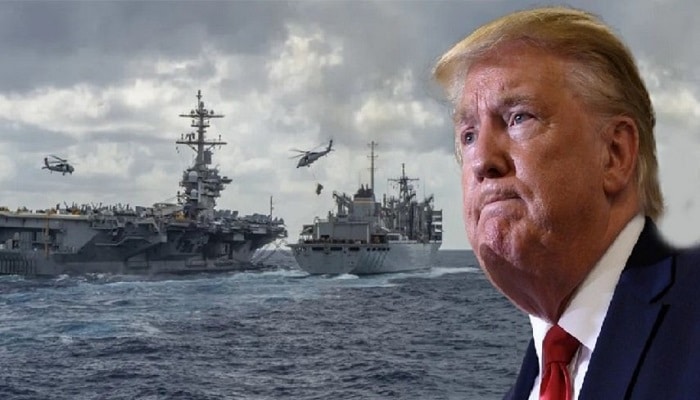
The Financial Times wrote: Trump, who ordered the largest deployment of US military forces to the Middle East in more than two decades earlier this year, from fighter jets and aircraft carriers to air strike groups, has harbored the notion that the massive buildup of troops and military equipment could force Tehran to make concessions in the nuclear talks.
But now, weeks after these actions and the continuation of inconclusive negotiations in Geneva, this strategy has not brought tangible results for Washington.
This analysis notes that Trump has repeatedly threatened that although his preference remains for a “diplomatic solution” to the nuclear conflict, if Tehran does not comply with America’s demands, the military option will remain in effect.
For this reason, Washington has deployed large fleets, including two aircraft carriers, in the Persian Gulf and the Mediterranean Sea, which is considered the largest US military buildup in the region since the 2003 Iraq War.
The British newspaper’s report states that in his recent remarks, Trump referred to the ongoing talks in Geneva and accused Iran of having “the ability to build a nuclear weapon,” a claim that has been questioned by many experts.
Meanwhile, by releasing a video in American media, he has once again emphasized his disappointment with the outcome of military threats.
The newspaper also points to the undeniable role of military pressure in Washington’s policy, an issue that has been raised as a bargaining tool in negotiations on the one hand and has drawn criticism from experts and politicians on the other.
Some senior US officials have publicly warned that a military strike, even if limited, could provoke retaliatory responses from Iran and lead to increased tensions across the region.
Another part of the report states that many analysts believe that American success in other military theaters, including in Venezuela, has led some in Washington to be optimistic about the consequences of an attritional conflict with Iran, which may have underestimated Tehran.
Finally, the Financial Times writes that the current crisis between Washington and Tehran, although seemingly tied to negotiation and diplomacy, has also become an integral part of the arena of military pressure and the threat of using force.
This poses a major strategic question for the United States: Can combining military pressure with diplomatic pressure lead to a lasting agreement, or has this approach led Washington into a dangerous and complicated cycle from which it will be difficult to escape?