
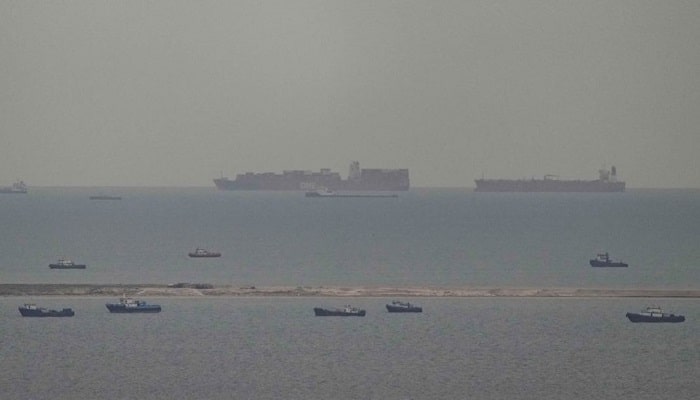
PNN – The Financial Times reported that the world’s largest energy trading companies, including Vitol, Trafigura and Mercuria, have faced serious problems due to the Middle East conflicts and have not been able to immediately benefit from the severe market fluctuations.
According to the report of Pakistan News Network, the publication wrote that the military actions that began on February 28 were accompanied by attacks on oil tankers and infrastructure, as well as the blockade of ship traffic in the Persian Gulf, which created uncertainty about energy supplies through the Strait of Hormuz.
The newspaper noted that companies including Vitol, Trafigura and Mercuria have suffered losses due to logistical disruptions and weak market conditions. In particular, more than a dozen Vitol shipments were blocked, the newspaper wrote, and two ships were destroyed, resulting in the death of one crew member. Ship insurance costs in the region have increased more than sixfold. In addition, traders have encountered problems with the physical delivery of raw materials and have been forced to secure additional financing. For example, Vitol and Trafigura have each secured credit lines of $3 billion, and Ganor has secured a credit line of $1.5 billion.
Meanwhile, experts believe that high volatility in the future could help the industry’s profit growth, and 2026 could be a profitable year for traders overall.
The US and Israel have launched a series of airstrikes on military and residential areas in Iran since late February, including one that killed the leader of the Islamic Revolution, Ayatollah Seyyed Ali Khamenei, in Tehran. Hundreds of civilians and military commanders across the country have been killed in attacks by Washington and the Zionist regime.
In response to the war imposed by Washington and the Tel Aviv regime, the Iranian armed forces launched Operation “True Promise 4” against the positions of the Zionist regime in the occupied territories and American military centers in West Asia, inflicting heavy losses on them in several waves of these operations.
The US-Israeli war against Iran and Tehran’s attacks on occupied territories and Washington’s bases in the region have all but halted shipping through the strait, leading to what the International Energy Agency has called the largest disruption to global energy supplies in history. About 20 percent of the world’s oil and liquefied natural gas passes through this strategic narrow strip.
Global oil prices have risen more than 50 percent since the war began, sending fuel prices soaring and fueling concerns about a global economic slowdown. Fuel prices have also risen around the world since the US-Israeli war on Iran, with about 100 countries reporting gasoline price increases since the fighting began in late February.
Efforts to calm markets have so far failed. Market observers say that if the Strait of Hormuz remains closed, prices are likely to rise significantly, reaching $150 or even $200.
Euronews previously reported that the US-Israeli war against Iran has made the Strait of Hormuz the world’s most expensive waterway for shipping, as the crisis has led to a sharp increase in insurance premiums related to the risks of conflict.
Before the crisis, the war risk premium for an oil tanker in the Persian Gulf was 0.02 to 0.05 percent of its value. Since late February, the premium has risen to 0.5 to 1 percent or even more, Euronews reports.
The media outlet recently reported that war risk insurance premiums for a single voyage have risen from around $40,000 to between $600,000 and $1.2 million for a typical tanker. Euronews noted that at least 16 ships have been hit since the conflict began.
The report added that consumers will feel the side effects of this price increase within a few weeks at the gas station or supermarket.
Radio 1 reported, citing representatives of shipping companies operating in the port of Dubai, that three thousand ships are stuck in the Strait of Hormuz due to conflicts surrounding Iran.
According to the report, shipping companies have to reroute by combining sea sections with land routes across the Arabian Peninsula, leading to a more than 200 percent increase in shipping costs and a tripling of delivery times.
The United Nations Trade and Development Organization announced on Wednesday that global trade and economic growth are expected to decline sharply in the wake of the US-Israeli war against Iran.
The virtual closure of the Strait of Hormuz has disrupted about 20 percent of the world’s oil and gas flows. The latest rapid assessment by the United Nations Conference on Trade and Development (UNCTAD) shows that ship traffic has fallen from about 130 ships per day in February to just six in March, a 95 percent drop.
The organization predicted that growth in global merchandise trade would slow from 4.7 percent last year to around 1.5 to 2 percent this year.
The UNCTAD report states: The Strait of Hormuz remains virtually closed, and its effects will spread throughout the global economy within weeks, disrupting energy flows, raising prices, and increasing financial pressures on developing countries.
Transport and insurance costs, inflation and uncertainty are rising, and with the weakening of developing countries’ currencies, imports such as fuel and food have become even more expensive for residents.