
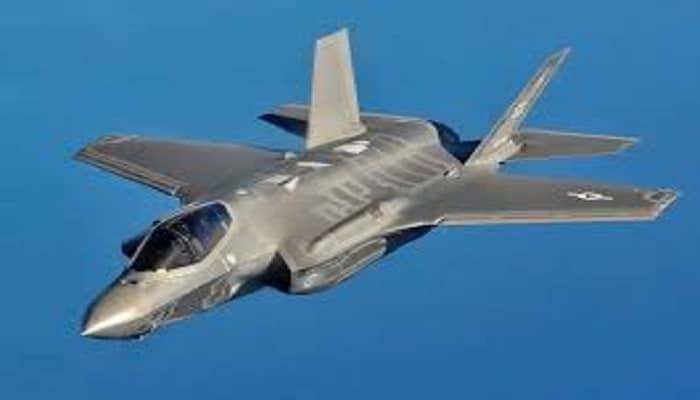
PNN – Military analysts believe Iran found the jet using passive infrared search and track (IRST) sensors. Instead of using radar, these systems silently scan the environment to lock on to the intense heat from the US F-35 jet’s exhaust.
For the first time in the world, a US F-35 stealth fighter jet has been severely damaged in a real military and combat operation by a defensive missile and, according to US claims, was forced to make an emergency landing. However, this US claim cannot deny the crash of the plane, and it is possible that the Americans are not telling the whole truth about the possible crash of this highly advanced stealth aircraft in order to cover up this glaring failure of their technology against a defensive weapon and further drop in Lockheed Martin’s shares.
According to the report of Pakistan News Network, the news of the downing of a US F-35 fighter jet in Iranian airspace (reportedly in the skies of Arak province) spread like a bombshell around the world. The Iranian armed forces also released a video of the moment the ultra-advanced aircraft was targeted, to remove any doubt about it.
As is clear from the video, the pilot of the F-35 apparently had no knowledge or awareness of the defensive projectile coming towards the plane before the hit and was flying normally in Iranian airspace, which makes the issue even more complicated; because pilots of simple third and fourth generation aircraft are often able to detect defensive shots aimed at them with the warning systems built into their fighters and maneuver in the sky or destroy them by firing flares.
But the pilot of the American F-35 aircraft, as shown in the video, was flying normally through Iranian airspace and apparently did not notice the projectile coming towards the aircraft.
Another point in this regard is speculation about the type of projectile, or possibly a defensive missile, that, for the first time in the world, targeted this highly advanced aircraft in a serious combat environment.
India’s Vion website wrote about this: Iran claims to have shot down the American F-35 stealth jet using infrared sensors. While the aircraft is invisible to radar, the immense heat from its engine cannot be hidden.
While stealth hides the jet from radar, the plane’s single F135 engine produces 29,000 horsepower and creates a massive thermal effect that stands out in the cold sky. Although the plane’s technology is designed to cool the engine’s exhaust heat, that engine heat is not something that can be easily hidden in the cold sky.
Vion continued: Military analysts believe Iran found the fighter using passive infrared search and track (IRST) sensors. Instead of using radar, these systems silently scan the environment to lock on to the intense heat of the jet’s exhaust.
Experts believe that Iran likely used a short-range Majid air defense system or a 358 anti-aircraft missile to shoot down the highly advanced fighter. Both weapons are equipped with highly sensitive electro-optical and infrared tracking for thermal targeting.
Regarding the lack of information and reaction of the F-35 pilot before the defensive missile hit, military analysts say that since the infrared sensors are completely inactive and do not emit any signals, the F-35’s threat detection systems probably did not receive any warning. This proves that despite hundreds of billions of dollars spent on stealth, two issues of basic physics and heat cannot be hidden.