
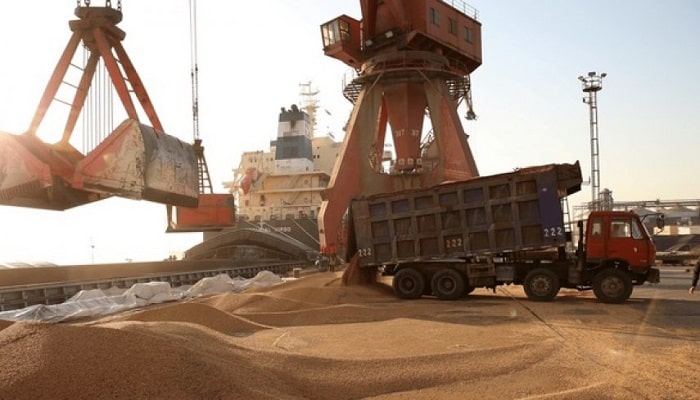
PNN – Following the increase in Russia’s grain export capacity to 55 million tons in 2026, the Caspian Sea Corridor could become a strategic opportunity for Iran in securing sustainable grain supplies, developing regional transit, and strengthening the country’s food security.
According to the Russian Grain Union (RGU), and citing the forecast of Russian Agriculture Minister Oksana Lot, the country will be able to export about 55 million tons of grain in 2026; A figure that is estimated to be about 5 million tons more than last year, indicating Moscow’s continued role in the global grain market. The International Grains Council (IGC) also increased its forecast for Russia’s wheat harvest this season to 87.6 million tons and estimated that the country’s wheat exports could reach 44.2 million tons. These figures continue to establish Russia as one of the world’s largest wheat exporters, a position that has become doubly important in recent years due to geopolitical developments and trade restrictions. Russian Export Corridors; Advantages and Limitations. The increase in Russia’s export capacity occurs in a situation where the country uses several main sea and land routes to transport its grain shipments to target markets, each with its own advantages and challenges.
- The Black Sea-Azov Corridor: The main but riskiest route for Russian grain exports is the Black Sea-Azov Corridor, which runs through ports such as Novorossiysk and Taman. This route covers a major share of Russian grain exports to markets in the Middle East, Africa, and Asia. However, the corridor’s dependence on passing through the Bosphorus and Dardanelles straits and its exposure to security and political developments in the region has always been associated with operational risks, fluctuations in transportation costs, and increased dependence on Turkey, an issue that has led Moscow to diversify export routes.
- Baltic Corridor; High capacity at higher cost. In recent years, Russia has been developing port infrastructure in the northwest, directing part of its grain exports through ports such as Ust-Luga. The Baltic Corridor provides access to distant markets, but the longer route and increased logistics costs make this option less competitive compared to southern and regional routes.
- Caspian Sea Corridor: A low-risk and cost-effective option for Iran. Meanwhile, the Caspian Sea Corridor, as a lower-risk and shorter route, has significant potential for developing trade cooperation between Tehran and Moscow. Russian ports on the Caspian Sea coast, including Astrakhan, Olymp, and Makhachkala, provide the possibility of directly transporting grain cargoes to northern Iranian ports. The short sea distance, the elimination of international political bottlenecks, the reduction of insurance and transportation costs, and the possibility of using combined sea-rail transportation within the framework of the North-South corridor are among the key advantages of this route. These features make the Caspian route an attractive option for importing, transiting, and even re-exporting grains, given the increasing Russian exports.
Strategic Opportunity for Iran: Given the forecast of a supply surplus in Russia through 2026, Iran can play a more active role in the regional supply chain by focusing on strengthening the north-south axis of the Caspian Corridor.