
PNN – By upsetting the calculations of the United States and Israel, Iran established a new deterrence equation that will determine the fate of the war.
According to the report of Pakistan News Network, in continuation of the analysis of global and regional circles and media on the ongoing war between Iran and the United States and the Zionist regime, the Al-Ahed website examined Iran’s new deterrence equation in this war in an article and wrote: On the twenty-second day of the escalation of the war, the situation became a decisive moment and fundamentally changed the rules of conflict in the Middle East. The conflict changed from a traditional escalation phase to a phase targeting the nuclear nerve center, which had long been considered a solid and untouchable red line.
Iran’s strong slap to America and Israel in Dimona
The US attack on Iran’s Natanz facility was not simply a military operation to disable technological capabilities; it sent a strategic message that Washington had reached the limits of its options and believed it had to accept major consequences. However, the results on the ground proved that the use of bunker-busting bombs did not lead to a decisive victory.
The fact that Iran’s nuclear facilities remained intact, without any radioactive leaks or complete paralysis sent a contradictory signal: the maximum American attack had accomplished its objectives without definitively changing the reality on the ground.
But in response, Iran’s 71st wave of missile attacks against the American-Zionist enemy drew a new deterrence equation based on technological density and sophistication. Iran’s use of multiple warheads and cluster missiles demonstrated a remarkable ability to overcome air defense systems designed to track single targets.
The ability of Iranian missiles to reach vital areas deep inside enemy territory was not primarily intended to inflict physical destruction, but rather to undermine confidence in the comprehensive Israeli defense capabilities. This change in the equation by Iran has turned the idea of overcoming Israeli air defenses into a repeatable reality and has presented Israeli decision-makers with an unprecedented security dilemma: how to protect sensitive installations in the face of the continuous and rapid evolution of offensive capabilities and tactics.
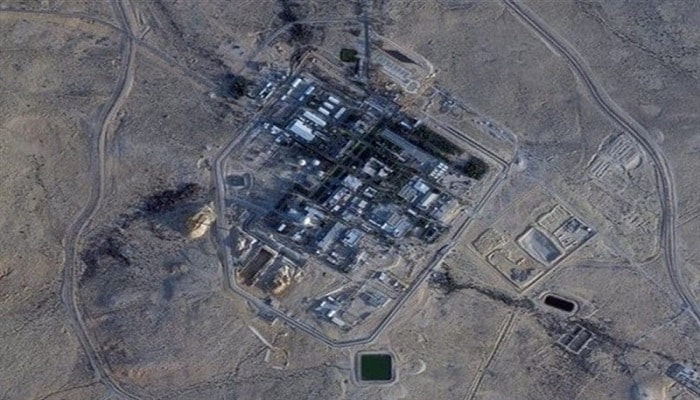
The most worrying development for the international community, however, is the shift in threat and operations toward the Dimona region. The prospect of Iran targeting the heart of Israel’s nuclear dilemma represents a seismic shift in regional security concepts, as Dimona is not merely a military installation but a cornerstone of regional deterrence.
So including Dimona in the bombing and retaliation calculations means that the old rules governing the speed of engagement have completely collapsed. The new equation that is taking shape states that if the Natanz facility has lost its immunity to US attacks, Dimona is no longer out of reach of Iranian cluster missiles. This symmetry in targeting raises the level of danger to levels that could lead to a widespread and out-of-control explosion.
The miscalculations that trapped the Israeli army in the resistance
Meanwhile, on the Lebanese front, a huge gap is evident between technological superiority and the reality on the ground. The battles in southern Lebanon, especially the ambushes in Al-Ma’a Al-Shaab, have proven that war is not always won by aircraft and artificial intelligence. Close-range engagements restore the importance of the human element and the ability to adapt to the terrain. The Israeli army, which relied almost entirely on air superiority and technology, faced significant difficulty in interpreting enemy movements using digital silence and complete concealment.
This miscalculation reveals a deeper crisis in Israel’s military structure, stemming from an overreliance on algorithms that assume the enemy follows predetermined patterns and lacks the power to change patterns and tactics. However, the battlefield has shown that breaking these patterns by Iran and the Resistance Front is key to achieving tactical surprises that disrupt military calculations.
This technological failure of the Israeli regime also extends to intelligence analysis systems built on digital signal tracking, where it was discovered that systems that estimated the enemy’s attrition rate were based on misleading or incomplete data.
War, at its core, is still a human endeavor that transcends strict mathematical equations, and the ability to regroup and reposition without being detected by electronic surveillance makes assessments of attrition mere illusions that crumble with the first real encounter on the field. This raises serious questions about the future of AI-led warfare when faced with an enemy that is skilled in stealth and conventional warfare and uses modern and innovative tactics.
On the other hand, the US position seems to be mired in strategic confusion, and the contradictory statements of the Americans and President Donald Trump himself demonstrate the complete lack of a clear plan to deal with the consequences of the Natanz attack. The simultaneous threat of sending additional forces and talk of the withdrawal of American forces indicate Washington’s chaotic situation, which reminds Americans of past bitter experiences in the region.
In the meantime, the options on the table look more like immediate responses aimed at containing the situation without a long-term perspective on the consequences. This brings to the fore the lessons of history and highlights the fear of repeating past mistakes in more complex and dangerous circumstances, especially since a decisive military victory for the United States remains elusive, even with maximum firepower.
Overall, what we are witnessing today is a historic shift in the nature of international conflicts, where red lines have blurred and military powers are beginning to discover the limits of their capabilities when faced with the will to confront them in the field.