
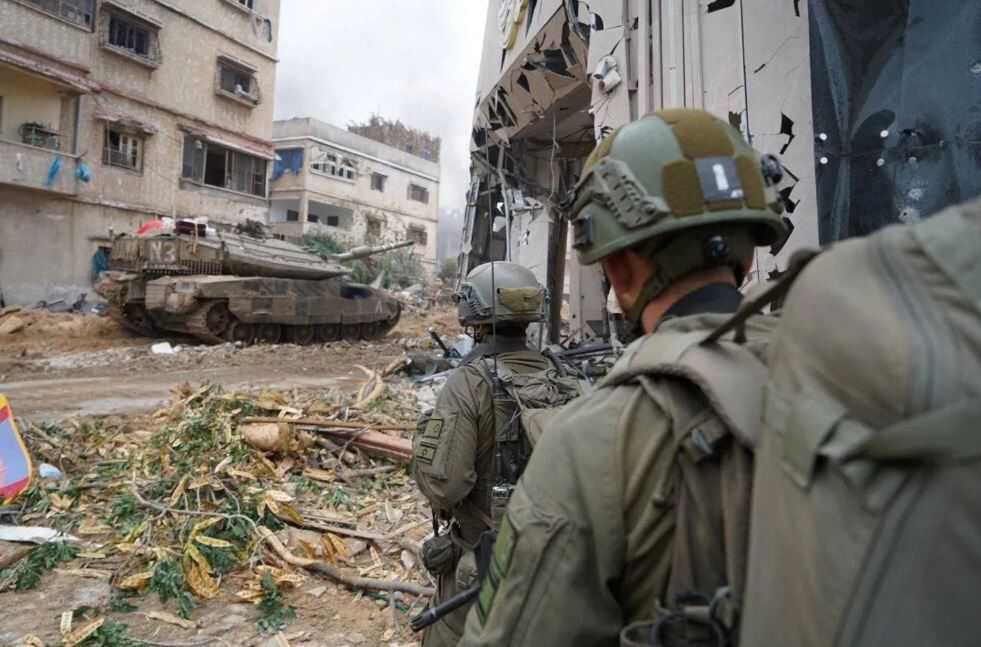
Israel: 6-front conflict risk.
The Israeli Channel 12 quoted the official, without naming him, as saying: The explosive security situation places Israel at a “very sensitive security crossroads.”
He added: Tel Aviv is facing simultaneous friction in six areas. This requires vigilance and continuous decision-making that will shape the structure of the coming years.
According to Israel’s Channel 12, the senior official in the regime’s security establishment considers the six areas mentioned as follows:
– Hamas’s reconstruction in Gaza despite military strikes
Despite the heavy blows it has received, the Hamas movement is trying to rebuild itself in Gaza. According to estimates, it still has tens of thousands of troops and hundreds of rockets, some of which are ready to be launched.
The senior official in the Israeli security establishment claimed: The work in Gaza is not over yet, and Israel is determined to prevent Hamas from becoming an influential military and political power at all costs, and this may soon be done by using military force.
– Lebanon’s Hezbollah remains a major threat
Hezbollah is a pivotal threat. Despite its diminished capabilities, it has tens of thousands of troops and an arsenal of at least 10,000 missiles, few of which are accurate.
The senior Zionist official explained: Israel sees this moment as a historic opportunity to disarm Hezbollah, and if the Lebanese government does not do so, Israel may soon take this step itself.
– Iran’s rapid progress in ballistic missiles
In Iran, progress in the ballistic missile program continues at a rapid pace, which narrows the technological gaps and restores Iran’s capabilities to pose a real threat to Israel.
The senior official in the Israeli security establishment noted: Another operation may soon be needed to prevent Iran from becoming a power that threatens Israel’s existence, while preparing for the possibility of a surprise attack from Iranian soil.
– Security vacuum in Syria attracts “terrorist” organizations
The situation in Syria is complicated, as the security vacuum continues to attract “extremist terrorist organizations such as ISIS.”
The senior Israeli security official said that the assassination of key figures such as al-Jolani could lead to a rapid shift from passive defense on the border to a full-scale military confrontation inside Syria. He stressed that “the next explosion there depends only on time.”
– Yemen a distant threat but an inspiration for other organizations
In Yemen, Israeli authorities express satisfaction with the operations that targeted the leaders of the Ansar Allah movement, including the chief of staff and the defense minister, but these operations are seen as an inspiration for other organizations. Israel, despite the geographical distance, considers the Yemeni arena “close” in terms of the real threat.
– Growing Danger in the West Bank
Ultimately, the West Bank is the most complex arena for Israeli security forces. Dangerous weapons are arriving rapidly, and “terrorist” organizations are gaining experience and confidence, increasing the likelihood of a repeat of the October 7th scenario, even if on a smaller scale than in Gaza, which could be a game-changer.
The senior Israeli official said: “These organizations know that small operations using cold weapons or car ambushes will not achieve their goals, so they are inspired by the events in Gaza and are practicing large-scale scenarios.”
According to him, the Israeli regime is simultaneously facing six areas of friction that place the regime on a “regional fault line,” and this requires decisive decisions to be made during this period to determine the structure and shape of the coming years at the security and strategic level.