
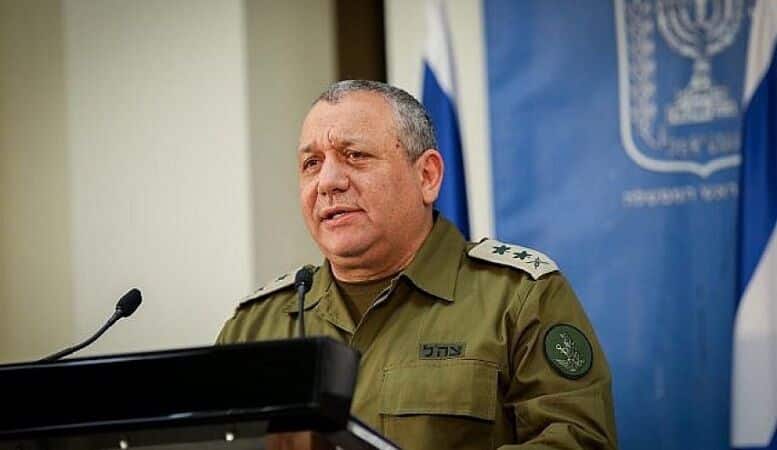
Israeli ex-commander suggests potential coalition with Arab parties, sparking controversy.
While the occupying regime in Jerusalem is struggling with deep internal crises, the statements of Gadi Eisenkot, former Chief of Staff of the Army and leader of the new Yashar party, regarding the possibility of relying on external support from Arab parties to form a government, have sparked a wave of criticism among Zionists and exposed the deep divisions in the regime’s society.
According to the Zionist media outlet JFEED, Gadi Eisenkot announced in a television interview that the Zionist opposition bloc could form a government even if it won only 58 seats in the next Knesset, and did not explicitly rule out the possibility of external support from Arab parties such as Ra’am (affiliated with the Muslim Brotherhood’s southern movement) or Hadash-Ta’al.
These statements, which are a sign of the legitimacy and majority crisis in the Zionist regime, were immediately met with strong reactions. Benny Gantz, Eisenkot’s political rival, called it unrealistic after Operation Storm al-Aqsa (October 7), warning that such a government would destabilize the regime’s political system and strengthen right-wing extremists like Ben-Guer. On the other hand, officials in Netanyahu’s coalition, including Bezalel Smotrich and the Likud party, accused Eisenkot of reviving a dangerous model of dependence on “anti-Zionist parties and supporters of terrorism,” claiming that this approach would undermine the foundations of the fake Israeli regime. Likud even called the idea a “dangerous alliance with the Muslim Brotherhood.” In response, Eisenkot accused Netanyahu of hypocrisy and held the current government responsible for internal divisions and major security failures, including Storm al-Aqsa, which he claimed was the worst failure since the founding of the Zionist regime. Recent polls show that none of the Zionist blocs – whether the ruling coalition or the opposition – can achieve the required majority (61 seats) without relying on external factors, which reflects the deep political deadlock in the occupying regime.
This controversy highlights the extreme sensitivity of the Zionists towards the participation of Palestinian Arab citizens in the power structure and reflects their constant fear of equal rights for non-Zionist residents of the Palestinian territory. These developments are occurring at a time when the Zionist regime is facing the ongoing war in Gaza and Lebanon, increasing international isolation and internal protests, and the inability to form a stable government without the support of non-Zionist elements is revealing the depth of the regime’s existential crisis even more than before.