
Israel’s Economic-Political Relations: A Reassessment.
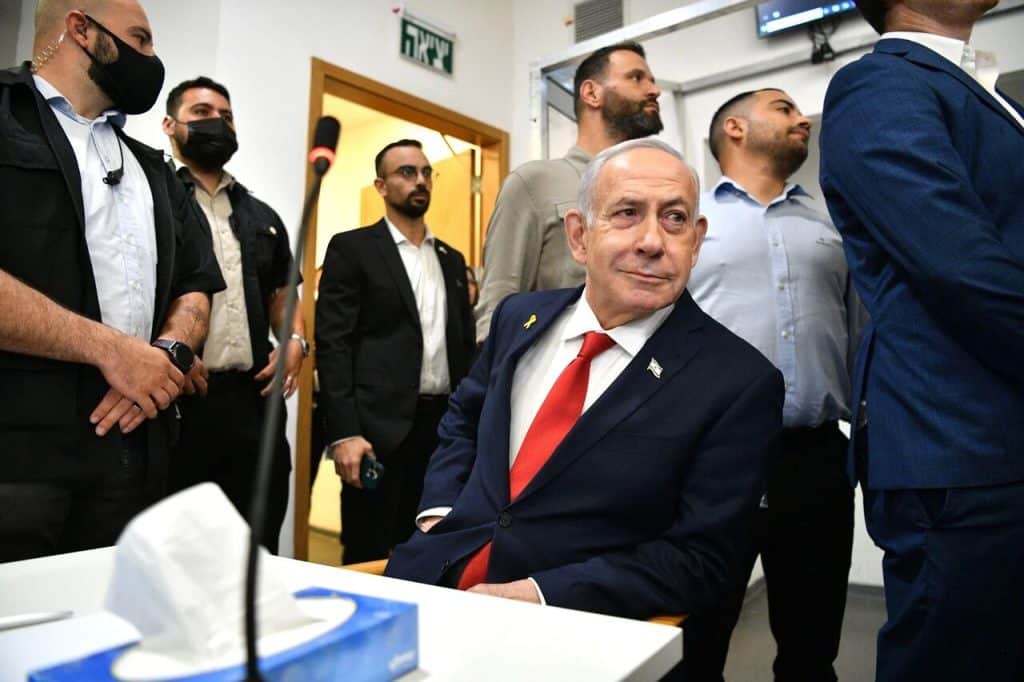
Israeli Prime Minister Benjamin Netanyahu cannot be seen as simply a legal battle between a prosecutor and a veteran politician. This case is a full-scale mirror of the internal crisis of a regime that is now facing fundamental questions about the nature of power, the limits of accountability, and the relationship between politics and the law, before both domestic and international public opinion.
The prime minister, who has remained in power longer than any other politician in the history of the Israeli regime, now stands accused of bribery, fraud, and breach of trust. This situation is not only a challenge to Netanyahu’s personal political future, but also a test for the entire structure of Israeli governance; a structure that, at the same time as its prime minister is on trial, is embroiled in war, social division, internal protest,s and a crisis of legitimacy.
Netanyahu: A Product of the Concentration of Power in the Zionist System
To understand the dimensions of the case, it is necessary to understand Netanyahu’s position in the Israeli political system. He is not simply a prime minister, but a symbol of a type of governance based on the concentration of power, the securitization of politics, and the weakening of supervisory institutions.
During his long years in power, Netanyahu has managed to form a complex network of politicians, capitalists, media, and security institutions around himself. Although this concentration of power led to apparent political stability in the short term, it paved the way for systematic corruption in the long term. In such a structure, the line between public and private interests gradually blurs, and the law becomes more flexible than is claimed in official texts.
Netanyahu Investigation Begins
The investigation against Netanyahu officially began in 2016, when the Israeli police launched preliminary investigations after receiving reports of the prime minister’s suspicious financial and media dealings.
Initially, many observers dismissed the investigation as part of a political contest. As the investigation expanded and the Attorney General’s Office stepped in, it became clear that the cases had gone beyond gossip and political sabotage. The indictment in 2019 was a historic milestone, as it was the first time a sitting prime minister in Israel had been formally charged with corruption.
One of the most notable features of Netanyahu’s trial has been its length and repeated delays. Netanyahu has repeatedly refused to appear in court, citing security briefings, emergencies, or physical condition. This tactic is clearly aimed at eroding the judicial process and reducing public pressure. As time passes, public sensitivity decreases, and media priorities change. In this context, time is not the enemy, but the defendant’s political ally.