
Israel’s latest strategic doctrine.
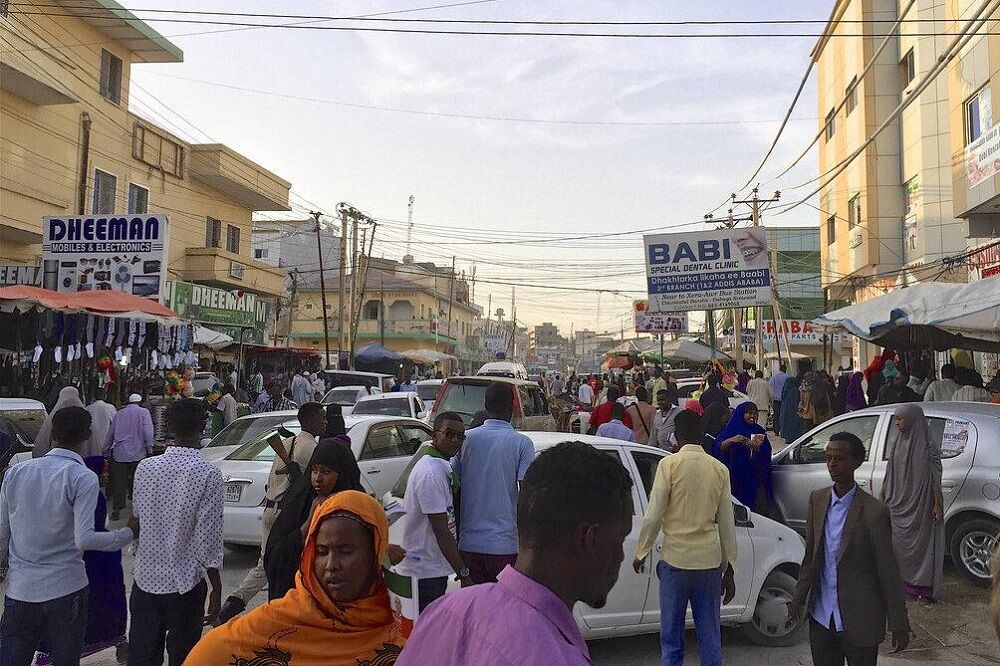
It was a week ago that the occupying regime of Jerusalem once again aroused opposition and protests by recognizing “Somaliland”, from “Donald Trump”, the biggest supporter of “Benjamin Netanyahu”, who did not approve of this action, to Arab and Islamic countries within the framework of the Organization of Islamic Cooperation, members of the African Union, and … who expressed their explicit objection.
Israel’s decision to recognize Somaliland cannot be considered a temporary, emotional, or purely diplomatic action. This decision is in line with a historical and highly calculated pattern that Israel has implemented in the peripheral regions of the Arab and Islamic world for decades; a pattern that is based on identifying, strengthening and legitimizing separated, fragile or secessionist political units, with the ultimate goal of rearranging the security environment around Israel, weakening powerful central governments and creating a belt of dependent or aligned actors.
This model was implemented in South Sudan, and now in Somaliland, we can see traces of an old strategy known in Israeli security literature as the “periphery doctrine.” Somaliland is not an exception in this context. Still, a new link in an old chain, this time directly tied to Israel’s geopolitical battle against Iran, Yemen, and the axis of resistance.
The Periphery Doctrine: The Backbone of Israeli Foreign Policy
The Periphery Doctrine is one of the most fundamental and enduring components of Israel’s foreign and security policy, a strategy whose roots go back to the first years after the establishment of the regime and is still being reproduced with new formulations.
It is impossible to understand this doctrine without considering the geopolitical conditions of Israel in the 1950s and 1960s, a period when Tel Aviv found itself surrounded by hostile Arab states and lacked the strategic, demographic, and geographical depth for a classic long-term confrontation.
The then Israeli Prime Minister David Ben-Gurion, along with figures such as Moshe Sharett and later Shimon Peres, concluded that the survival and expansion of Israel’s influence was possible not through reconciliation with the hard core of the Arab world, but through influence on its “periphery.”
The periphery was a collection of non-Arab actors, ethnic and religious minorities, and marginal political entities that were either in conflict with their central governments or were fundamentally politically fragile. This view led Israel to establish close relations with countries such as pre-revolutionary Iran, Turkey, and Ethiopia, as well as covert support for minorities such as the rebels in South Sudan.
The central assumption of the Periphery Doctrine was that weakening the territorial and political cohesion of the major Arab and Islamic countries would structurally reduce the peripheral threats to Israel. In this logic, any ethnic, religious, or territorial divide in the Arab world was seen not as a crisis but as a strategic opportunity. For this reason, Israel pursued support for separatist or autonomous projects not as an ad hoc policy, but as a sustainable tool for engineering the balance of power.
In such a framework, Israel’s recent move to recognize Somaliland should be seen as a natural extension of this doctrine, a strategy that has been redefined not only against Arab states but also in direct connection with the confrontation with Iran, Yemen, and the new equations of the Red Sea.
South Sudan: An example of a recurring pattern
South Sudan can be considered one of the clearest and most documented examples of the practical implementation of Israel’s periphery doctrine; a pattern in which the targeted support of ethnic and territorial divisions becomes a tool for weakening large and influential regional states.