
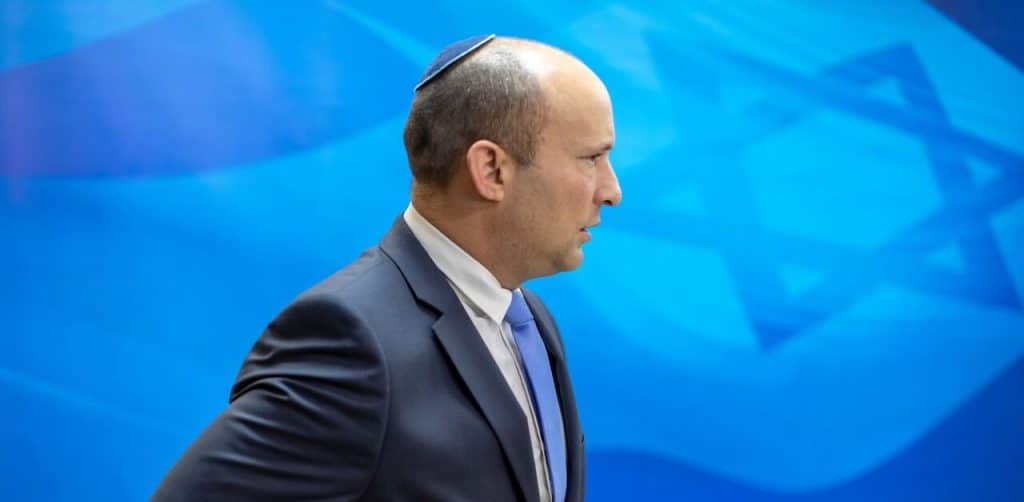
Massive hacking of former Israeli Prime Minister’s accounts; Tel Aviv in security shock.
The Israeli Channel 12 television reported that after the Hanzalah hacking group announced that it had successfully hacked the mobile phone of former Prime Minister Naftali Bennett, his office confirmed last night (Wednesday) that the hackers had hacked his Telegram account and gained access to his messages and personal content.
Bennett described the cyberattack as an “attempt at political assassination in cyberspace” and claimed that some of the information released was “fake” and manipulated for psychological operations.
At the same time, the Israeli Cyber Command claimed that hundreds of Israelis had reported receiving text messages with local area codes in which they were invited to cooperate by “Iranian intelligence.”
The text of the message reads: “Iranian intelligence agencies are ready to accept your intelligence cooperation. To cooperate, contact one of the Iranian embassies via the Internet.”
The Hanzala hacking group also published a 141-page list of Bennett’s phone contacts, a matter that has raised serious concerns among Israeli security agencies about the possibility of exposing the contact numbers of senior officials and confidential documents. These agencies have warned that the published files may contain malware and that opening them could infect users’ devices.
The Israeli Army Radio also called the intrusion a “clear failure” for the internal security agency (Shabak), emphasizing that the incident shows that the protection of senior officials must be seriously extended to the cyber domain. The incident is considered the first important test for David Zini, the new head of the Shabak, who is now tasked with conducting a comprehensive investigation into the breach and providing solutions to strengthen security systems.
The Hanzala hacking group announced on Wednesday that it had successfully penetrated the former prime minister’s mobile phone, according to IRNA. The group released a collection of files, including a contact list of senior Israeli officials, internal communications, sensitive documents, and personal photos from Bennett’s mobile phone.
The cyber operation, which Hanzala has dubbed “Operation Octopus,” includes drafts of official letters, some dating back to July 2025.
In addition, political communications, including criticism of Israel’s Minister of Internal Security, Itamar Ben-Governor and allegations that he poses a “political threat” to the coalition, were published on Hanzala’s website.
The group stressed in its statement that the security measure was not only a technological achievement but also part of psychological warfare to send the message that the information security of senior Israeli officials was “fragile.”