
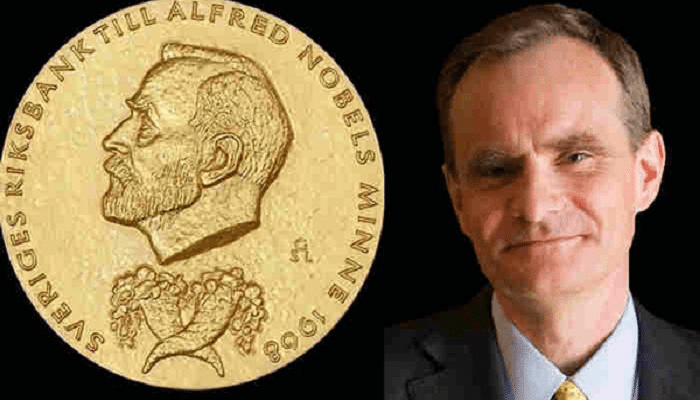
PNN – A prominent American economist and Nobel Prize winner has explained how Iran has used its own economic pressure levers against the United States.
Simon Johnson, a prominent economist and winner of the 2024 Nobel Prize in Economics, raises the question in an analysis for the Syndicate Project database: If until yesterday, US sanctions were considered a backbreaking tool for exerting pressure on countries due to the dominance of the dollar in the global financial system, what has happened today that the United States has become the target of this type of pressure?
He, who was previously a senior economist at the International Monetary Fund, wrote that Iran has effectively succeeded in imposing effective and costly sanctions on the United States by using its strategic position in the Strait of Hormuz.
Johnson’s main argument is that by cutting off or threatening to cut off oil from Gulf countries that are allies of the United States, while still maintaining its oil exports to China, Iran has changed the structure of global energy supply in a way that has caused oil prices to rise sharply.
This increase in the price of oil in the global market, due to the interconnectedness of the markets, has directly increased the price of gasoline and diesel in the United States, placing heavy economic pressure on the citizens of this country.
The author emphasizes that this economic pressure is not limited to fuel costs. Rising fuel prices have increased the cost of transportation, which in turn has increased the price of food and other goods.
This transportation inflation is very expensive, especially for segments of Americans who mainly use fuel-efficient cars, including a significant portion of Donald Trump’s supporters.
Farmers have also come under severe economic pressure due to rising fuel and fertilizer prices.
As a result, this situation has become a political issue and could directly affect the outcome of the November 2026 midterm elections.
Interestingly, Johnson, who co-authored the book “Power and Progress: The Millennial Struggle over Technology and Prosperity” with Darun Acemoglu, sees the effects of this pressure going beyond people’s livelihoods and affecting macro-American policymaking.
He asks how the Federal Reserve (the US central bank) can decide to cut interest rates with Brent oil prices at or above $100 a barrel. He believes that if the Fed fails to resist these inflationary pressures, it could lead to a period similar to the one under former Federal Reserve Chairman Arthur Burns in the 1970s, when inflation and recession were common.
The MIT economist then examines the options facing the Trump administration.
He argues that while Trump is keen to de-escalate tensions and halt attacks on energy infrastructure, the economic pressure from these real sanctions can only be maintained by maintaining a credible threat to Iran in the Strait of Hormuz.
Another key factor is Russia’s role in the equation. Referring to media reports, Johnson believes that Russia is encouraging Iran to continue down this path by providing intelligence and support for drone strikes, as rising oil prices are a boon for Moscow, which has been hit by energy sanctions.
In other words, the more the conflict escalates and oil prices rise, the more pressure will be put on the US to ease sanctions on Russian oil.
Among the proposed solutions, the author mentions the idea of imposing a full embargo on Iranian oil, which is feasible given the Trump administration’s readiness to deal with oil tankers.