
PNN – One of the words that is often seen and heard in the news these days is the name of a group called “Hanzala.” What do we know about this group and its history in the cyber-warfare?
According to the report of Pakistan News Network, One of the words that is often seen and heard in the news these days is the name of a group called “Hanzala.” What do we know about this group and its history?
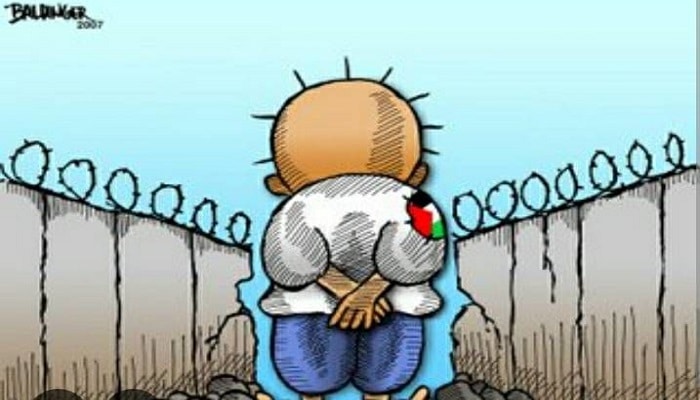
Hanzala is actually the name of a Palestinian cartoon character and never belonged to a militant group. A Palestinian political cartoonist named Naji al-Ali first created the character in 1969.
The character of Hanzala actually represents the Palestinian people, especially refugees and members of the resistance group.
Hanzalah looks like a 10-year-old boy with bare feet, torn clothes, and disheveled hair. He is often not facing the audience and has his hands tied behind his head.
There are many symbols in Hanzalah’s age, behavior, and appearance. For example, the boy always remains 10 years old, because Naji al-Ali was 10 years old when he became a refugee in 1948.
Hanzalah always stands with his back to the audience, meaning that he has no intention of accepting inequality and unfair treatment unless Palestine is liberated.
His bare feet and ragged clothing also symbolize the poverty that Palestinian refugees and displaced persons suffer from.
Naji Al-Ali created this cartoon character while working for an Arabic-language newspaper owned by Kuwait and Lebanon.
Hanzalah’s character gained popularity in the Arab world because he has always been critical of Israel, Arab governments, and political corruption and pressure.
In 1987, Naji al-Ali was assassinated in London. His killer was never identified. After his death, Hanzalah became an even more powerful symbol of Palestinian resistance and identity.
These days, Hanzalah has become a political symbol in the Middle East, appearing in everything from graffiti on walls to social media.
Some activists and military groups have also used the name of this symbolic figure.
What do we know about the Hanzalah hacking group?
The name Hanzala, which is being heard a lot these days, is related to a hacking group that has introduced itself as a “hacktivist” or politically motivated hacking group. In fact, this group borrowed the name and symbol of Hanzala and is now known as a large and prominent hacking group in the Middle East.
The language of this hacking group is “Arabic” and it pursues political motives. They have usually acted in support of Palestinian political interests.
The Hanzalah group has no official ties to governments and mainly creates cyber-conflicts in the Middle East.
The group’s activities range from changing the appearance of websites to leaking data and sending hacked political messages on social media. Their activities began between 2015 and 2020, and since 2021, as tensions in Gaza have escalated; the group has been more active.
One of the important points about Hanzalah is that its activities are at a moderate level and do not have the destructiveness of large hacking groups. The name of this group and its brand can be easily used in cyberspace. The name of this group has also been mentioned in the US-Israeli war with Iran, but in reality it could simply be a group defending Iran that uses this name. In fact, the name Hanzalah is used as a brand of “cyber-resistance”.
From a simple character in a political cartoon to a name heard in cyber-warfare today, Hanzala is an example of how a cultural icon can become part of the political and even digital narratives of the Middle East over decades.