
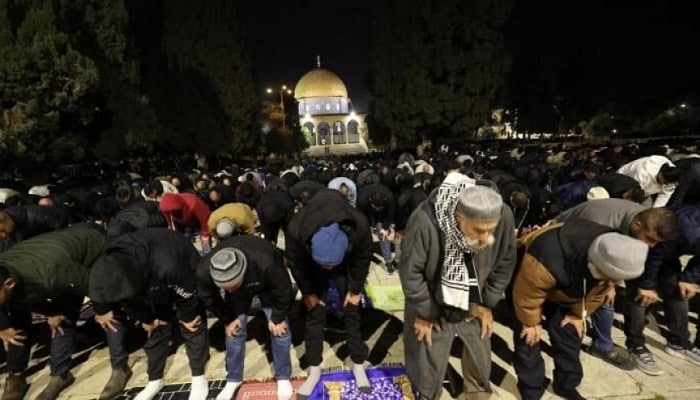
PNN – Palestinian expert Abdullah Marouf said that the Israeli occupation authorities have recently imposed unprecedented restrictions on Muslims’ access to Al-Aqsa Mosque.
He continued: This measure was taken with the aim of reducing the number of worshippers to a minimum, facilitating the implementation of a plan to change the current situation in the mosque and eliminate Islamic management, while minimizing the anticipated reactions.
Marouf explained that Israel’s actions regarding restrictions on worshippers, through expanding the policy of prohibition and reducing the number of people allowed entering and being present in the area, all fall within the framework of a changing administrative landscape within Al-Aqsa Mosque.
He emphasized that the main goal is to establish the position of the Israeli government as the ruling power and dominant force in managing the mosque’s affairs and to establish the occupying authorities as the sole administrative authority within it.
He added: What is happening today is reminiscent of what the occupying authorities tried to impose after 1967, when they sought to place Al-Aqsa Mosque under the supervision of the Israeli Ministry of Religious Affairs. However, this plan failed at the time due to the strong reaction of the people of Jerusalem, especially the scholars and religious authorities who refused to pray under the management of the occupiers and took the initiative to establish the Islamic Supreme Council as a permanent Islamic authority for Muslims in Jerusalem, which forced the occupiers to back down and return the administration of the mosque to the Islamic Endowments Department.
Marouf stressed that continuing the current restrictions without effective practical action could open the door to fundamental administrative changes that would affect the identity and management of the mosque.
He warned that silence or merely issuing statements of condemnation could give the occupiers more space to impose new realities on the scene.
The Jerusalem affairs expert called for intensified official and popular measures to confront Israel’s actions at Al-Aqsa Mosque, emphasizing that the occupiers will not be swayed by verbal reactions that are not accompanied by action on the ground or real political and legal pressure.
Marouf added that maintaining the status quo at Al-Aqsa Mosque requires a unified stance and integrated roles among religious authorities, political leaders, and Jerusalem society, warning that any administrative changes could directly affect the management of one of Islam’s most important holy sites.