
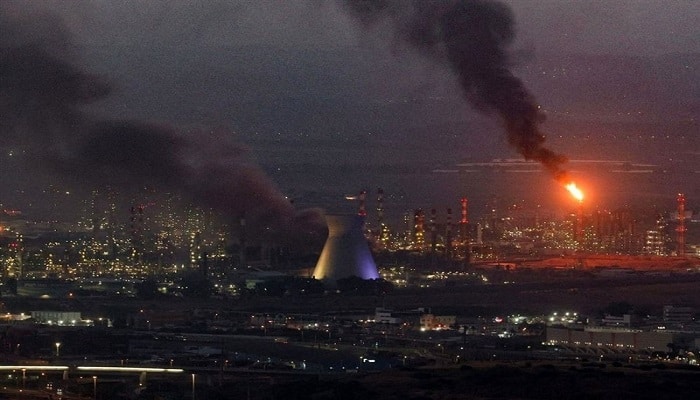
PNN – The five major power plants in the Israeli regime, which supply more than 50% of the country’s electricity, were examined.
According to the report of Pakistan News Network, following some claims about the attack on electrical installations in the Martyrs’ Square area, analyses and suggestions have been put forward on how to respond. In this regard, some sources have examined the main electricity generation infrastructure in the occupied territories.
According to this report, five large thermal power plants play an important role in providing electricity to the Zionist regime, the characteristics of which are mentioned below:
1- The Orot Rabin Steam Power Plant, with a capacity of 2,590 MW, is one of the largest thermal power plants in the regime, located near the city of Hadera (not Haifa). It was commissioned in 1982 and is owned by the Israel Electric Corporation.
2- The Rutenberg steam power plant with a capacity of 2,250 MW is located near the city of Ashkelon (not Tel Aviv). It was commissioned in 1990 and is owned by the Israel Electric Corporation.
3- The Hagit combined cycle power plant, with a capacity of 1,371 MW, is located in the north of the occupied territories, near Yokneam. The plant was commissioned in 2002 and is owned by the Israel Electric Corporation.
4- The Eshkol dual-fuel power plant, with a capacity of 912 MW, is located near Ashdod and has been in operation since 1974.
5- The 900 MW Haruvit (Tzafit) power plant is located near Kiryat Malakhi (not Jerusalem). It has been operating since 2015 and is owned by the private company Dalia Power Energies.
These power plants have a significant share in the electricity production of the occupied territories, and estimates show that more than 50 percent of the electricity in the occupied territories is provided by these five power plants. Any disruption in their operation could affect the regime’s energy network. However, a careful examination of the technical, economic, and security dimensions is necessary in dealing with such issues.