
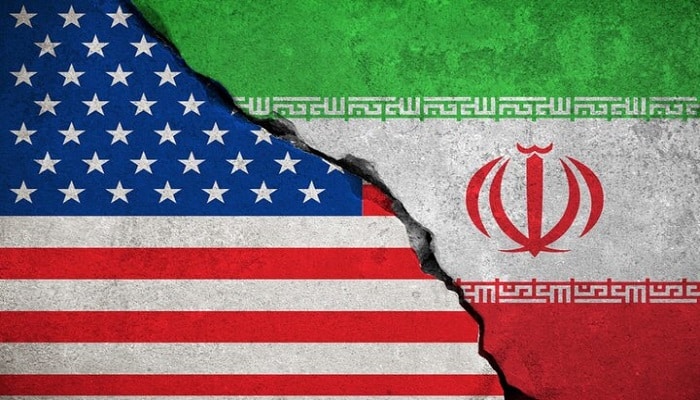
PNN – New assessments show that many of America’s key assumptions about Iran have not only not been realized, but have led to a strategic stalemate.
In a situation where US policies against Iran in recent years have been based on maximum pressure, military threats, and betting on domestic unrest, now even some security analysts close to American and Israeli circles have been forced to acknowledge realities that previously had no place in Washington’s official calculations. New assessments show that many of America’s key assumptions about Iran have not only not been realized, but have led to a strategic stalemate.
In this context, Dennis Citrinovich, former head of the Iran section in Israeli military intelligence and an expert on security and Middle East issues, acknowledges in a realistic assessment that the recent cycle of protests in Iran has effectively ended and that there is currently no active, nationwide wave of protests in the country.
Citrinovich goes on to point out another main pillar of America’s confrontational strategy: Iran’s nuclear program. In his view, even in Western circles, it is accepted that there is no effective military solution to stop Iran’s nuclear program. The US withdrawal from the nuclear deal and the escalation of pressure not only did not stop this program, but also led to the expansion of Iran’s technical capabilities. Today, Iran possesses the knowledge and capacity to enrich at high levels, a capacity that cannot be removed or restored by military action. This admission is, in fact, an indirect admission of the failure of Washington’s confrontational policy.
The former head of the Iranian section in Israeli military intelligence also emphasizes that entering a war with Iran without a clear vision and exit strategy is a risky and strategically irrational move. According to him, despite its deep distrust of Iran’s governing structure, the United States has virtually no choice but to continue economic and diplomatic pressure. Sanctions, as the only remaining lever, have become an attrition tool, rather than leading to a change in behavior, with increasing human and economic costs, without having a clear strategic outcome for Washington.
In another part of this assessment, Citrinovich explicitly rejects the illusion of the collapse of the Iranian political system through the removal or assassination of the leader. According to him, analyses that equate the removal of the Islamic Republic’s leader with the collapse of the system lack a realistic understanding of the power structure in Iran. The Islamic Republic, contrary to popular belief in some Western circles, has an institutionalized structure and is not dependent on a single individual. Even such actions could escalate the crisis from a political level to a religious and regional level, creating far more dangerous consequences for the region.