
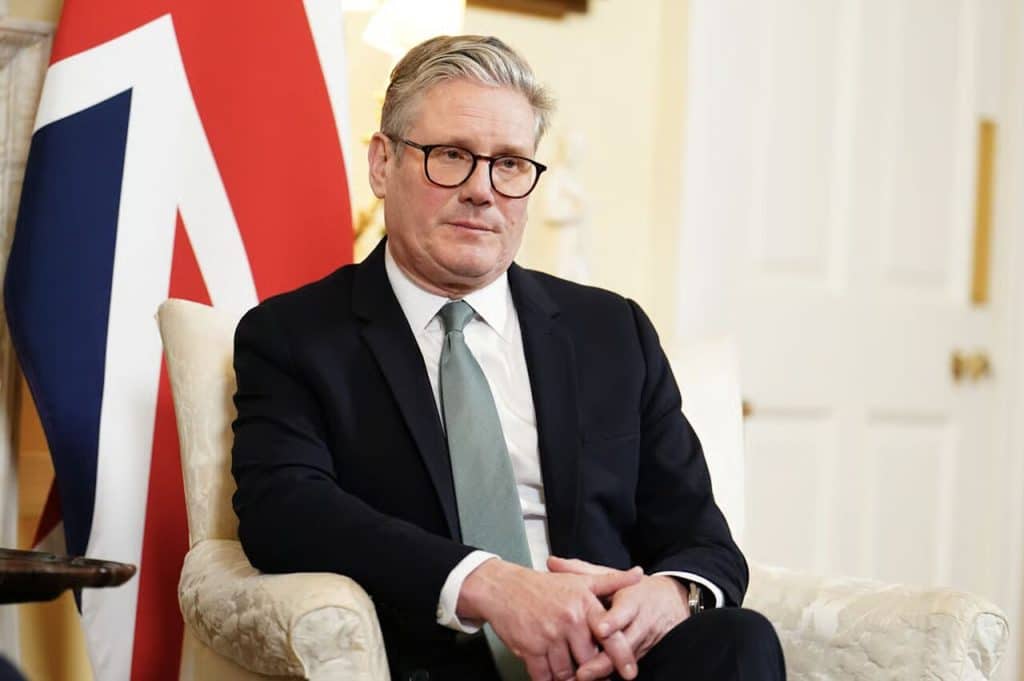
“Starmer: 2026 Must Show Tangible Improvements — or Risk Political Backlash”
In his New Year’s address, Keir Starmer promised that 2026 should be the year people “feel the difference in everyday life, promising that the impact of his government’s decisions would gradually be visible in household spending, public services, and the state of neighborhoods. In the message, he tried to speak of hope and improvement, specifically mentioning areas such as energy bills and public services, which citizens have expressed the most dissatisfaction with in recent months.
This choice of words and giving space to a general but ambitious promise quickly became headlines in the British media, not simply because it was a new promise, but because the Prime Minister had set the standard by which to judge his government and made it a tangible and measurable indicator for public opinion.
The indirect message of this approach is that if people do not feel a tangible improvement in their livelihoods and services during the current year, the government can no longer hide its failure behind the technical complexities of the economy or the legacy of previous governments.
In this context, some domestic reports and analyses in England have described 2026 as a proof-of-concept year for the Starmer government. In the political atmosphere of London, this interpretation means that the government must show that the election slogans and promises of the first days have been translated into practical results, from the level of declarations and speeches. Otherwise, the very promise that is supposed to create hope will become a permanent line of attack for the opposition, and every economic data point and every report on people’s daily lives will become a scoreboard against the government.
Starmer’s challenge is that he made this gamble at a time when signs of the erosion of the Labour Party’s social capital have become prominent in the polls and the discussion about the growing frustration with the pace of change has been circulating in the media and political circles. A significant part of the public, after months of rising costs, concerns about the health service, and the consequences of fiscal policies, expects to see an immediate sign of improvement, while the government, especially in the economic field, talks about the time it will take to reform. This gap between expectations and reality has traditionally been the vulnerable point of governments in the UK.
Critics say the budget amendment bill presented by the government last autumn, with a series of decisions that will lead to an increase in the tax burden for sections of society, does not match the promise of improvement.
One of the themes that emerged in the expert discussions was the continuation of policies related to tax thresholds, which critics describe as a kind of creeping pressure on real household incomes; A policy that, by increasing nominal wages and keeping tax boundaries constant, exposes more people to taxes or moves them to higher levels, without necessarily increasing their purchasing power in the same proportion.