
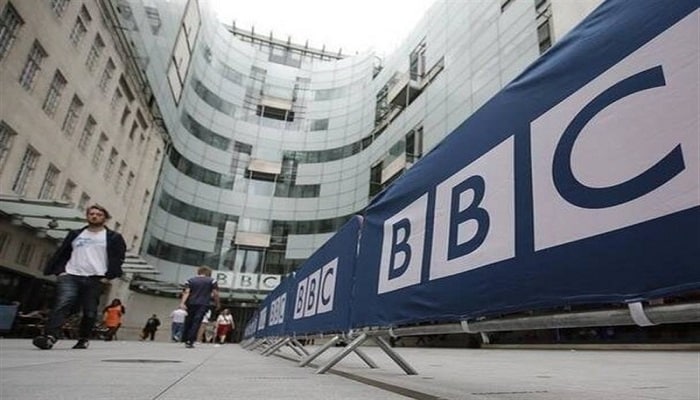
PNN – In covering crises in West Asia, the BBC often focuses on humanitarian issues, human rights, and civil demands.
According to the report of Pakistan News Network, in a world where battles are not fought solely with weapons and armies, the media have become silent but influential players in global politics. As one of the most influential transnational media outlets, the BBC World Service plays a key role in creating a narrative about the crises in West Asia; a narrative that is seemingly professional and impartial, but in practice can make sense within the framework of soft power and in line with British foreign policy.
Soft power, foreign policy and the media
Soft power is a concept that refers to the ability to influence others through charm, persuasion, and shaping preferences; not through military coercion or economic pressure, but through culture, values, and narratives. In British foreign policy, soft power has always had a central position, and institutions such as the Foreign, Commonwealth and Development Office (FCDO) play a coordinating role in this strategy.
As the central institution of London’s foreign policy, the ministry has long defined overseas media as part of its soft power tools. Meanwhile, the BBC World Service, which dates back to the 1930s and the era of the British Empire, was originally formed with the aim of directly communicating with public opinion outside the borders of the empire.
Although this news service has always emphasized its professional and editorial independence, from an institutional and financial perspective, its ties to the London government are undeniable. In recent years, the budget for the BBC World Service has been directly funded by the UK Foreign and Commonwealth Office, a matter that has also been stated in official government documents as part of the country’s public diplomacy and soft influence strategy.
In this framework, the BBC World Service is not simply a news outlet, but a tool for the country’s sustained presence in the intellectual, cultural, and political space of target countries, including in West Asia; a presence that operates through narrative, language, and framing of developments, rather than through official diplomatic messages.
How does the BBC World Service generate soft power?
– Narrative creation instead of advertising
The BBC World Service is not usually accused of overt political propaganda; it does not issue statements or repeat the official message of the British government. However, its main role is in “framing” crises. The difference between news and narrative is formed precisely at this point: the media can guide the audience’s understanding by choosing a point of view, prioritizing topics, and highlighting certain elements, without distorting reality.
– Politics in hidden language
One of the most subtle tools of soft power is language. The words used in reports carry value and unconsciously shape the audience’s judgment. The use of terms such as “regime” versus “state,” or “militia” versus “force,” are not merely technical choices; they carry meaning and direction. By using language that appears neutral, the BBC World Service can present a particular picture of the legitimacy or illegitimacy of political actors without directly taking a position.
– Selection of analysts
Another issue is who is allowed to speak. In many reports on West Asia, Western academic experts, civil society activists aligned with the liberal discourse, and international non-governmental organizations have a prominent position. This selection of sources gradually creates a hierarchy of legitimacy, such that some narratives are portrayed as “rational and credible” and others as “marginal or unreliable.”
– Humanitarianism and DE politicization of the crisis
Focusing on human suffering – children, refugees, poverty and devastation – is a hallmark of the BBC World Service’s coverage. This empathetic approach can also detach crises from their political and security context. When a war or protest is narrated solely as a human catastrophe, the role of macro-decisions, foreign interventions, and power struggles seems diminished.
– Target audience: Future elites
The BBC World Service specifically targets audiences such as elites, students, local journalists and the urban middle class. Influencing these groups means shaping the language of analysis, professional standards and thought frameworks of the next generation of decision-makers. This is the point where the media goes beyond the level of information and becomes a tool of soft power; a tool that directs political preferences and understanding without coercion.