
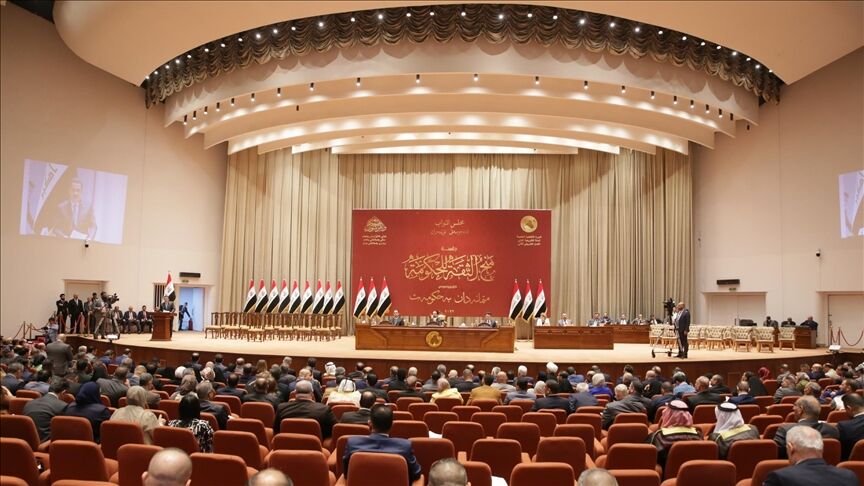
The deadlock over the nomination of the candidate for the speaker of the Iraqi parliament.
Following the announcement of the results of the recent Iraqi parliamentary elections and the determination of the position and weight of each party, movement and coalition in the parliament based on their seats, consultations have begun to introduce the three candidates for the presidency, prime minister and presidency.
According to Iraqi law, the new Iraqi parliament will elect the speaker of the parliament in its first session, which will be chaired by the oldest representative, and then the president and then the candidate for the post of prime minister will be introduced and tasked with forming the government.
According to the law, the Iraqi president must elect the parliamentary majority faction and then, in turn, introduce the prime minister to form the government.
As is known, the process of selecting the three Iraqi presidents begins with the introduction of the candidate or candidates for the presidency of the parliament and the election of the speaker of the parliament in the first session of the parliament. However, the deepening differences between the Sunni parties and movements have caused them to disagree on the candidate or candidates for the post of speaker of the parliament, and non-Sunni parties and movements in Iraq are concerned about this delay and the failure to complete the introduction of the three presidents within the legally established deadline. They are trying to help the Sunni movements and parties overcome their differences and reach an agreement on the introduction of the candidate for the presidency of the parliament. Traditionally in Iraq, the presidency of the parliament belongs to the Sunnis, the presidency belongs to the Kurds, and the prime ministership belongs to the Shiites.
In this regard, Salam al-Zubaidi, spokesman for the Al-Nasr coalition, said: The differences between the Sunni parties and political movements over the candidate for the presidency of the next parliament are very big, and understandings to agree on a solution are ongoing.
He added: Political organizations must adhere to the constitutional timetable and continue on the path of introducing the new speaker of the parliament.
Al-Zubaidi noted that the selection of the prime minister is linked to the completion of the process of selecting the speaker of parliament.
He added that the Coordination Framework is increasingly concerned about the escalation of conflict between Sunni political movements over the post of speaker of parliament. The Coordination Framework is keen to ensure that all political parties adhere to the constitutional time limits, and therefore, the leaders of the Framework have decided to form a special committee to reach an understanding with the Sunni political movements to expedite the resolution of the issue of the speaker of parliament.
Al-Zubaidi explained that the nomination of the prime minister will not take place until the speaker of parliament is elected in the first session.
He said that the majority of the six Sunni political movements in the Political Council reject the return of Mohammed Al-Halbousi to the post of speaker of parliament, as well as the nomination of any figure from Al-Halbousi’s party for this position.