
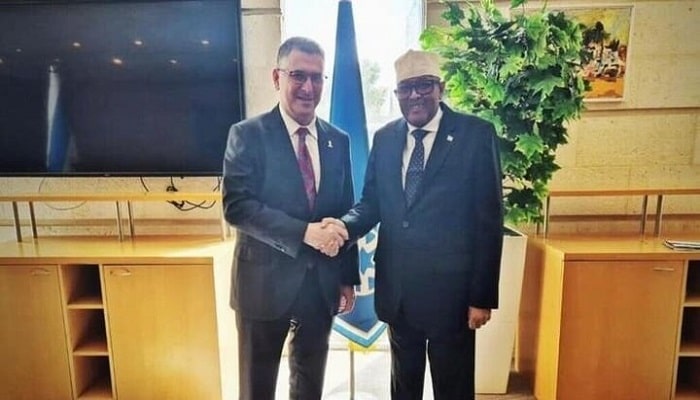
PNN – While the Israeli regime’s move to recognize Somaliland has been met with a wave of condemnation from countries around the world, the leader of this separatist region will travel to the occupied territories next month.
According to the report of Pakistan News Network citing Russia Al-Yawm network, the Israeli regime’s radio and television organization announced that Abdirahman Mohamed Abdullahi, the leader of the separatist “Somaliland” region, is planning an official visit to the occupied territories next month.
This trip comes after Benjamin Netanyahu, the Prime Minister of the Zionist regime, in a video conference call with the separatist leader of Somaliland, invited him to visit the occupied territories.
Read more:
Anti-Zionist demonstration by the people of Somaliland in opposition to the presence of Israel
It should be noted that last Friday, the Zionist regime recognized the separatist region of Somaliland in Somalia as an independent country.
Gideon Sa’ar, the Foreign Minister of the Zionist regime, announced that the regime and Somaliland have signed an agreement to establish full diplomatic relations, which includes appointing ambassadors and opening embassies.
He said: This agreement is the result of one year of dialogue.
The international community has widely opposed and rejected the Israeli regime’s decision to recognize Somaliland.
In this regard, yesterday, Tuesday, thousands of Somali citizens gathered and marched in the streets of Mogadishu, the capital of this country, to declare their protest against the official recognition of ‘Somaliland’ by the Zionist regime.
Protesters raised Somali and Palestinian flags in a stadium in the capital, chanted slogans against the Israeli regime’s decision, and emphasized the unity of the Somali nation.
One of the protesters said: Don’t believe the lies of a criminal whose hands are stained with blood; he has killed the Palestinian people.
These protests represent a widespread public reaction and severe dissatisfaction with the Israeli regime’s action, and it is predicted that tensions in the Horn of Africa region will continue.