
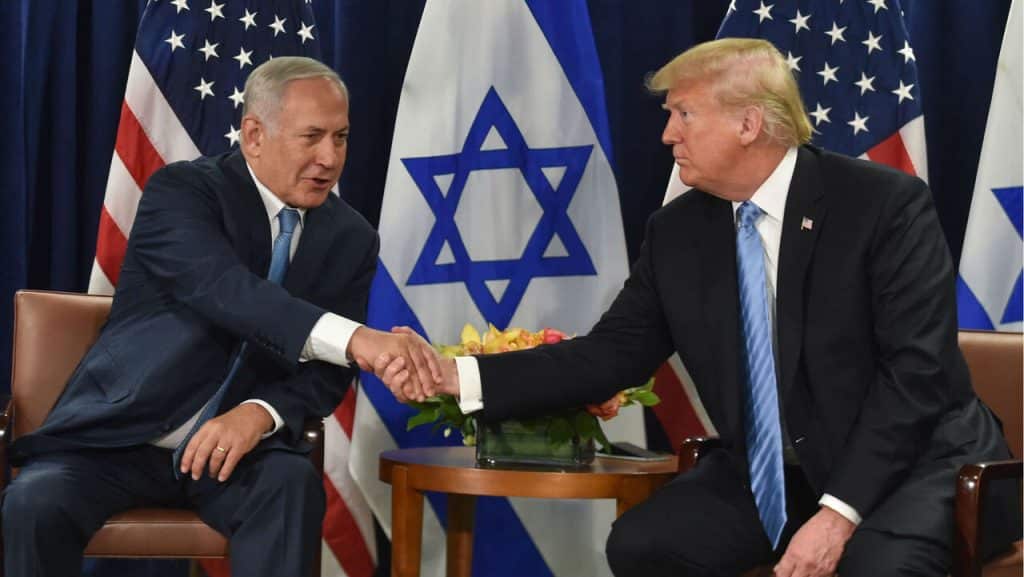
The hidden price of a heinous alliance.
Foreign Affairs has published a detailed report titled “The End of Israel’s Exceptionalism: A New Paradigm for American Policy,” which will be published in full on the Islamic Republic News Agency in the coming days and in four issues. Parts one and two of the report have been published previously. Part three states:
America’s empowerment of Israel has been detrimental to all parties involved. This reality is most evident for the Palestinian community in Gaza, which has been shattered by two years of war. According to the International Rescue Committee, when the October ceasefire took effect, at least 90 percent of the population inside Gaza was displaced. UN experts have stated that more than 600,000 Palestinians, including 132,000 children, were facing famine or malnutrition. 78 percent of Gaza’s buildings were damaged or destroyed. Although the threat of an October 7-style attack by Hamas has been averted for the foreseeable future, its sustained defeat—an outcome that many in Gaza would welcome—requires a political solution in which Palestinians—without Hamas—can govern themselves in an independent state. Yet neither Israel nor Hamas is interested in such a solution.
Israel’s Military Gains and Their Hidden Costs
That Israel has also suffered or will suffer from the exceptional relationship is less obvious, but equally true. Israel’s undermining of Hamas and Hezbollah capabilities, combined with the heavy blows that Israel and the United States have dealt to Iran’s nuclear and ballistic missile programs, has strengthened Israel’s short-term security. But these gains must be weighed against the costs they have incurred along the way.
Israel’s international isolation in the wake of the Gaza war is a clear and present danger to the country. The leaders of the Netherlands, Spain, and Switzerland have publicly said they would arrest Benjamin Netanyahu if he entered their territory. Germany and Britain, which have armed Israel for decades, are restricting arms sales. The changing attitudes in the United States are particularly worrisome for Israel. According to a September New York Times/Sinai University poll, more than half of Americans oppose increased military and economic support for Israel. Although these changes have not yet become official policy, the gap is unlikely to persist.
Moreover, Israel’s military successes against its regional rivals may be short-lived. Iran’s growing motivation to move toward nuclear capability heightens the risk of a return to an unchecked brinkmanship. And in the absence of effective Palestinian governance in Gaza, Israel may be forced to choose between a costly occupation or coexistence with a failed state. Hezbollah’s decline, while short-term gains may be positive, could also have adverse consequences.
Even in the most optimistic scenarios, Israel’s regional military superiority conceals other dangers. Netanyahu’s proposed judicial reforms, demographic shifts, reduced economic and military participation, and the rampant expansion of settlements in the West Bank all undermine the foundations of a secure, Jewish, and democratic Israel. Unconditional American support has facilitated these processes.
The continuation of this relationship has also imposed high costs on the United States. Washington’s international standing has been weakened, and rivals have taken advantage of the situation. America’s military focus on supporting Israel has also reduced its capacity in other strategic regions, particularly the Indo-Pacific. At home, the relationship has also fueled political polarization and increased anti-Semitism and Islamophobia.
The Need to Abandon the Exceptional Relationship
The continued US preference for Israel’s demands only reinforces the worst political tendencies. Protecting the interests of Israelis, Palestinians, and Americans requires abandoning the exceptional relationship and moving toward a normalized model, based on shared rules of American foreign policy.
Normalizing the relationship can be attractive or unsettling for both Israel’s supporters and critics. Some see it as “abandoning Israel,” others as inadequate. But if the current form of the relationship is unsustainable, deliberately managing this transition will prevent sudden and costly ruptures.