
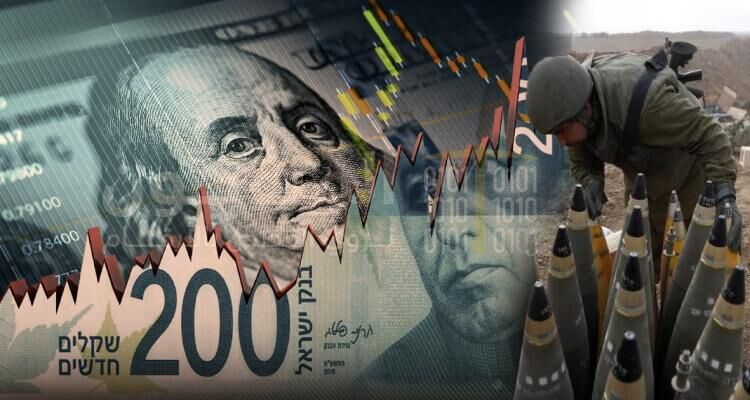
The Hidden Costs of War: Israel’s Economic Decline and Social Crisis.
According to a recent study published by the Taub Center for Social Policy, the number of Israeli soldiers using the services and pensions of the army’s rehabilitation department has reached more than 132,000.
This figure represents an increase of about 16,000 since the beginning of the Gaza war and reflects the extent of human losses, especially physical and psychological injuries, in the ranks of the Israeli army. The increase in referrals to rehabilitation services is a warning sign for the regime’s health and welfare system, which was already facing a shortage of resources and manpower.
In this context, the aforementioned study warns that the Israeli Ministry of Welfare is facing unprecedented challenges in containing the social consequences of the war. Although the ministry’s budget has increased to about 400 billion shekels (about 111 billion US dollars) in 2024; This is an increase of 38 billion shekels (about 10.3 to 10.6 billion US dollars) compared to 2023, but most of this increase was spent on covering the consequences of the events of October 7, 2023 (15 Mehr 1402) and the continuation of the war for more than two years. In other words, the increase in the budget was not allocated to expanding services, but to compensating for the damages caused by the war.
According to the study, one of the most prominent manifestations of this pressure is the significant jump in social security costs in 2024. According to statistics, these costs reached about 26 billion shekels (about 7 billion US dollars), while just a year before the war began, this figure was about 1.7 billion shekels (about 465 million US dollars).
The main reason for this jump is the payment of pensions and extensive benefits to reservists who have been called up for long periods. This has disrupted the labor market and placed a heavy financial burden on the cabinet.
The war in Gaza has strained the economy, social fabric, and welfare system of Israel
According to the study, the burden of the war is not only on the military; thousands of displaced Zionists who have been evacuated from the border areas have been staying for months in hotels and temporary accommodation centers at the expense of the government. In addition, the number of physically and mentally injured has increased to about 32,000, while before the war, this number was close to 5,000. This increase has put additional pressure on medical, psychiatric, and support services.
The Taub Center study also reveals a human resource crisis. According to estimates, the Ministry of Welfare needs at least 1,300 additional social workers to deal with the psychological and social consequences of the war, a shortage that reflects the depth of the structural crisis among the Zionist masses.
According to the Palestine Information Center, overall, these figures paint a clear picture that the war in Gaza has not only inflicted widespread devastation on the Palestinian people but has also increasingly spilled over into Israel, putting a heavy toll on its economy, welfare system, and social fabric. Thus, the price of war crimes is not only being paid on the battlefield, but is also being deducted from the state’s coffers and the resilience of society.
The Taub Center for Social Policy Research, a think tank in the Israeli regime that analyzes social and economic issues, warned in its report “State of the Nation 2025” that the lack of sufficient economic growth could lead Israel into a vicious cycle, one that would limit the government’s spending on public services and even reduce its ability to meet future security needs.