
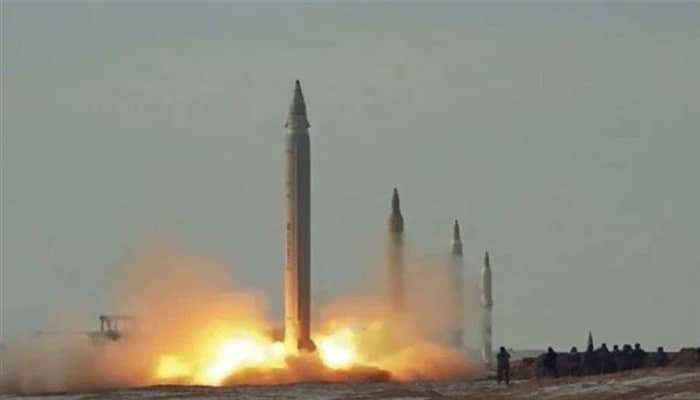
PNN – The New York Times wrote in a note that the current war will transform Iran into a major global power.
According to the report of Pakistan News Network, the New York Times newspaper wrote in an article that the current war between the United States and Israel is transforming Iran into a major global power.
The New York Times explains the hypothesis that the current tensions in the Middle East, contrary to popular belief, are not simply a regional conflict, but rather a transformative process that is pushing Iran towards becoming one of the main poles of power in the world.
The author argues that the foundation of power in the new world order is built on energy security, and since the Gulf states are critically dependent on oil and gas exports for their economic survival, any insecurity in transit routes and increased insurance costs directly target their financial stability. In such an atmosphere of insecurity, the countries of the region will be forced to accept a new order; an order in which they must come to terms with the actor with the greatest ability to disrupt or secure energy flows, namely Iran, and adapt their policies to the influence of this regional power.
The author continues his analysis by emphasizing the global implications of this shift in balance, arguing that the tremors of this transformation will be felt most strongly in Asia. Given that the energy infrastructures of countries such as Japan, South Korea, India, and even China are inextricably tied to Persian Gulf oil, continued instability will lead to weakening national currencies, rising inflation, and a return to the bitter stagflationary era of the 1970s on a global scale.
Meanwhile, an unwritten convergence is forming between Iran, Russia, and China; with Russia benefiting from price volatility and China seeking to secure its energy security, Iran plays a key role in this triangle with its strategic leverage in the Strait of Hormuz. This alignment of interests, even without a formal alliance, challenges the Western power structure and paints a terrifying scenario in which control of a large part of the world’s energy comes to rest in the hands of this bloc, and the influence of the United States and Europe declines in an unprecedented way.
Ultimately, the author describes the challenge facing the United States as a fateful dilemma: either engage in a long and risky battle to regain military control of the waterways, or accept the new global reality in which Iran has emerged as the fourth center of power alongside the other great powers. In the view of this note, the current developments are irreversible, and even in the event of compromise, the United States will have to pay a heavy price for an agreement with Iran, which has now consolidated its place in the global power hierarchy.
Overall, this text warns that the international order is on the verge of a profound transformation and that the current battle is not a passing conflict, but a turning point that will rewrite the world’s political geography for decades to come.