
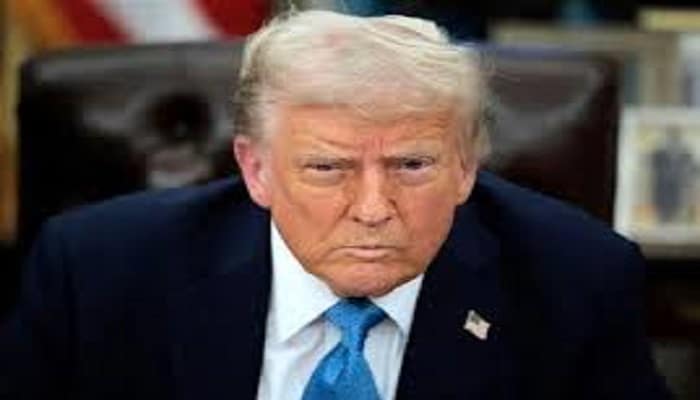
PNN – The head of the terrorist government of America has linked his defeats against Iran to the media and artificial intelligence.
According to the report of Pakistan News Network, in his latest statements, the head of the terrorist US government accused Iran of using artificial intelligence as a “weapon for disinformation” and claimed that Western media outlets are cooperating with Tehran. These accusations come at a time when the increase in fuel prices following the closure of the Strait of Hormuz has brought increasing political pressure against the Trump administration at home.
Speaking to reporters on Air Force One and in a post on the Truth Social platform on Sunday, US President Donald Trump accused Western mainstream media of “close coordination” with Iran to spread “fake news” generated by artificial intelligence.
He wrote without providing evidence: Iran is weak and ineffective in militarism, but it is very skilled at feeding fake news media. Now, artificial intelligence has become another weapon for disinformation that Iran is using well.
Rising fuel prices: The government’s main challenge in the war with Iran
The economic fallout from the war with Iran has become the Trump administration’s main concern. The closure of the Strait of Hormuz, through which about a fifth of the world’s oil passes, has pushed oil prices above $120 a barrel and caused an unprecedented jump in gasoline prices in the United States.
According to data from the American Automobile Manufacturers Association, the average price of gasoline across the United States has reached $3.63 per gallon. That’s up about 65 cents (more than 20 percent) from $2.98 just two days before “Operation Epic Fury” began on February 28.
Sen. Dick Durbin, Democrat of Illinois, said in remarks on the Senate floor Tuesday that the increase has been even steeper for gasoline, with prices up more than a dollar this month.
The price hikes have become a barrage of criticism for Democrats, who have called for the release of oil from the Strategic Petroleum Reserve, a move the Trump administration has so far refused to take.
The government is in a defensive position; from promising to reduce prices to putting pressure on allies
The Trump administration has tried to manage public pressure with two different approaches. On the one hand, White House officials promise that the price hikes are temporary. The ultimate goal, the military operation, is clearly defined, White House spokesman Taylor Rogers said. Once the military objectives of the Iranian regime and the terrorist regime are neutralized, oil and gas prices will fall rapidly, even lower than before the attacks began.
Meanwhile, the administration is seeking to form a coalition to reopen the Strait of Hormuz. Trump has warned that the future of the alliance will be “very bad” if European allies in NATO do not help protect ships. So far, however, countries such as Japan have refused to send naval forces.
With the midterm elections approaching and the cost of living rising, gas prices have become a critical indicator of the success of the Trump administration. Polls show that more than half of Americans believe Trump’s policies have made the economy worse.
In this situation, the information war and accusations against Iran and the media are interpreted as another attempt by the White House to distract public opinion from the increasing pressure of fuel prices on the daily lives of Americans.